
Tile to Shingle in Modesto: What Changes When an Old Tile Roof Comes Off
Concrete tile often outlasts the layers under it. Here is what a Modesto tile-to-shingle replacement actually involves, from tear-off to solid deck to finished courses, shown on a real Legend job.
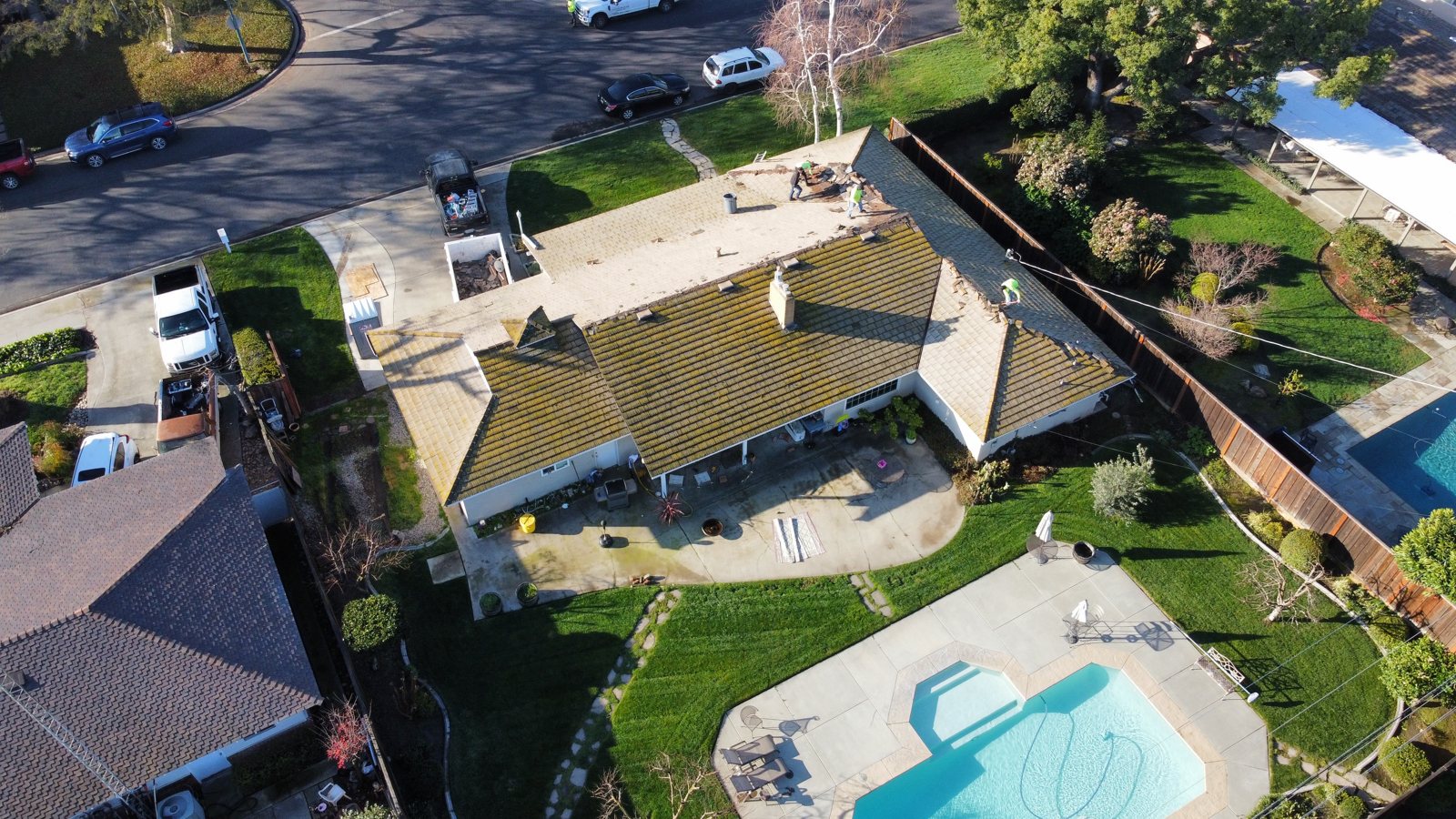
Day one on a Modesto tile-to-shingle replacement: moss and debris had settled into the shaded tile planes long before the tile itself gave out.
A lot of Modesto homes built decades ago still wear their original concrete tile. From the street it can look fine. Up close, the story is often different: moss in the shaded planes, cracked or slipped pieces, debris packed into valleys, and an underlayment beneath the tile that has been doing the real waterproofing work for a very long time.
When that underlayment is worn out, homeowners usually face a choice: rework the tile roof, or replace it with a different system. This post walks through what a tile-to-shingle conversion involves, using a real Legend Roofing Company Inc job in Modesto that went from mossy concrete tile to GAF Timberline architectural shingles in Charcoal.
It’s for homeowners in Modesto, Ceres, Riverbank, Oakdale, Turlock, Ripon and nearby Central Valley towns. If you’re dealing with one leaking valley on an otherwise sound tile roof, start with when a tile valley goes soft instead.
Why tile roofs often fail underneath first
Concrete tile is durable, but tile is not the only layer keeping water out. On most tile roofs, the underlayment below the tile is the primary water barrier, and the tile protects it from sun and weather. Over many Central Valley summers, that underlayment can dry out, crack and stop shedding water, even while most tiles still look whole.
Shaded tile planes add their own problem. Moss and organic debris hold moisture against the roof and slow drainage, which is exactly what the featured photo shows on the north-facing planes of this Modesto home.
What a tile-to-shingle conversion actually involves
1. Full tear-off. The tile, the battens or spacers it hung on, and the old underlayment all come off. On this job the crew loaded old tile straight into a dump trailer in the driveway so debris didn’t sit in the yard.
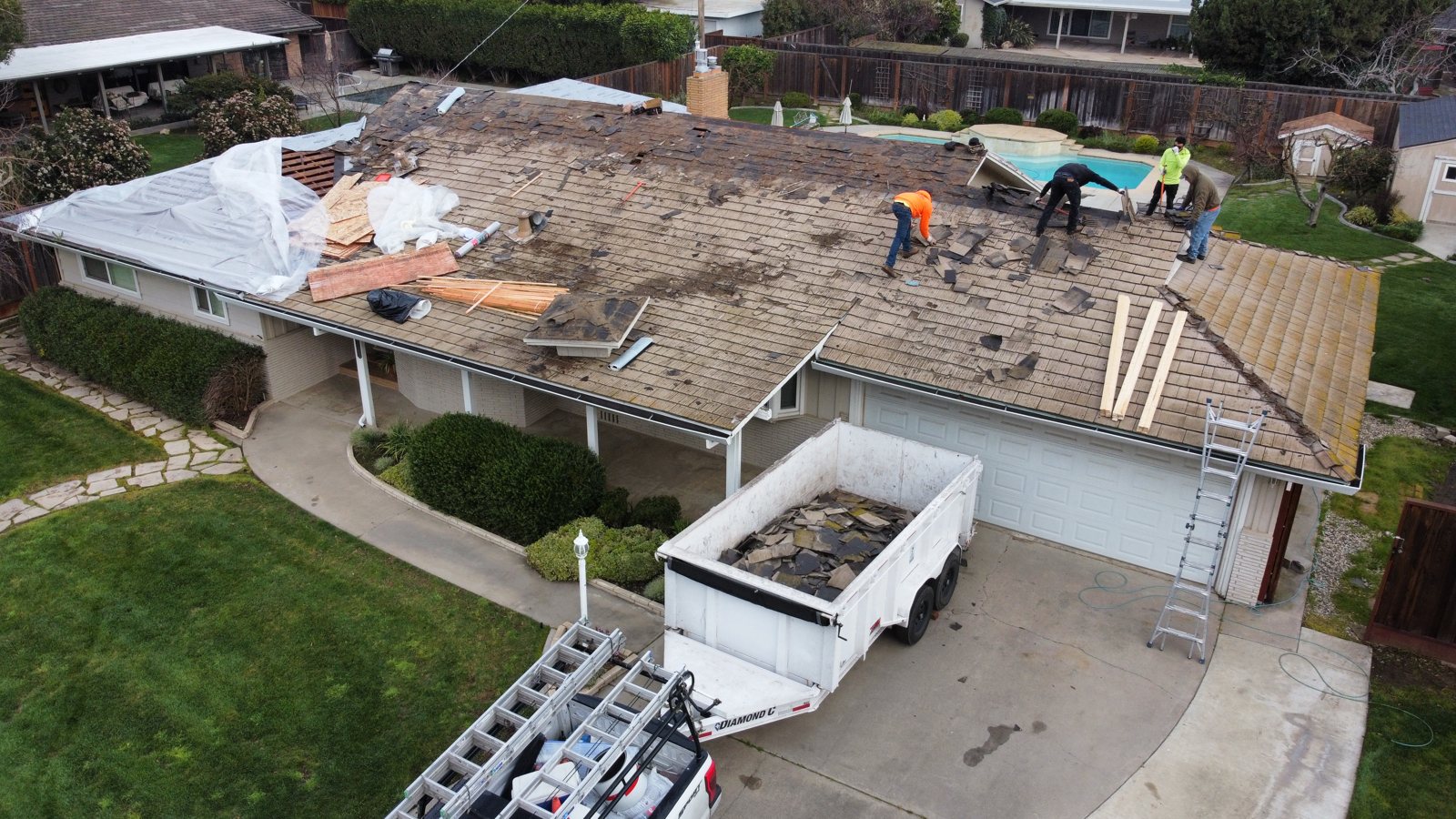
Tile, battens and old underlayment come off down to the framing so the deck can be checked and rebuilt.
2. A solid deck. Tile is often installed over battens or spaced boards. Asphalt shingles need a continuous, solid deck under them, so a conversion usually means checking the framing and installing new sheathing where it’s needed. On this Modesto roof, new sheathing went down over the open framing before anything else. (For what we look for in the deck itself, see soft spots and roof decking and skip sheathing to solid deck on a Turlock roof.)
3. New underlayment and edge details. The whole roof is dried in with fresh underlayment, with metal at the edges and attention at eaves and valleys. See why underlayment matters in Modesto heat, drip edge and roof valleys.
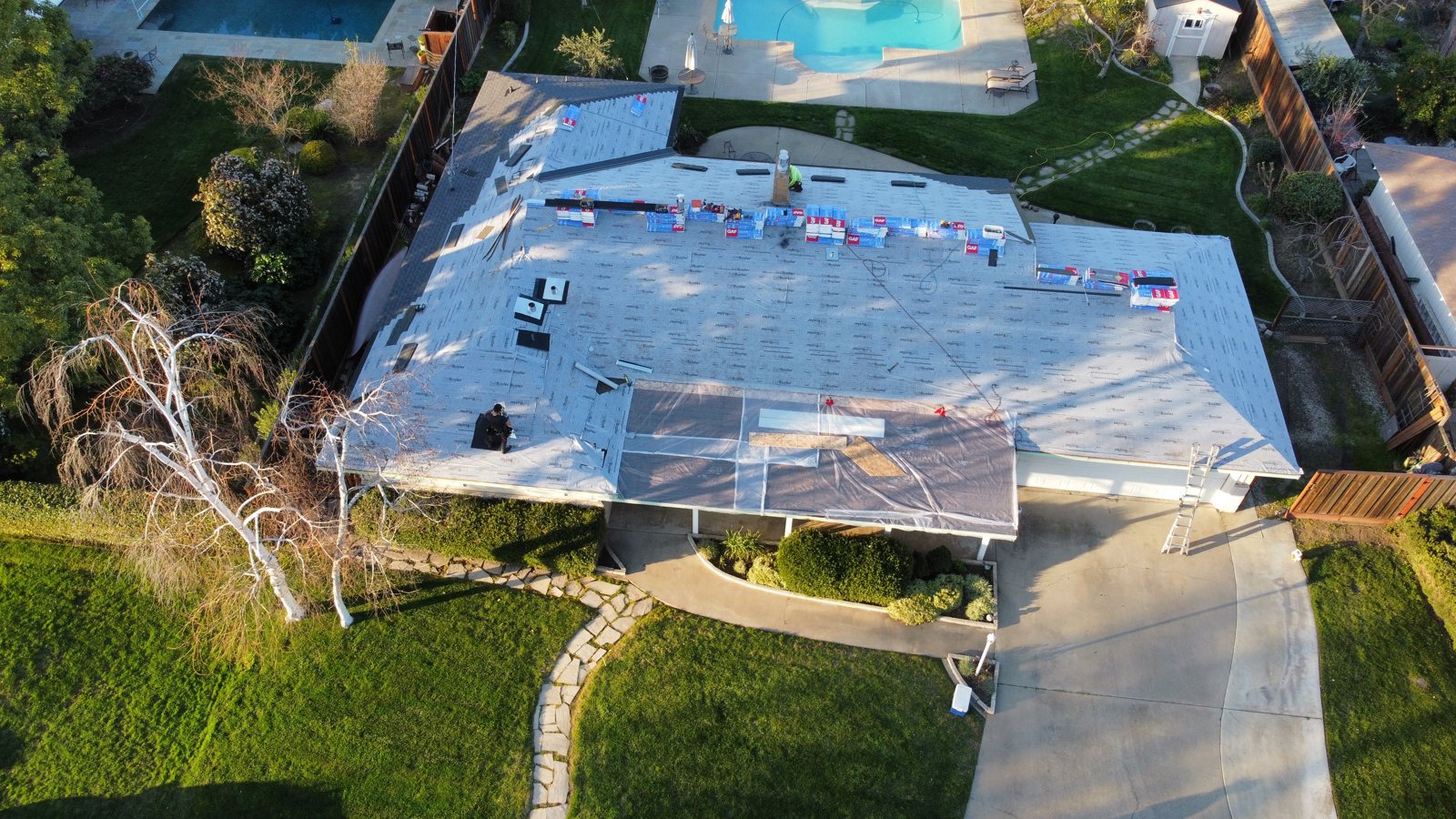
Solid deck, full dry-in, then bundles staged by plane before a single course goes down.
4. Flashing made for the new system. Chimneys, walls and pipes on a tile roof are flashed for tile. When the roof becomes shingles, those spots need flashing detailed for shingles. Chimneys in particular deserve a close look; here’s why chimney flashing leaks first.
5. Ventilation, then shingles. A conversion is a good moment to sort out attic intake and exhaust (more in roof vents before fall). Then the shingles go down plane by plane, finished with ridge cap.
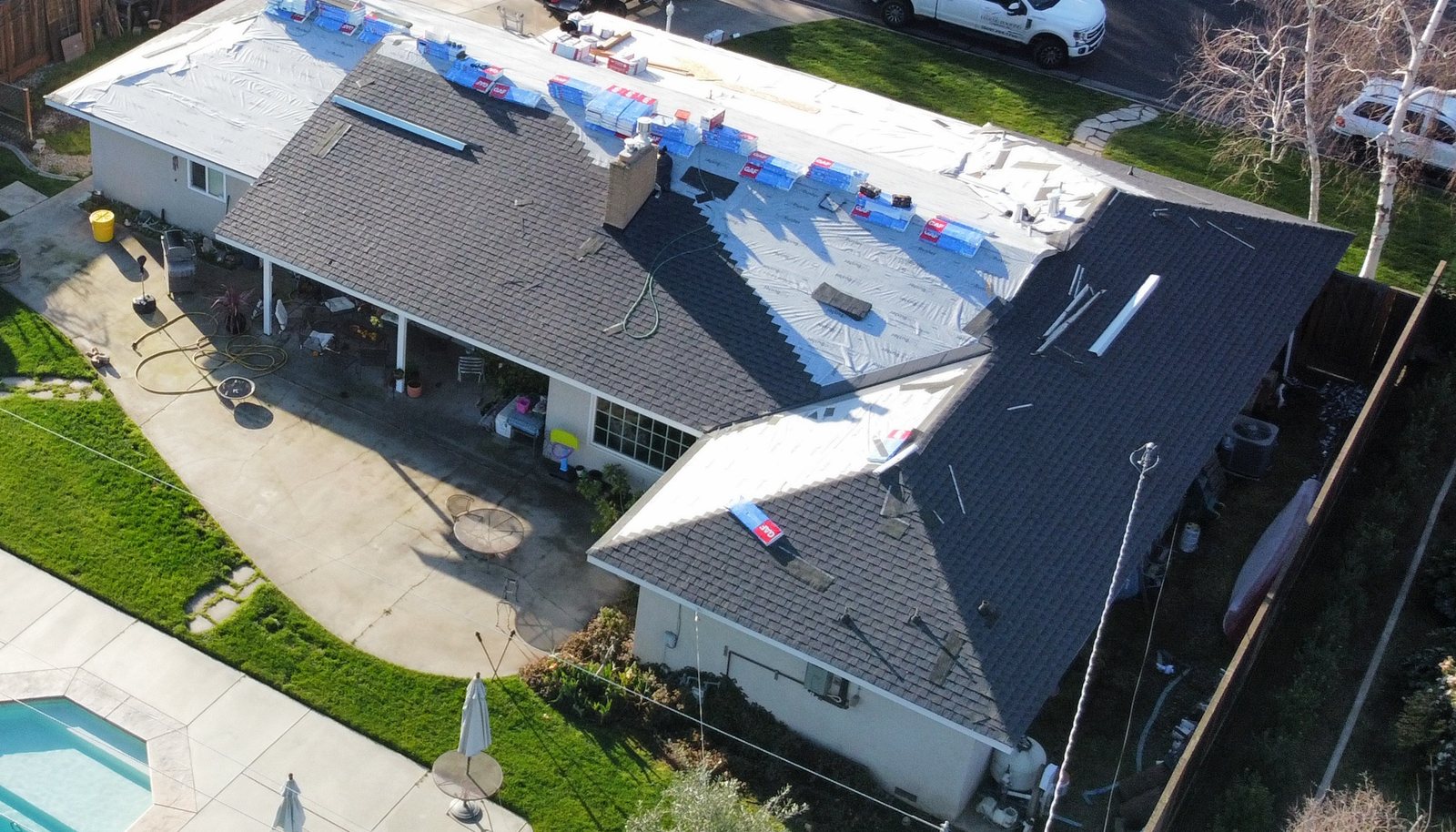
Charcoal Timberline courses going on over the new deck, plane by plane.
Why some homeowners choose shingles over tile
- Much lighter roof. Concrete tile is far heavier than architectural asphalt shingles, so the conversion takes a lot of weight off the framing.
- Fewer places for debris to sit. A shingle surface sheds leaves and debris more easily than tile profiles do.
- Simpler future repairs. Shingles are easier to walk and to repair locally than brittle old tile.
- Wide color choice. Timberline comes in many colors; in California, also ask whether the color you like meets current energy-code requirements for your re-roof. Our GAF materials page lists cool-roof options, and eligibility is confirmed for the address before permitting.
When converting may not be the right call
Converting isn’t automatic. If most of your tile is sound and the problem is mainly the underlayment, ask whether resetting the tile over new underlayment is realistic for your roof. HOA rules, the look of the neighborhood, and your plans for the home also matter. A good contractor should explain both paths, not just the one they prefer.
Questions to ask before you decide
- Is the leak or wear coming from the tile, the underlayment, or the flashings?
- What’s under the tile now (battens, spaced boards or solid sheathing), and what will the new deck be?
- Which shingle and color are specified, and do they work for the energy-code requirements on this permit?
- How will chimneys, walls and pipes be flashed for shingles?
- What’s the plan for attic ventilation?
Soft next step
If you have an older tile roof in Modesto or the Central Valley and you’re weighing your options, Get a Quick Quote via Contact or call (669) 294-1760. We’ll walk you through what we’d expect to find under your tile and whether conversion or a tile rework makes more sense. Learn more about roof replacement in Modesto.
Legend Roofing Company Inc — 4400 Gomes Rd, Modesto, CA 95357 — (669) 294-1760 — CSLB #1067374 — GAF Master Elite.