
Soft Spots Before Fall Rain: Why Modesto Roof Decking Matters
Soft spots are where roof decking has weakened under tiles or shingles. Here is why that wood layer matters before Modesto fall rain — and how a local repair differs from a full redeck.
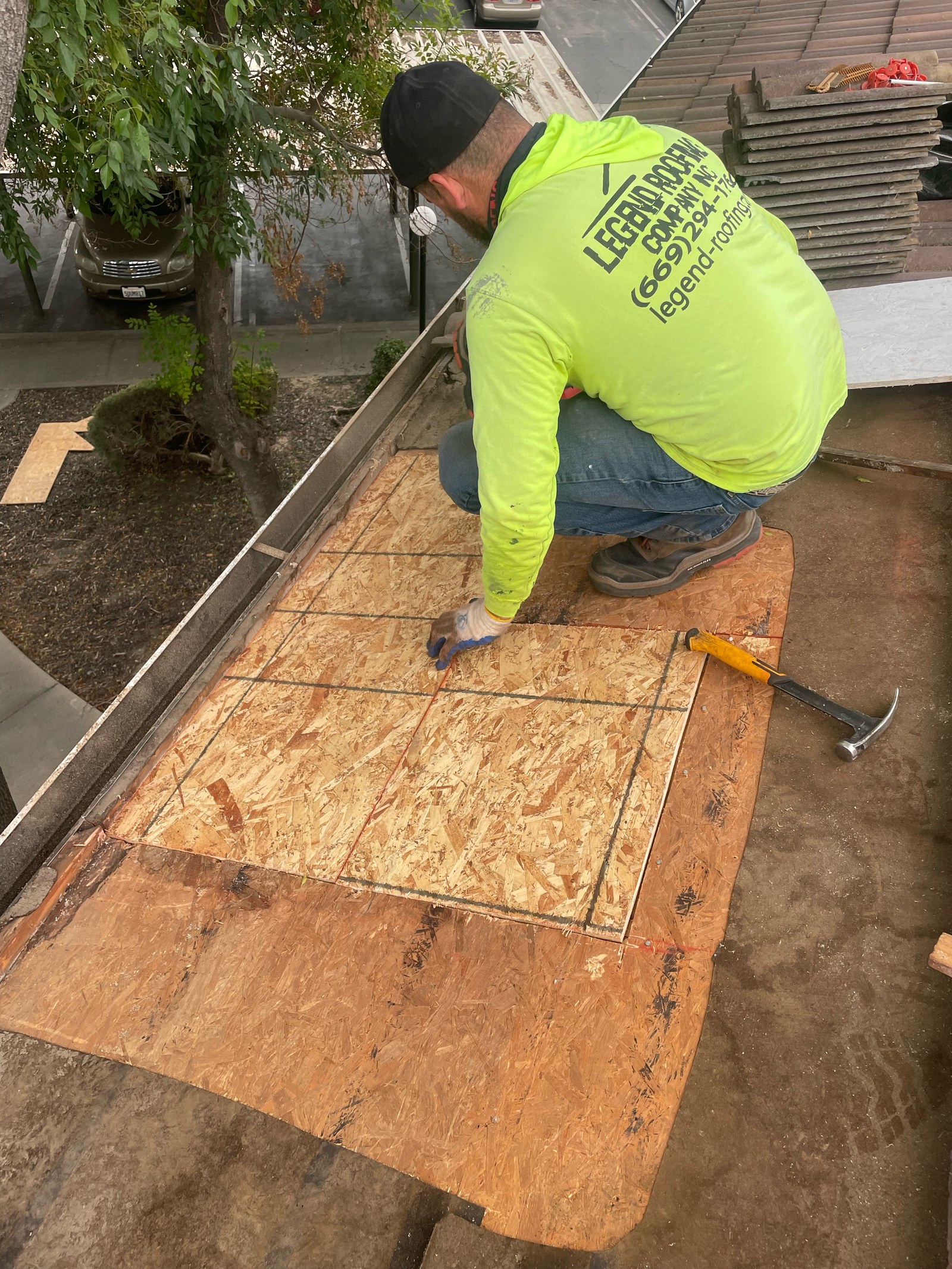
A local soft-spot fix starts with opening the surface and replacing the weak deck panel — new OSB cut into the opened area before tiles go back.
After a long Central Valley dry season, Modesto homeowners often hear “soft spot” for the first time when someone walks a roof, presses a boot near a valley, or notices a spongy feel under a tile or shingle. A soft spot is not a cosmetic stain. It usually means the roof decking — the wood sheathing under the finished surface — has weakened from water, age, or a failed detail above it.
This guide is for homeowners in Modesto, Ceres, Riverbank, Oakdale, Turlock, Ripon, and nearby Central Valley towns. It stays distinct from skip sheathing to solid deck in Turlock (how older roofs were built) and when a tile valley goes soft in Ripon (a clogged-valley case study). Here the focus is the everyday idea: soft spots, what they mean, and what a local OSB patch vs a wider redeck looks like before fall rain returns.
What “soft spot” actually means
Roof decking (also called sheathing) is the wood layer fastened to the rafters or trusses. On modern jobs that usually means OSB or plywood panels. Tiles, asphalt shingles, underlayment, and flashings sit on top of that layer. When decking softens, fasteners lose hold, the weather surface can sag, and the next storm has an easier path into the structure.
Homeowners often confuse soft spots with:
- Skip sheathing — spaced boards from older construction, not necessarily rot (Skip Sheathing to Solid Deck)
- Valley debris or clogged tile valleys — a common cause of local soft deck (When a Tile Valley Goes Soft)
- Fascia or drip-edge staining — edge wood problems that may or may not reach the field deck (Drip Edge Before Fall Rain)
- Underlayment age alone — the backup sheet can fail without the wood already being soft (What’s Under Your Shingles?)
For material context, see the materials hub and Roofing Modesto.
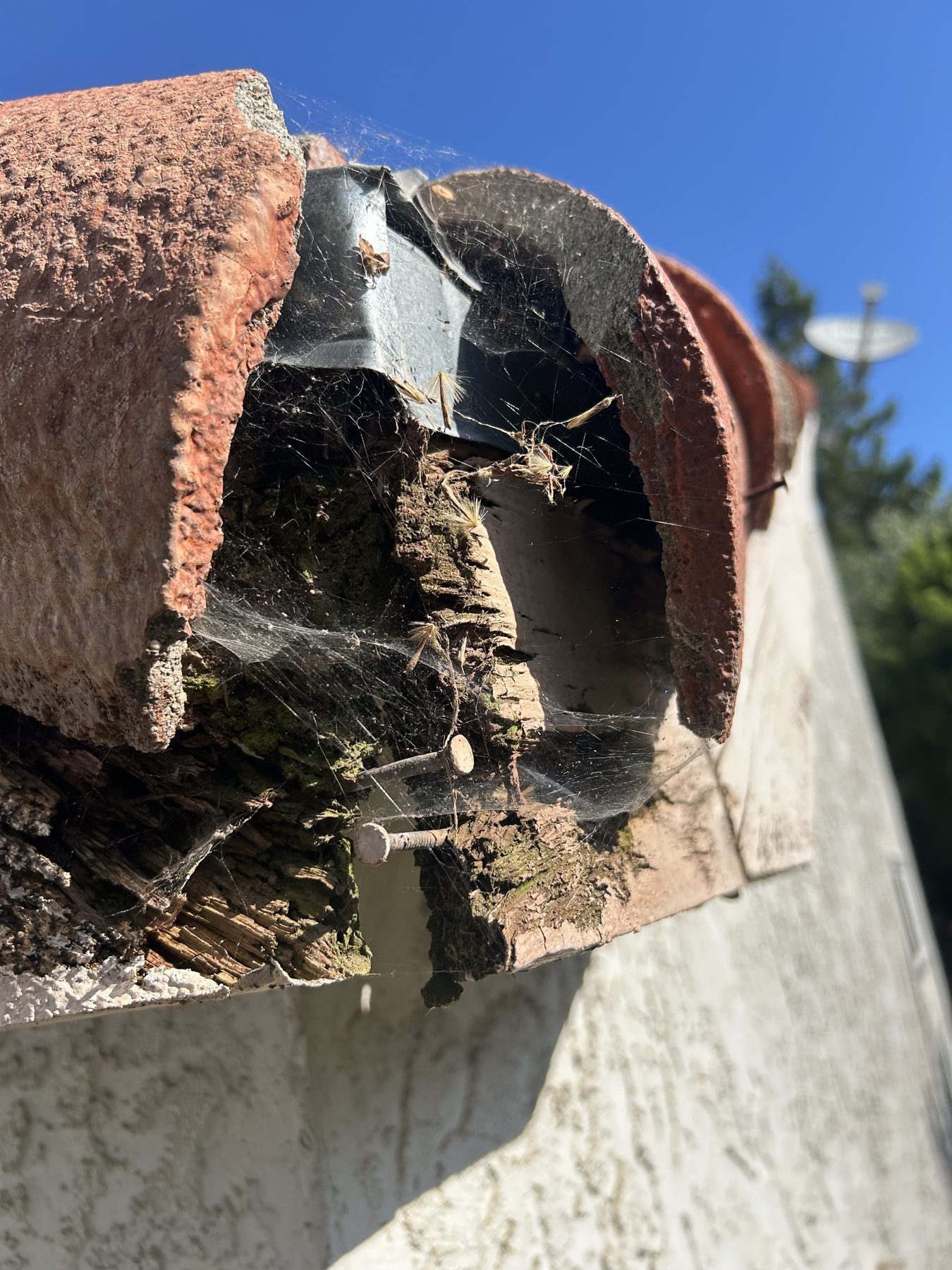
Soft wood at a tile edge is what homeowners mean by a soft spot — the surface can look intact while the deck or trim underneath has already failed.
Why soft spots matter before Modesto fall rain
Central Valley summers leave months with little meaningful rain. Dust and heat dry the surface. When the first real storms return to Modesto, Ceres, Riverbank, or Oakdale, water finds every weak detail: open flashings, tired underlayment, clogged valleys, and edges without sound metal. Soft decking is where that water has already spent time — and where a boot can punch through what looked fine from the street.
A soft spot that sits dry through August can become an active leak path in October. Documenting and repairing decking while the weather is still workable is the practical reason this topic belongs in a fall checklist.
What a local deck repair looks like
Many soft spots are local. The crew opens the tiles or shingles over the suspect area, cuts out the weak panel, and fits new OSB into the opening — chalk lines and fasteners back into sound framing — then rebuilds underlayment and the weather surface. On a documented Legend tile job, that looks like a lighter OSB patch set into older decking with the original tiles stacked nearby, ready to return once the wood is solid again.
That local patch is often enough when the surrounding field and framing are still serviceable. It is not a full tear-off, and it is not caulk on the surface of a soft board.
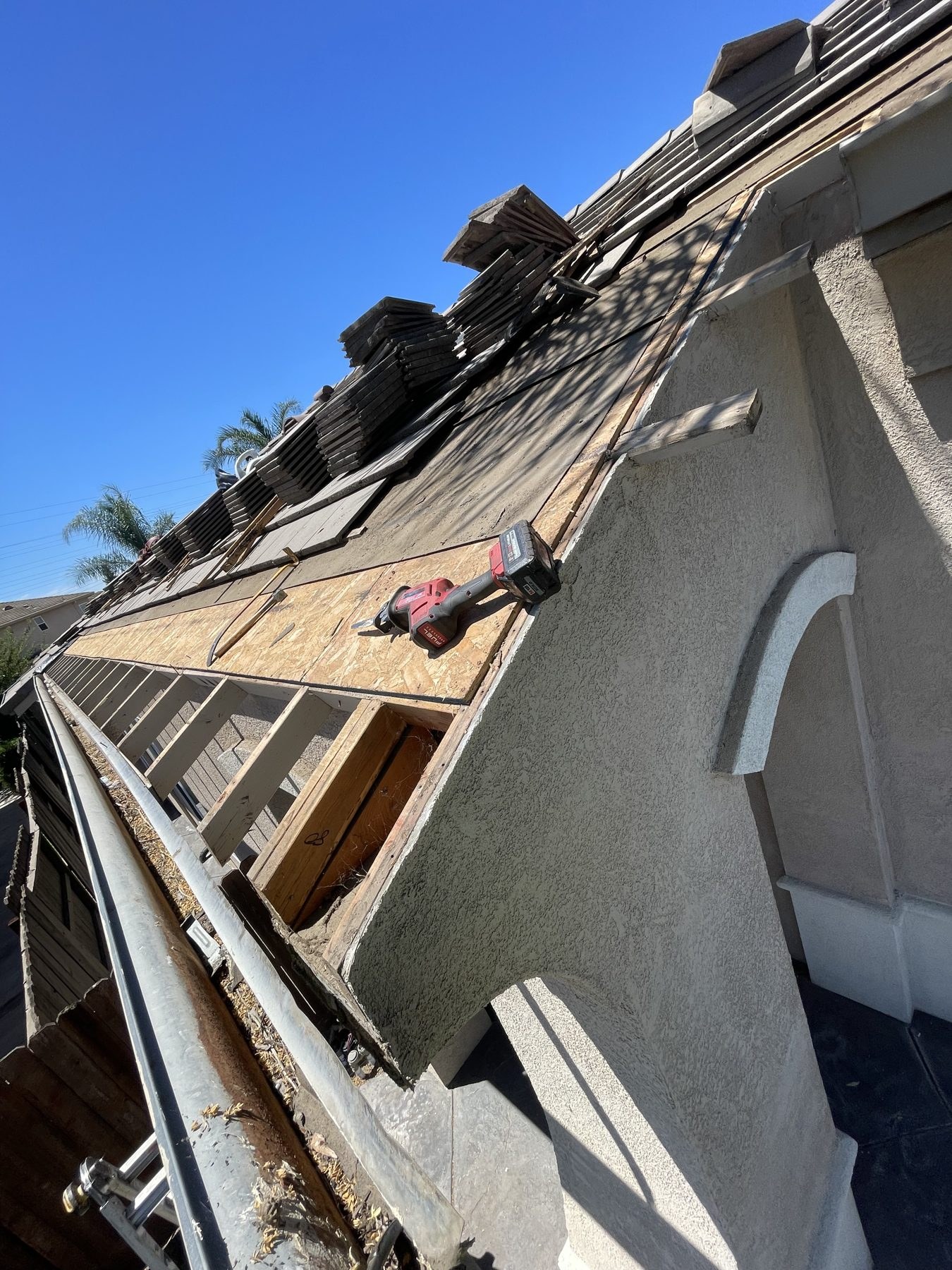
After a soft area is cut out, new OSB goes down first — tiles or shingles wait until the deck is solid again.
When the scope widens to a redeck
The conversation grows when soft deck shows up across multiple slopes, when tear-off exposes widespread soft or missing boards, or when an older roof still has skip sheathing that will not support a modern system. Then the honest scope is a redeck: remove the old surface, install solid OSB over the structure, then underlayment and the new weather face. On a Modesto replacement mid-job, that looks like fresh OSB across the main plane beside open rafters and tear-off piles — structure first, pretty layer second.
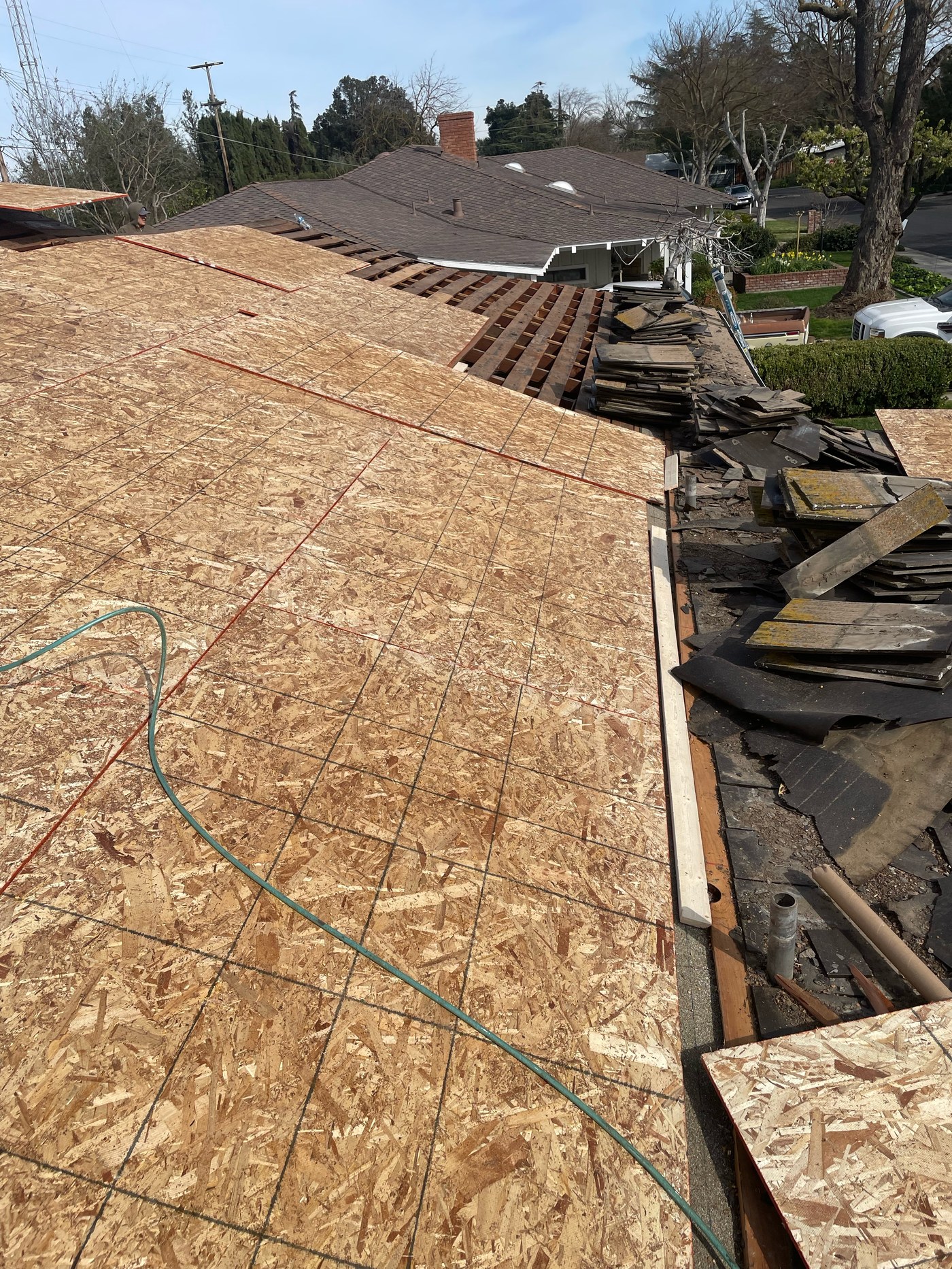
When soft deck spreads across slopes, the honest scope is a redeck — new OSB over the structure before underlayment and shingles return.
Aim for the smallest scope that restores a solid deck — not a surface-only fix over soft wood, and not a default full replacement when a documented local patch would solve it. See Repair or replace? How we decide on a Modesto roof.
What homeowners can safely notice from the ground
Stay off a wet, steep, or tile roof unless you are trained and insured. From the yard, binoculars, attic (where safe), or clear contractor photos, useful cues include:
- Spongy feel or bounce reported by a qualified walker in a small zone (not a DIY walk on tile)
- Sagging or uneven planes in shingles or tiles over one bay
- Dark, crumbling wood at eaves, rakes, or bargeboards under tiles
- Interior stains under the same roof zone after past storms
- Repeated leaks at valleys, chimneys, or penetrations even after surface patches
You usually cannot see OSB from the street once the roof is finished. Ask for photos of the opened deck when a soft area is investigated — before and after the patch.
Before the first fall storms: a practical checklist
- Note any known leak history by room or exterior wall
- Ask whether an inspection includes probing or photos of decking, not only the surface
- Ask whether the scope is a local OSB patch, a wider redeck, or still undetermined until opened
- Clear safe ground-level debris from gutters and valleys so water can leave after it hits sound edges
- Use Get a Quick Quote or call if you want Legend Roofing Company Inc to document soft areas in clear photos and plain language
Soft next step
Questions about soft spots or roof decking on a Modesto, Ceres, Riverbank, Oakdale, Turlock, or Ripon home? Get a Quick Quote via Contact or call (669) 294-1760. Legend Roofing Company Inc — 4400 Gomes Rd, Modesto, CA 95357 — CSLB #1067374 — GAF Master Elite. More local context: Roofing Modesto. Appointments available daily 7am–5pm.