
When a Tile Valley Goes Soft: What We Found Under a Ripon Roof
Tiles can look fine while a clogged valley quietly softens the deck. Here is the sequence we documented on a Ripon tile repair—and what homeowners in the Central Valley should know.
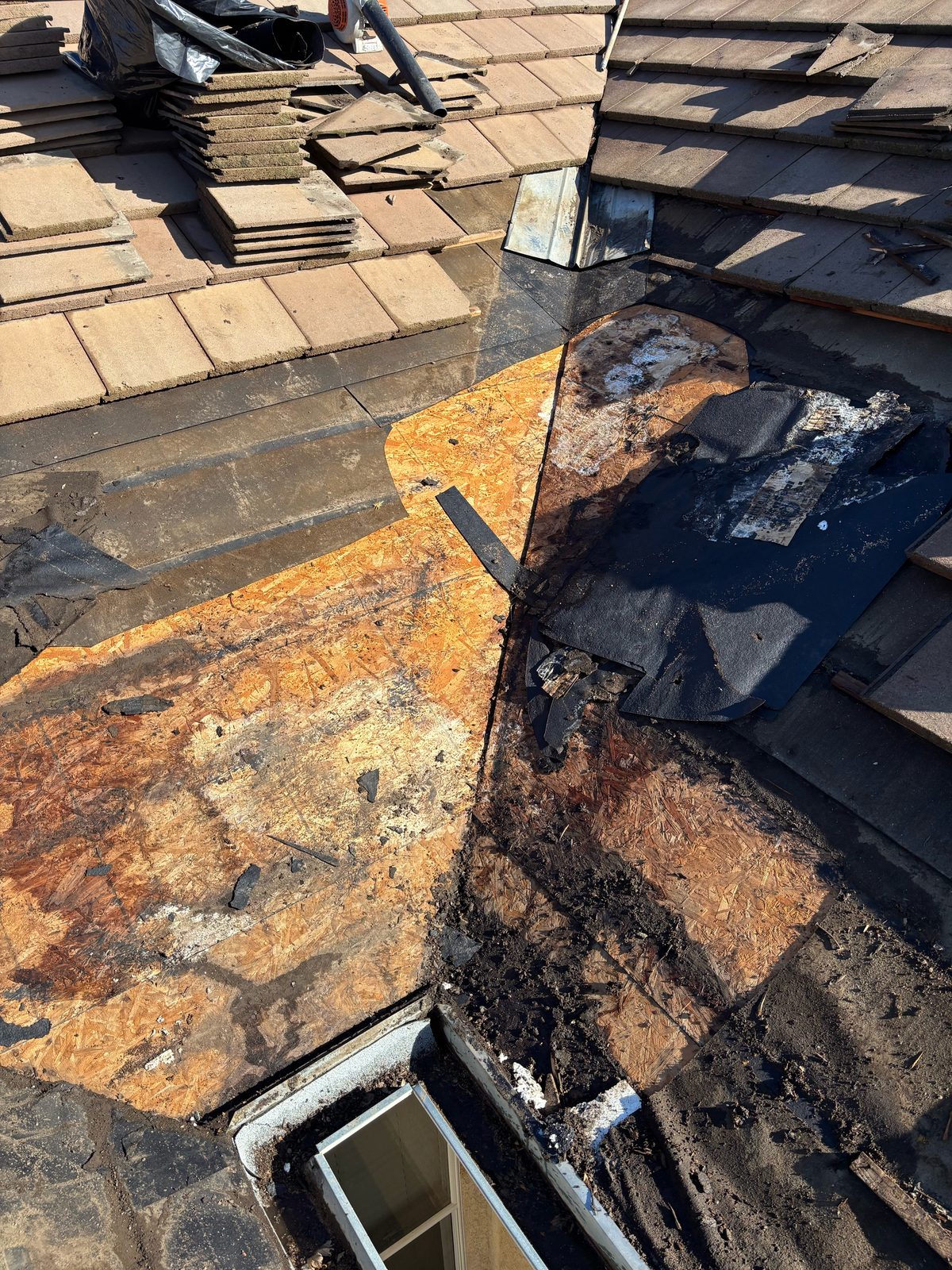
Soft, darkened deck along the valley path and around the skylight—damage that stayed hidden under tiles until the area was opened.
From the street, a concrete tile roof can look solid for years. Homeowners in Ripon and across the Central Valley often assume that if the tiles look fine, the roof underneath must be fine too.
Valleys are where that assumption breaks down. Water from two slopes meets in a narrow channel. Debris packs into the metal. Moisture sits longer than it should. Under the tiles, the deck can soften and rot while the surface still looks presentable. On a recent Ripon tile repair, we documented that sequence—clogged valley, soft OSB near a skylight, new deck, then fresh underlayment—before the tiles went back.
This guide covers what we found, why tile valleys matter, safe ground-level signs, and what an honest inspection looks for before fall storms. Modesto-area homeowners with tile or similar valley details face the same water-concentration story, even when the job itself is not in Modesto.
Why valleys matter on tile roofs
A roof valley is the V where two slopes meet. It is a drainage highway. On tile, water runs under and between the tiles as well as over them, so the metal valley and the underlayment beneath the field become critical secondary lines of defense.
On Central Valley tile roofs, valleys collect more than rain:
- Leaf litter, pine needles, and dust from dry months
- Granules and grit washed from aging surfaces upslope
- Bird nesting material and wind-blown debris after summer heat
When that material packs into the valley channel, water slows, pools, and finds edges. Over time it can work past old felt or failed seams and into the wood deck. The tiles above may still look complete—so the problem stays hidden until someone lifts courses or a leak shows indoors.
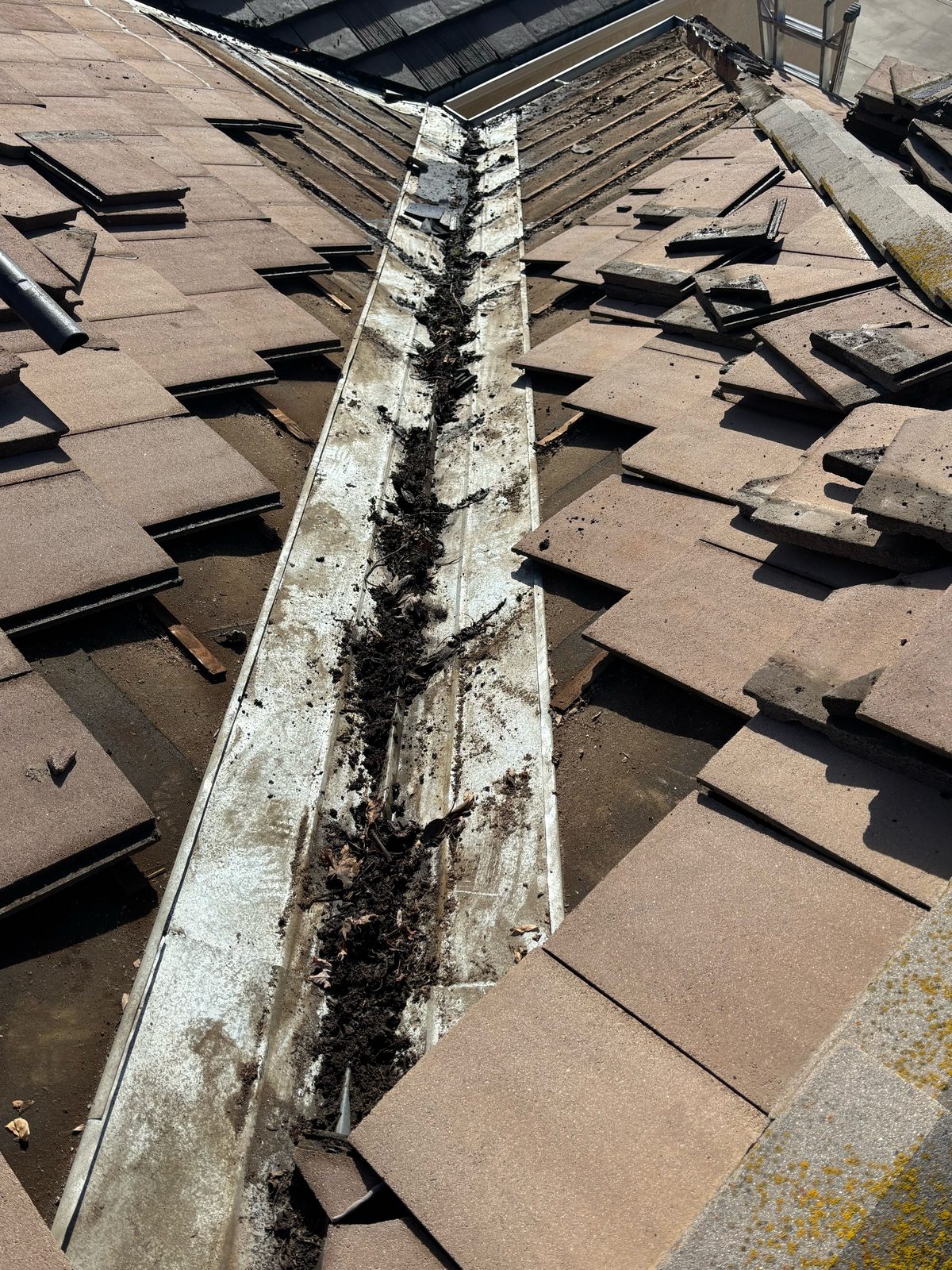
Packed debris in the metal valley—leaves, needles, and dirt that can hold water against the underlayment and deck.
What clogged debris looks like
Opening a tile valley often starts with the metal channel itself. On this Ripon job, the valley flashing held a continuous line of dark, damp organic debris—packed dirt, needles, and leaf matter in the drainage path.
Tiles near the valley had been lifted or stacked so the battens and aging underlayment showed. That is a normal mid-repair view: the surface still looks like a tile roof, but the valley is no longer shedding cleanly. Debris is not cosmetic—it is a moisture dam. If gutters at the valley outlet are also loaded, stormwater can back into the roof edge. Clearing alone is not always enough once the deck has softened, but clogged debris is one of the clearest early clues that a valley needs a closer look.
Soft deck and rot near the valley and skylight
After tiles and old underlayment came off, the wood told a clearer story. Along the valley line and around a skylight opening, the OSB was darkened and stained—classic signs of prolonged moisture. Soft deck does not always look dramatic from a distance; up close, color change and a soft feel underfoot (for a trained crew) show where water lived longer than the roof could tolerate.
Skylights sit in the weather plane. When a valley drains nearby, weak underlayment or a failed curb detail can feed the same wet path. This Ripon opening showed staining along the valley and at the skylight perimeter—not because every skylight leaks, but because water finds the softest route once the secondary barrier fails. Honest framing: tiles can hide soft deck for a long time. A roof that “looks fine” from the curb is not the same as sound deck under the valley.
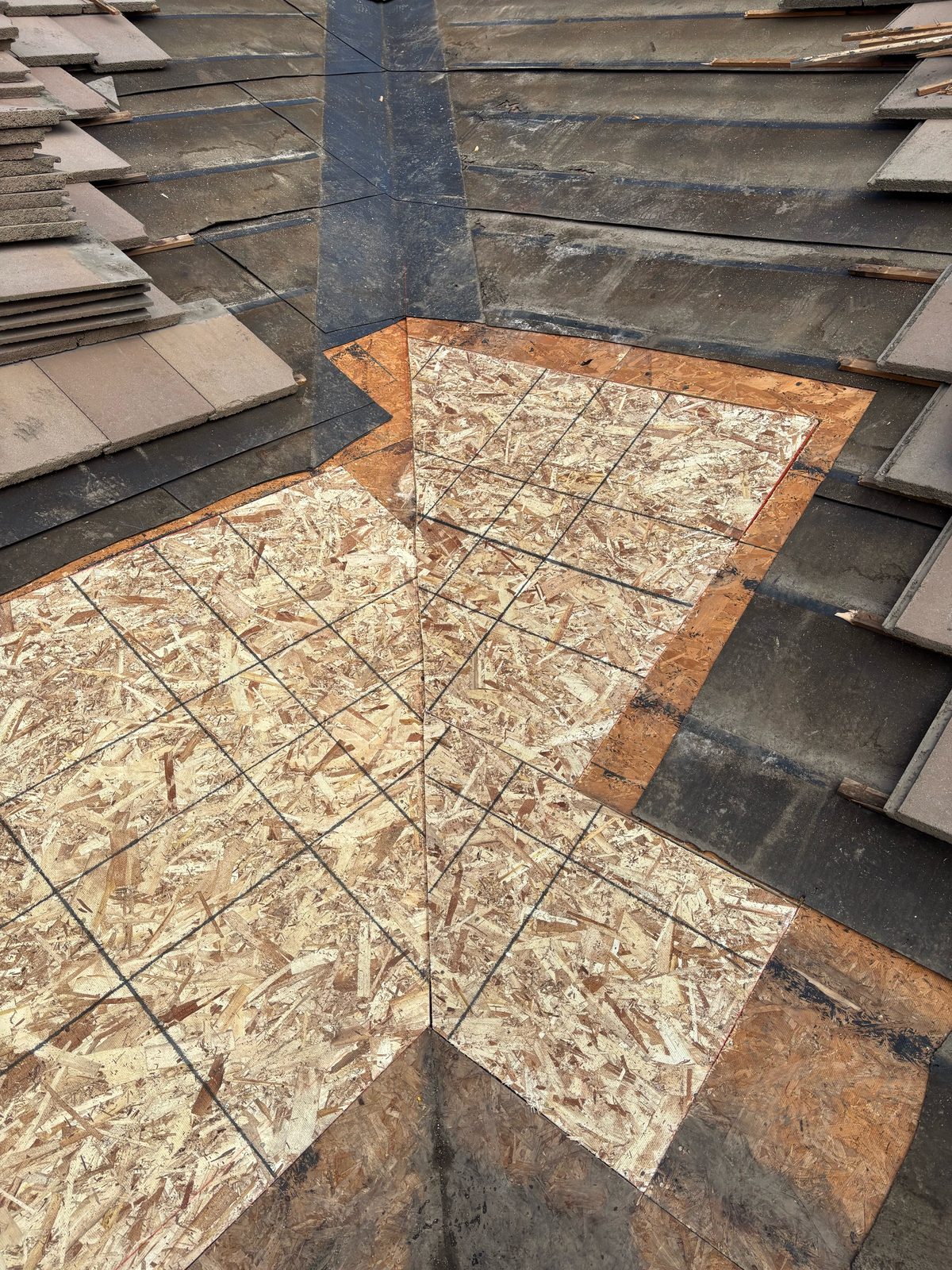
New OSB fitted into the valley after the soft, stained deck was cut out—solid wood before underlayment goes back.
Replacing OSB in the valley
When deck is soft or rotten, the repair is not a tube of caulk under a tile. The damaged sheathing has to come out. On this job, fresh OSB was cut to fit the valley geometry—light new wood against older surrounding deck—so the drainage path sat on solid sheathing again.
That step matters for homeowners deciding repair versus larger work. A valley patch with new OSB can restore a local failure when the rest of the roof still has life. If soft deck is widespread, the conversation shifts. For how we think about that choice in plain language, see Repair or replace? How we decide on a Modesto roof. Local valley and penetration repairs also sit under our roof repair work when the rest of the system can stay.
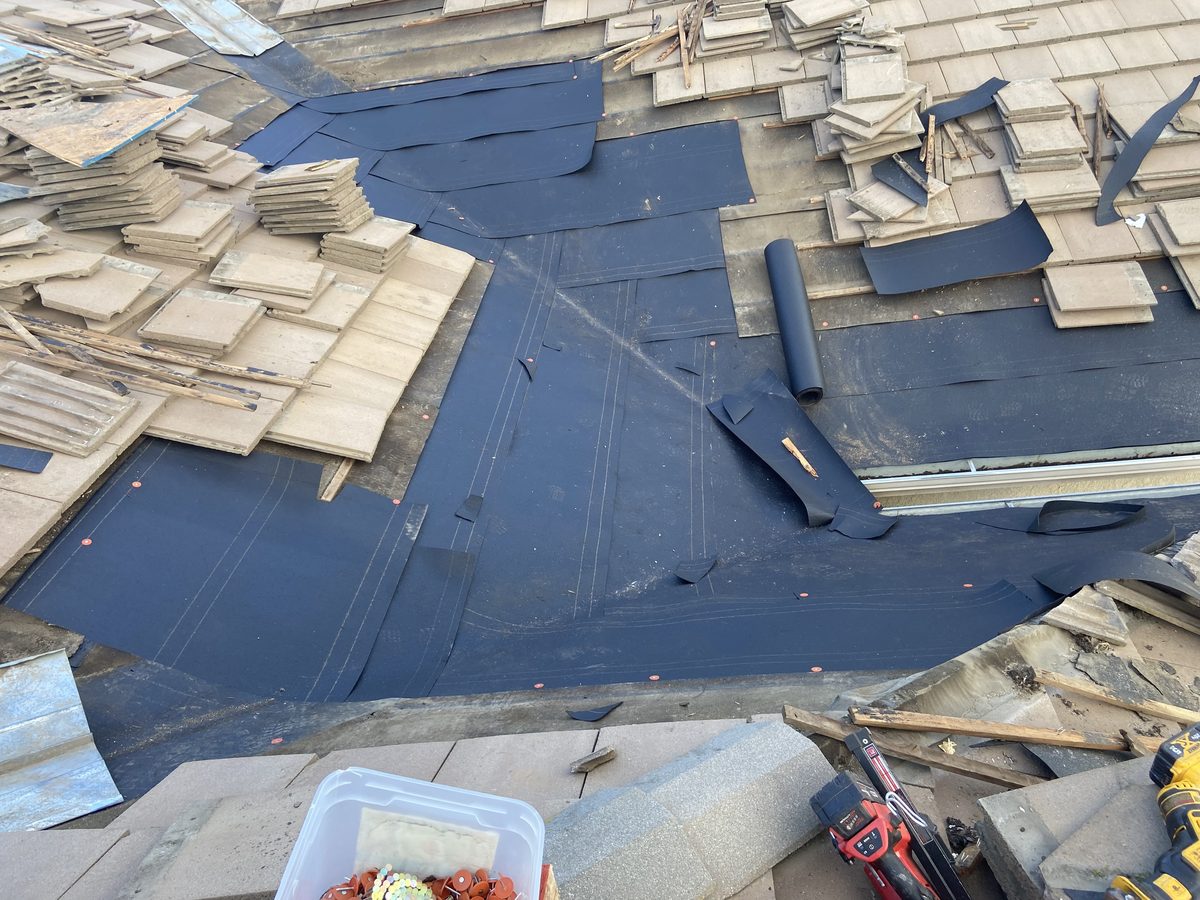
Fresh underlayment through the valley, fastened with plastic cap nails, ready for metal detailing and tile return.
New underlayment and cap nails before tiles return
Solid wood is only half the weather story. Before tiles go back, the valley needs a continuous secondary barrier. On this Ripon repair, new black underlayment was run through the valley and fastened with plastic cap nails that hold the sheet flat and reduce tear-through compared with bare nails alone.
Underlayment is not the finished look—tiles and metal detailing still return on top. Skipping that step after an OSB repair leaves new wood open to the same moisture path. For the broader underlayment story, see What's Under Your Shingles? Why Underlayment Matters in Modesto Heat. Other junctions follow the same honesty: water concentrates where planes meet; see Chimney Flashing After a Modesto Summer when flashing is part of the roof.
Safe ground-level signs vs. stay off the roof
Stay off tile roofs unless you are trained for them. Tile is heavy, can crack underfoot, and valleys are slick when wet. From the ground or a second-story window you can often note:
- Dark streaks or packed debris visible in the open metal valley
- Tiles that look lifted, uneven, or displaced along the valley line
- Staining on fascia or soffit below a valley outlet
- After storms: ceiling spots under a valley run or near a skylight
- Gutters at valley ends that stay clogged after every wind event
What you should not do: walk the valley to “check soft spots,” dig debris out from a ladder at an unsafe angle, or seal the channel with random roofing cement as a permanent fix. Tile valley repairs involve height, weight, and a correct rebuild sequence—not a weekend patch that fails at the next real storm.
What an honest inspection looks for
- Debris load and drainage in the metal valley channel
- Condition of tiles, battens, and underlayment at the valley edges
- Soft deck, staining, or prior patch clues once courses are lifted
- Nearby penetrations—skylights, pipes, chimneys—that share the weather plane
- Gutter and downspout capacity at the valley outlet
- Whether a local OSB + underlayment repair is enough, or whether wider deck failure points to larger work
- Photos of the opened detail—before any sales pitch—so homeowners see clogged channel vs. soft wood vs. new deck vs. new underlayment
That documentation is the difference between “tiles look fine” and a repair plan grounded in what is actually under them.
Before fall storms: a practical checklist
- Look from the ground for packed valley debris and displaced tiles
- Do not treat caulk or cement in the valley as a permanent system
- Ask whether soft deck will be replaced with solid sheathing—not covered over
- Ask how underlayment will be detailed through the valley before tiles return
- Keep skylights, chimneys, and other penetrations in the same conversation
- Use Get a Quick Quote if you want Legend Roofing Company Inc to document a valley in plain language
Tiles can look fine. Valleys still need a real look.
A clogged tile valley can soften the deck while the roof still looks complete from the curb. On this Ripon repair, the sequence was clear: debris in the metal, soft stained OSB near the valley and skylight, new sheathing, then underlayment and cap nails before tile return. If you are in Ripon, Modesto, or elsewhere in the Central Valley and your valleys stay dirty, stained, or suspect after summer heat, Legend Roofing Company Inc can inspect the detail and explain what we find in clear terms.
Legend Roofing Company Inc · 4400 Gomes Rd, Modesto, CA 95357 · CSLB #1067374 · GAF Master Elite