Chimney Flashing After a Modesto Summer: Why This Spot Leaks First
Chimneys concentrate water and heat stress. Here is why Modesto roofs often leak at the chimney first—and what an honest inspection looks for.
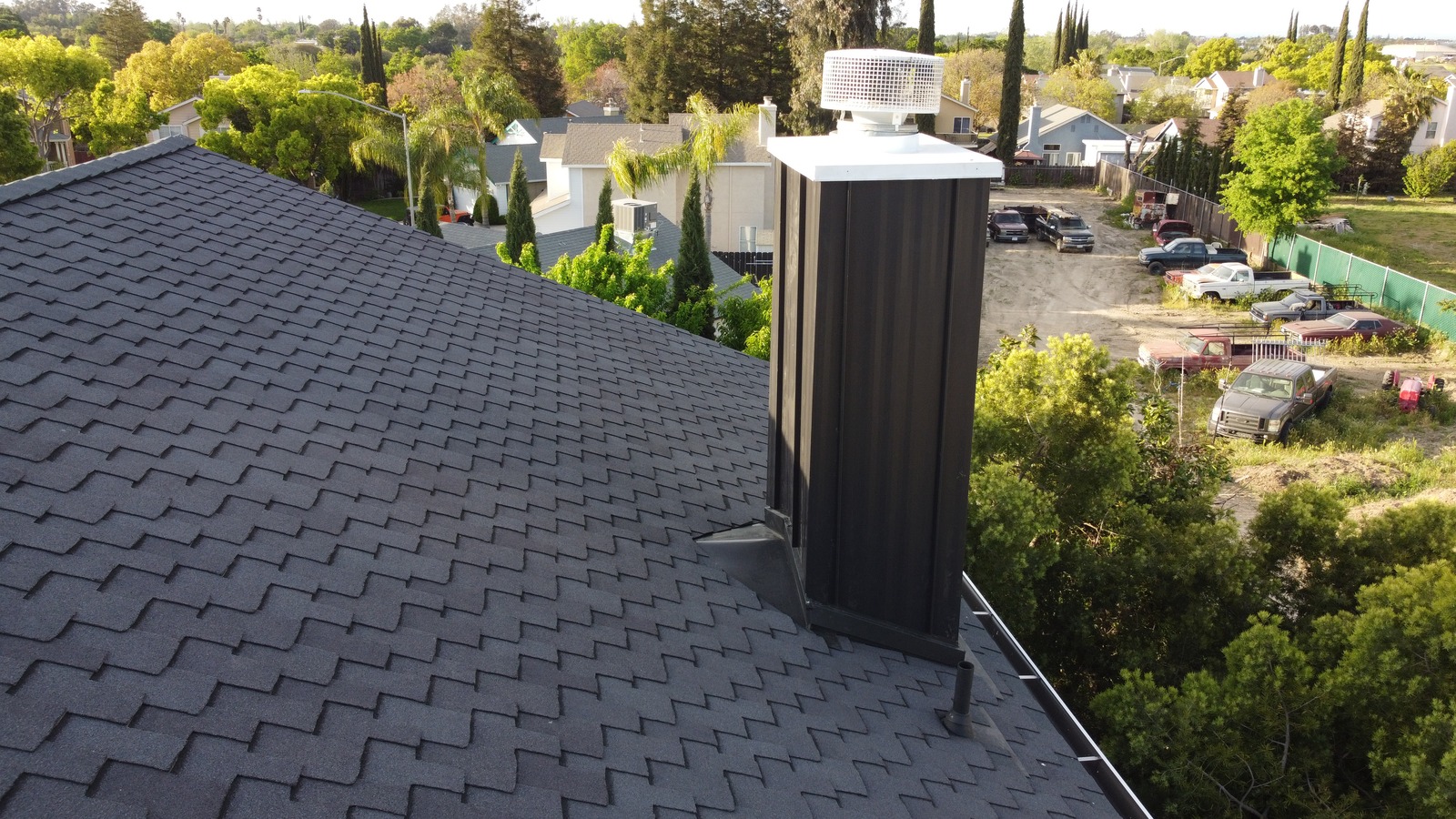
Open shingle fields get the attention, but after a long Central Valley summer the first drip often starts at the chimney. Chimneys concentrate water, heat, and movement, so metal flashing, sealant lines, and nearby wood take more stress than a clean slope.
What chimney flashing actually is
Chimney flashing is a system: step flashing woven into each shingle course, counter-flashing sealed to masonry, apron flashing at the front, and a cricket or saddle when a wide chimney needs water diversion. When metal rusts or pulls away, sealant cracks, or old caulk fails, water finds a path.
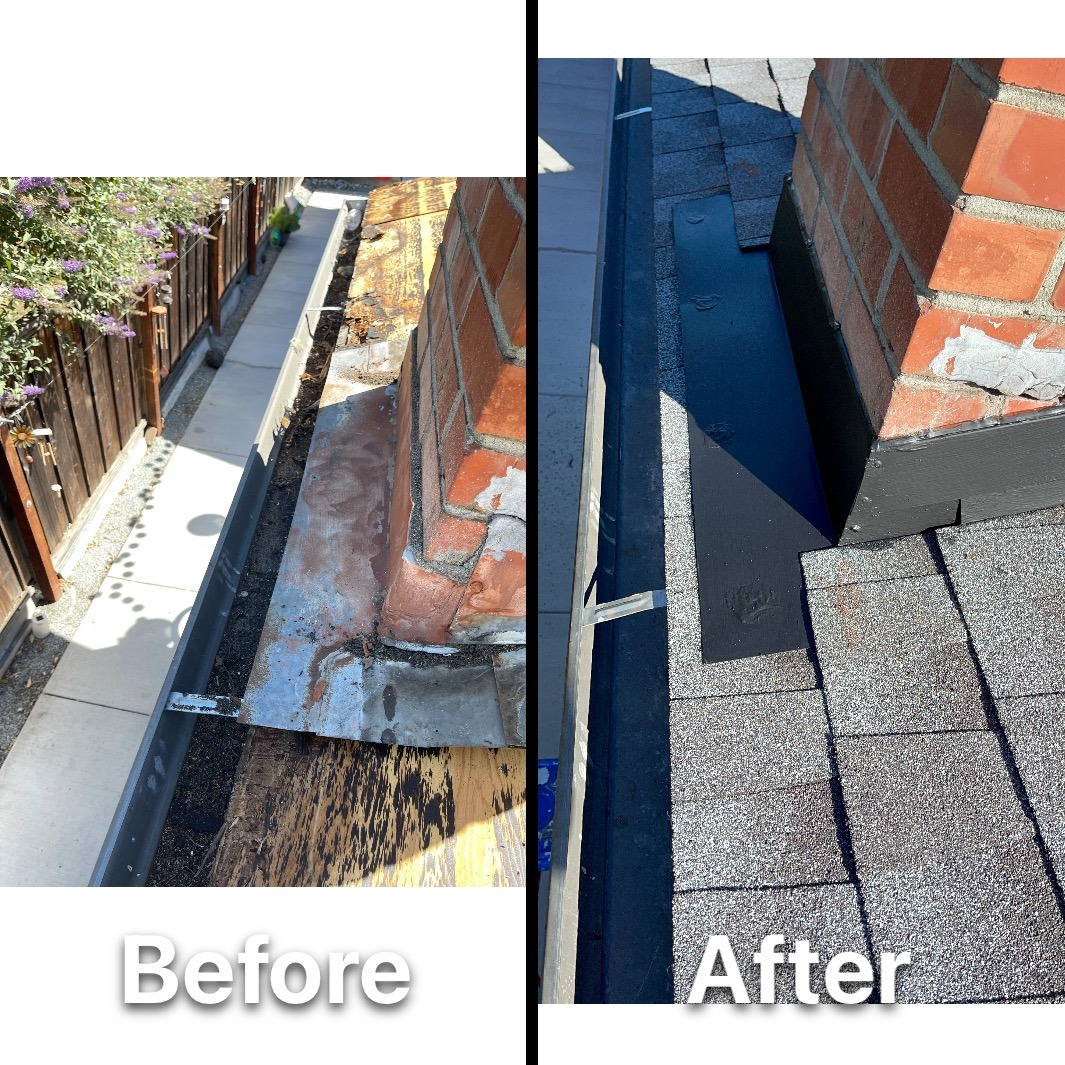
Why Modesto summers expose weak spots
UV and attic heat bake sealant, expand and contract metal, and dry out older roofing cement. The first fall rain then concentrates at the chimney base. Look safely from the ground for rust stains, lifted metal, cracked sealant, curled shingles, or ceiling stains near a fireplace. Do not walk a hot roof to probe soft spots or add caulk as a permanent fix.
When a repair is enough
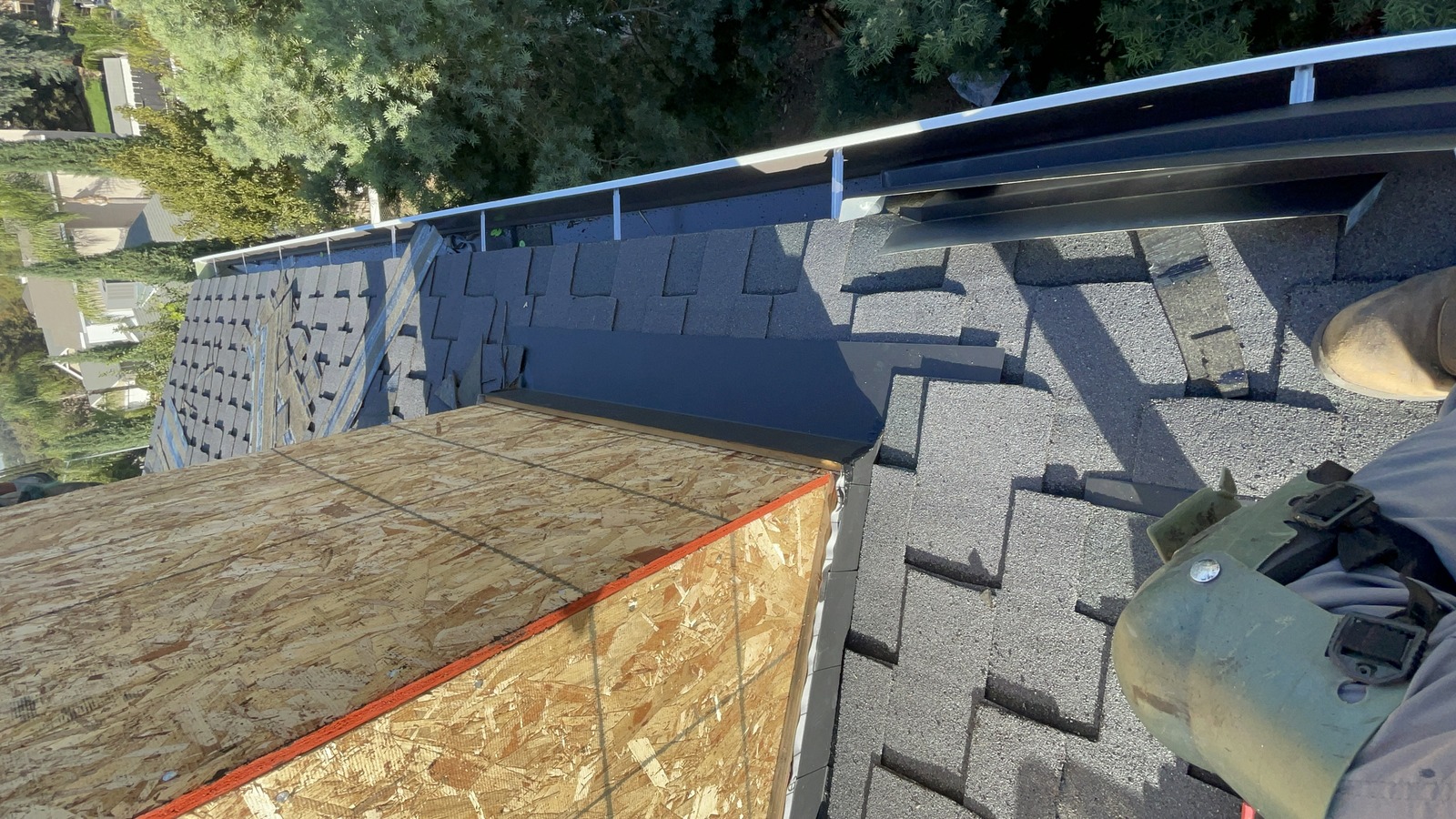
Many chimney leaks are flashing repairs: replace step and counter-flashing correctly, repair local soft deck if found, and reseal to masonry or cladding. Wider work belongs in the conversation when sheathing, framing, or the chase is damaged. The goal is the smallest honest scope that stops water—not a caulk-only patch and not a default full rebuild.
Before the next storm
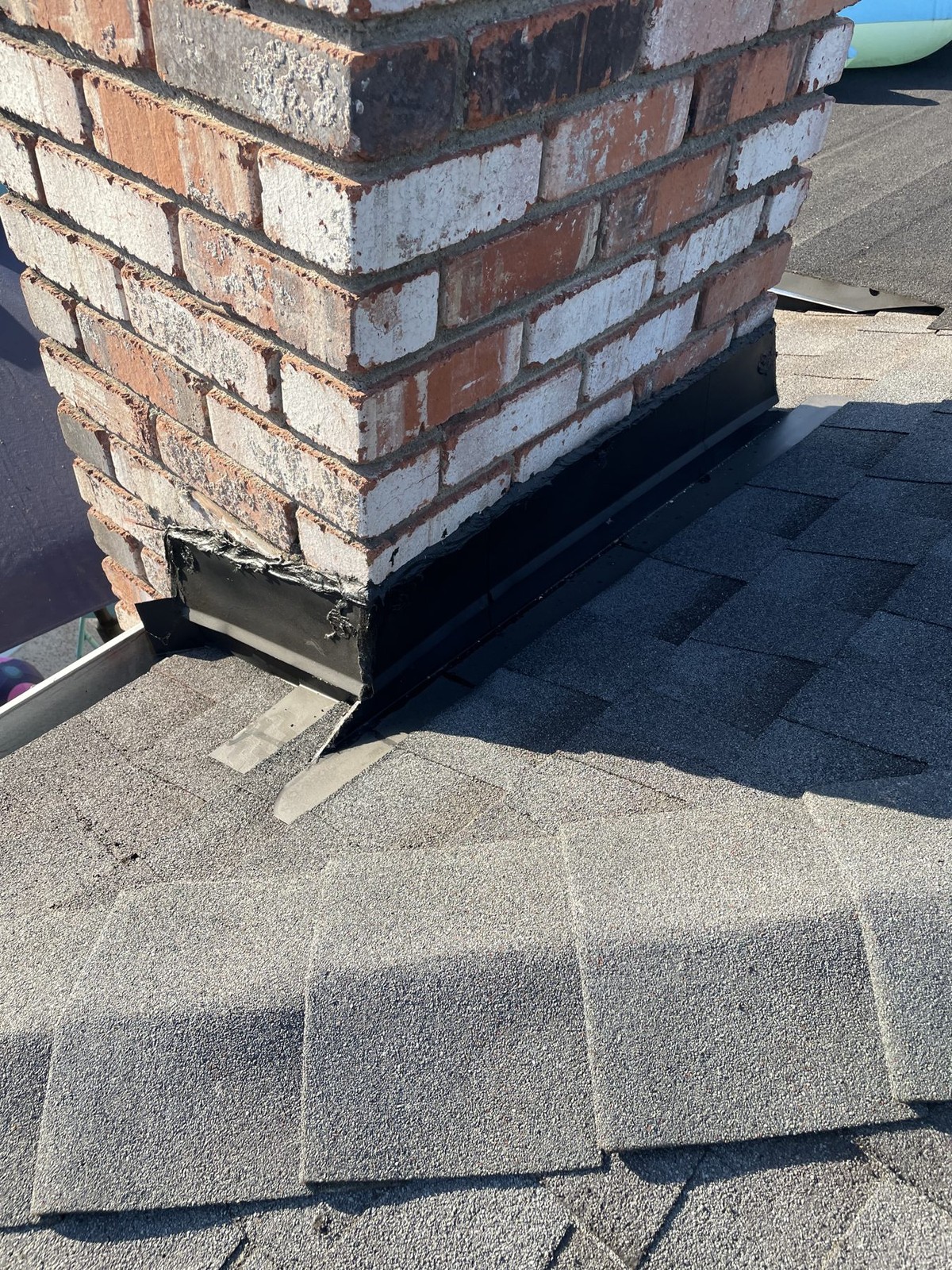
Ask whether step flashing and counter-flashing will be replaced as a system, how soft deck will be handled, and whether boots, valleys, and underlayment were checked too. Get a Quick Quote if you want Legend Roofing Company Inc to document the detail in plain language.
Get a Quick Quote Call (209) 404-6110
Legend Roofing Company Inc · Modesto, CA · CSLB #1067374 · GAF Master Elite