
Tear-Off or Roof-Over? Why We Strip a Riverbank Roof Down to the Deck
A roof-over can look cheaper on paper, but it hides the deck and stacks weight on the framing. Here is how a full tear-off works on a real Riverbank re-roof, and when a roof-over is even allowed.
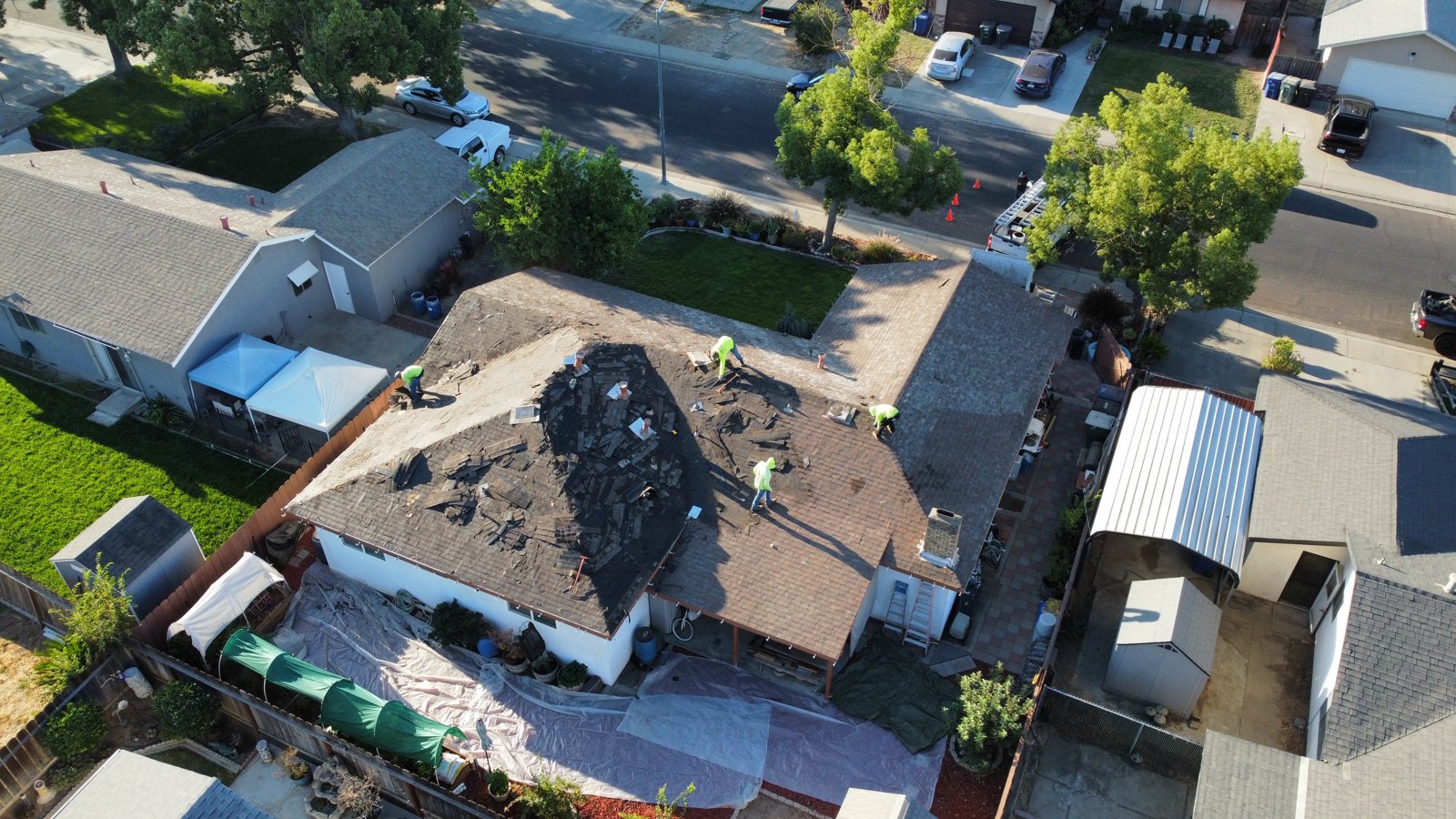
Tear-off day in Riverbank: the old shingles come off in sections while tarps protect the yard, beds and patio below.
When an asphalt shingle roof wears out, one of the first questions homeowners hear is whether new shingles can simply go on top of the old ones. That shortcut is called a roof-over (also an overlay or re-cover). The alternative is a full tear-off: removing the old roofing down to the deck and building the new roof from there.
This post walks through why Legend Roofing Company Inc recommends a tear-off on most Central Valley re-roofs, using a real job in Riverbank that went from worn shingles to GAF Timberline architectural shingles in Hickory. It’s for homeowners in Riverbank, Modesto, Oakdale, Ceres, Turlock and nearby towns who are comparing quotes and want to know what they’re actually paying for.
What a roof-over skips
A roof-over saves the labor and disposal of removing the old layer. What it also skips is everything under that layer:
- The deck stays hidden. Soft or delaminated sheathing, old leak damage and loose boards can’t be found, let alone fixed, while the old shingles are still on. (Here’s what soft spots in roof decking mean.)
- The new shingles sit on a bumpy base. Curled or cupped old shingles telegraph through the new ones, and nails have to pass through two layers to reach the deck.
- Edges and flashings get compromised. Drip edge, valleys, wall flashing and pipe boots work best when they’re installed against the deck, not layered over old material. See drip edge and ice and water shield at the eaves.
- The roof gets heavier. A second layer adds weight to framing that was sized for one.
- Heat stays trapped. In a Modesto-area summer, two layers of dark roofing hold heat against each other, which is hard on the new shingles.
When a roof-over isn’t even an option
California’s residential code limits re-covering. In general, a new layer isn’t allowed over a roof that already has two layers, or over a roof that’s water-soaked or deteriorated, and some existing roof types can’t be covered at all. Your local building department has the final word for your address, and a good contractor should tell you which situation your roof is in before quoting.
Manufacturer warranty terms can also depend on how the roof was installed, so if someone proposes a roof-over, ask how it affects the warranty on the shingle being quoted.
What a tear-off looks like on a real job
1. Protect the property first. Before anything comes off, tarps go down over the yard, planting beds and patio. In the featured photo you can see them covering the ground on both sides of this Riverbank home.
2. Strip in sections. The crew removes the old shingles and underlayment plane by plane and gets debris off the roof as they go, so the house isn’t left open longer than needed.
3. Check the deck while it’s open. With the old layer off, the sheathing is fully visible. Damaged boards get replaced, loose areas get re-fastened, and gaps get addressed before anything new goes on. On some older Central Valley homes we find spaced boards instead of a solid deck; here’s what we did on a Turlock roof with skip sheathing.
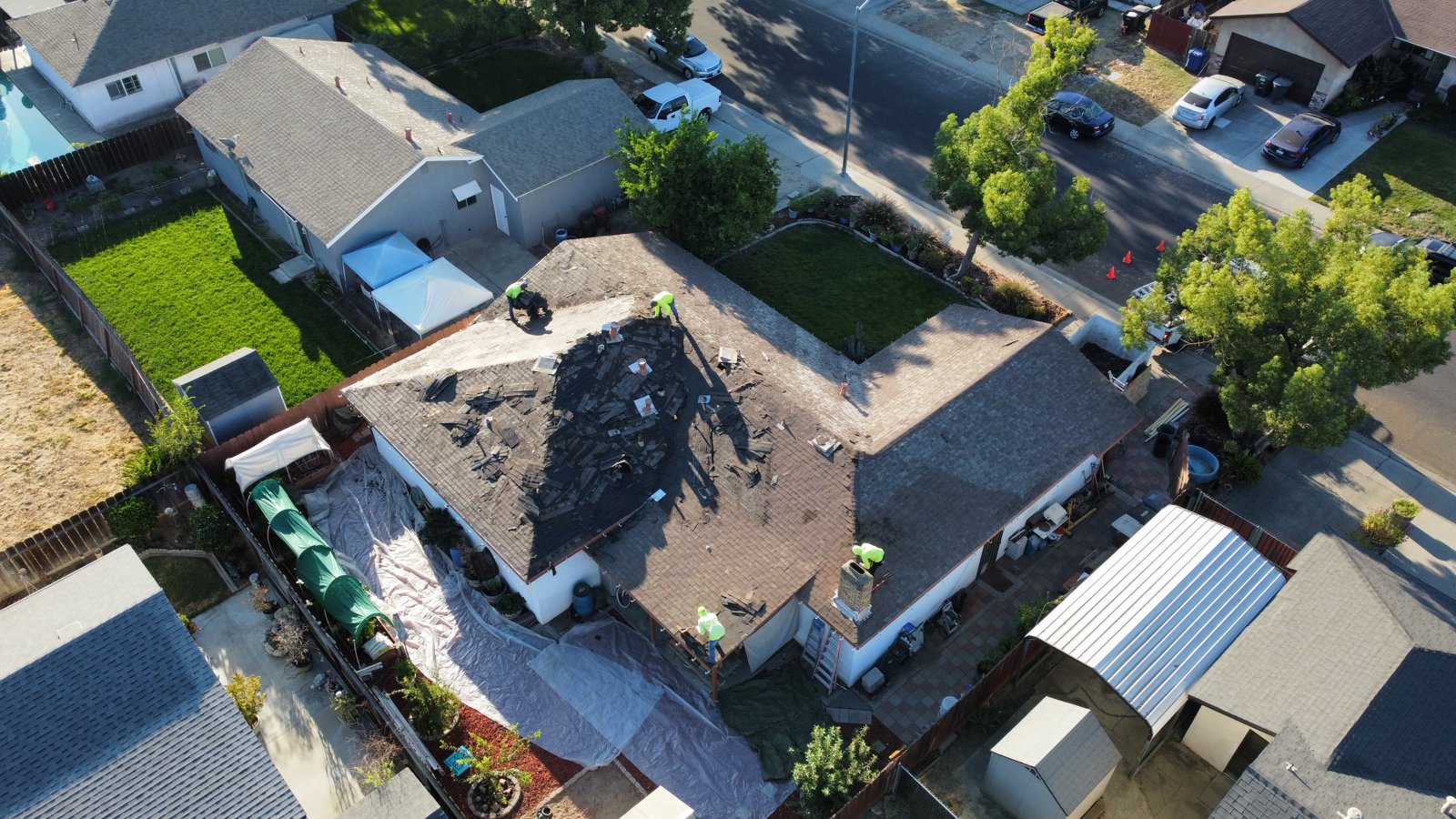
With the old layer gone, the deck is out in the open, which is the only time anyone can really check it.
4. Build the new system from the deck up. Fresh underlayment, new metal at the edges, flashings detailed for the new shingles, attic ventilation sorted out (more in roof vents before fall), then shingles and ridge cap. Our GAF shingle replacement walkthrough covers those steps in more detail.
5. Clean up. Tarps come up, the yard gets swept for nails and debris, and the finished roof is checked from the ground and the air. The last photo shows this home finished in Timberline Hickory.
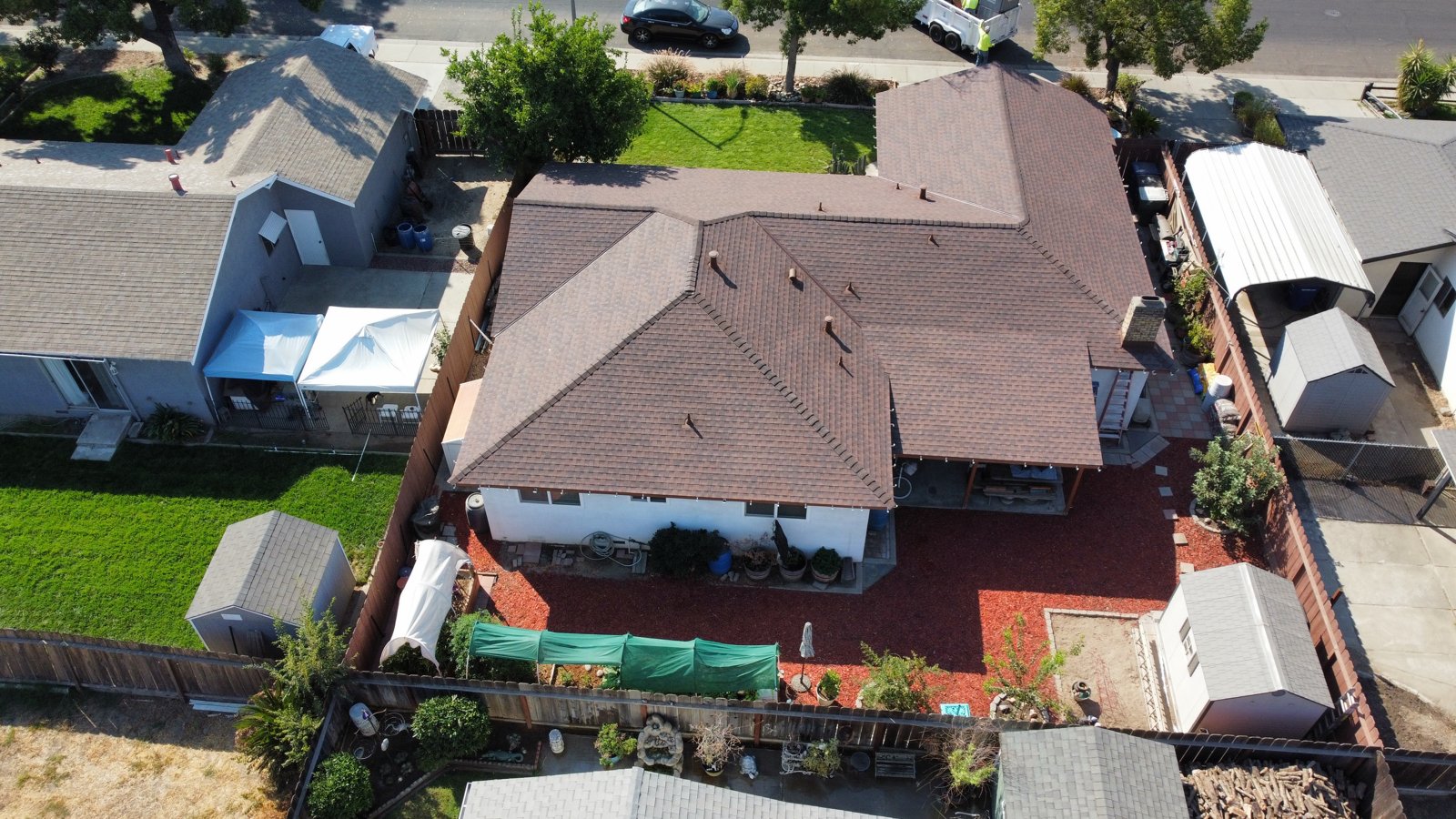
The same home finished in GAF Timberline Hickory over a checked deck and fresh underlayment.
Questions to ask any roofer you’re comparing
- Is your quote a full tear-off or a roof-over?
- How many layers are on my roof now, and does code allow another one?
- What happens if you find damaged decking, and how is that priced?
- How will you protect my yard, plants and patio during tear-off?
- Are drip edge, underlayment, flashings and ventilation included, or extra?
Soft next step
If your roof in Riverbank, Modesto or anywhere in the Central Valley is due for replacement and you’re weighing a tear-off against a roof-over, Get a Quick Quote via Contact or call (669) 294-1760. We’ll tell you how many layers you have and what we’d expect to find underneath. Learn more about roof replacement in Modesto or read repair or replace? if you’re not sure you need a new roof yet.
Legend Roofing Company Inc · 4400 Gomes Rd, Modesto, CA 95357 · (669) 294-1760 · CSLB #1067374 · GAF Master Elite.