
Ice & Water Shield Before Fall Rain: Why Modesto Roof Edges Matter
After months of Central Valley heat, the first Modesto fall storms hit roof eaves and edges hardest. Here is why self-adhered ice-and-water membrane (StormGuard-style) at those edges matters—and how it works with field underlayment, not instead of it.
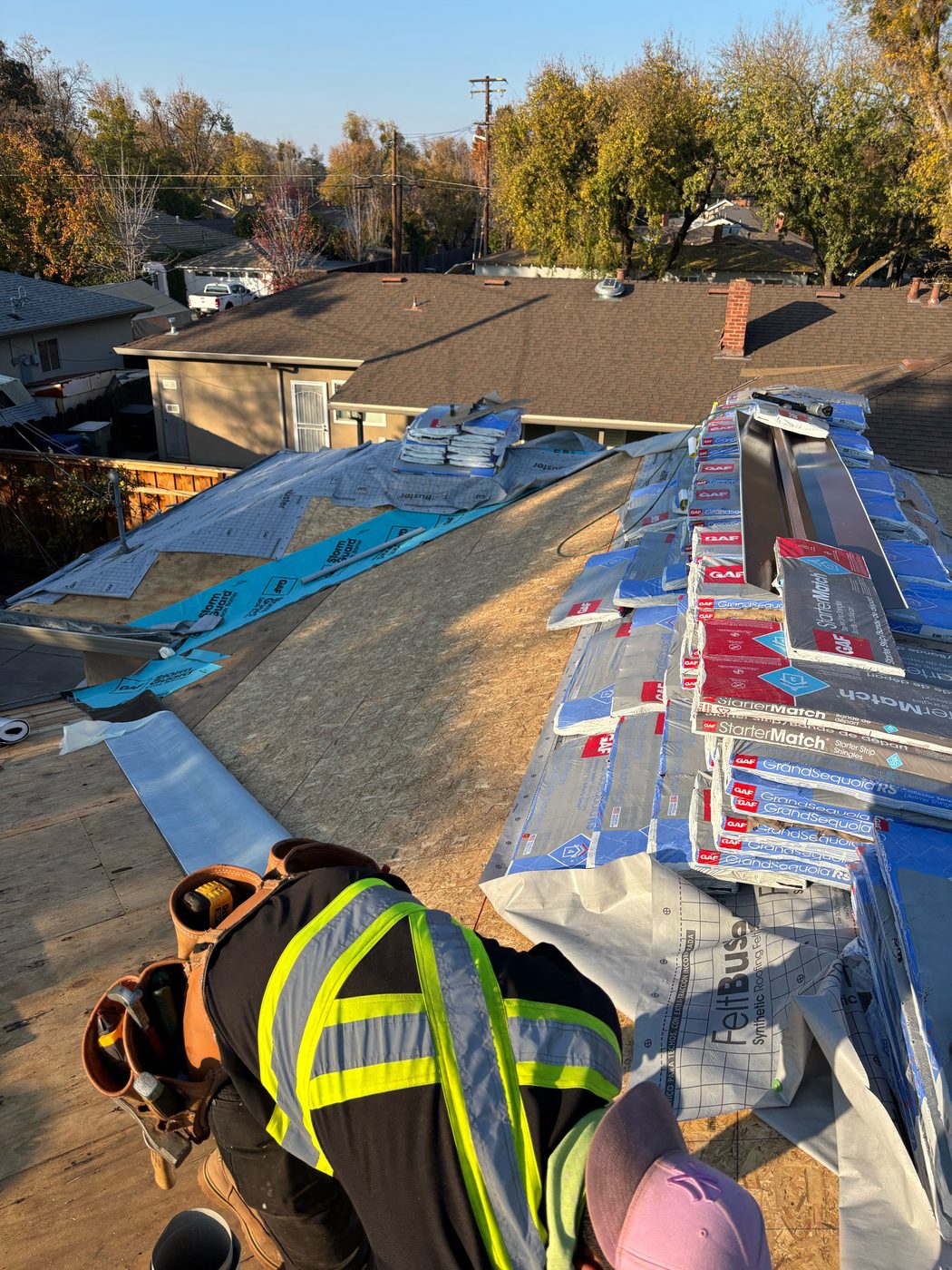
Blue GAF StormGuard leak barrier at the edge with FeltBuster across the fieldGrand Sequoia and StarterMatch staged on a Modesto dry-in.
After a long Central Valley dry season, the first Modesto fall storms do not test a roof evenly. Wind-driven rain and runoff hit eaves, rakes, and other high-risk edges firstthe same perimeter where water can work under shingle courses if the backup layer is thin or missing. That is why a self-adhered ice-and-water-style membrane (products such as GAF StormGuard on jobs we document) belongs at those edgesnot as a substitute for field underlayment, but as the tougher seal where the roof meets weather and gutters.
This guide stays at the perimeter: eaves, rakes, and edge dry-in. It is distinct from field underlayment education (synthetic felt across the open planes) and from asphalt-shingle valley metal plus dry-in where two slopes meet.
What ice & water / StormGuard-style membrane is
Ice and water shield is a common name for a self-adhered waterproofing membrane used under shingles at vulnerable roof zones. In manufacturer language you will also see leak barrier. On Modesto replacements we photograph, a bright blue GAF StormGuard sheet is often the visible edge product: sticky asphalt-backed film that bonds to the deck (or approved substrate) and seals around fasteners better than a loose felt or synthetic felt alone.
It is not a finished roof surface. Shingles, starter strips, and drip edge still form the weather face. The membrane is the backup at the edge—especially useful when wind pushes rain upslope under the first courses, or when water sits longer at the eave before it reaches the gutter.
Why eaves and edges take the first storm hit
Central Valley summers leave months with little meaningful rain. Dust, granules, and tree litter settle at drip edges and gutter lines. Shingle seal strips and edge metal see heat and UV. When the first real storm returns to Modesto, Ceres, Riverbank, or Oakdale, the perimeter sees:
- Wind-driven rain at the eave and rake, where airflow can lift or drive water under course edges
- Concentrated runoff that slows at the eave before dropping into the gutter
- Debris and overflow that can hold moisture against fascia and the lower courses if gutters are not ready
Open field slopes matter too—but the edge is where a thin or missing backup layer shows up first as stained fascia, soft deck at the overhang, or interior dampness near exterior walls. Valleys concentrate water in the crease; edges take the first sheet of storm water leaving the roof. Different detail, same season urgency.
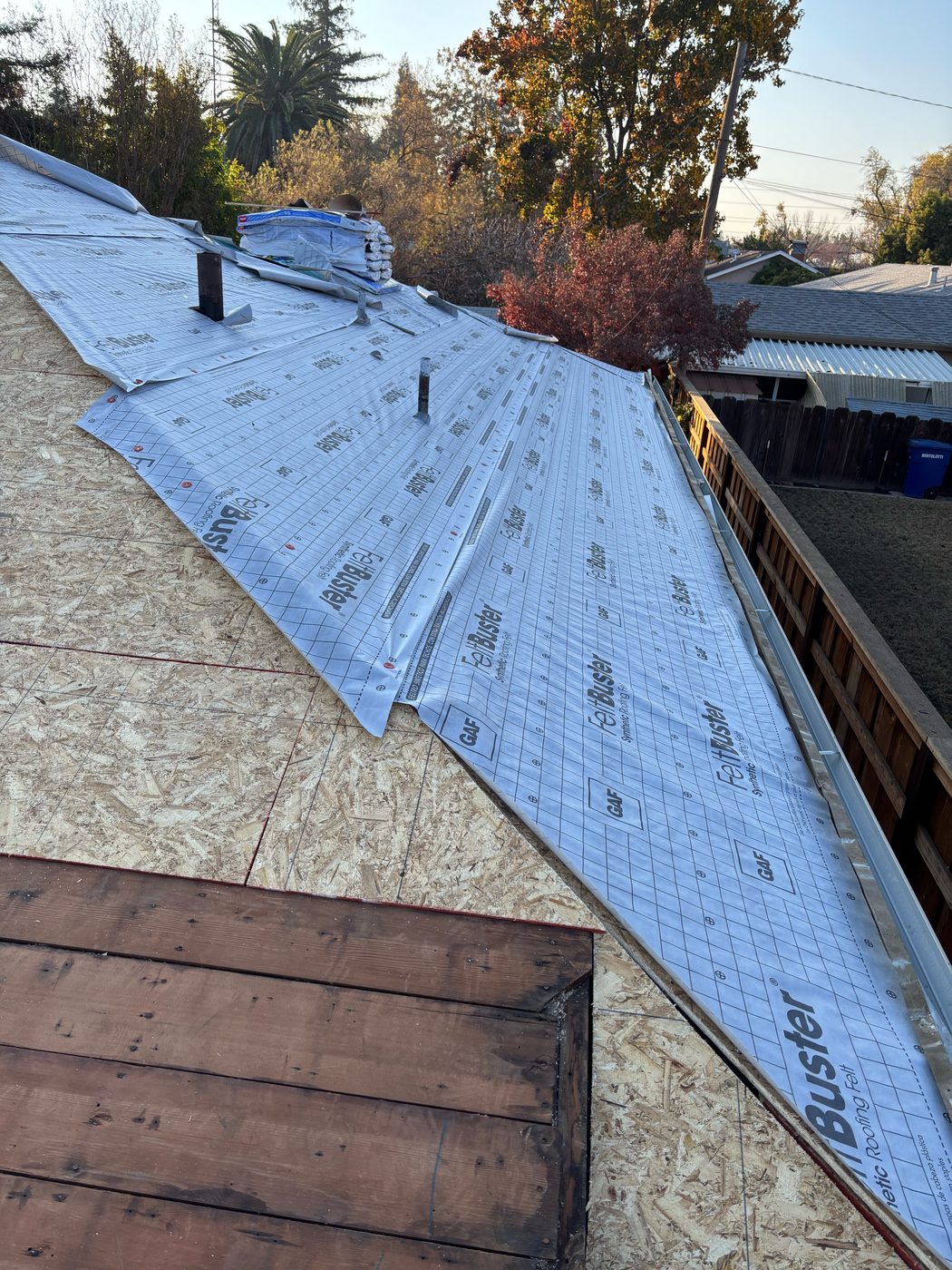
Field underlayment meets the metal drip edge—FeltBuster covers the plane while the perimeter edge stays ready for the weather layer stack.
How it works with field underlayment (not a FeltBuster replacement)
Think of the dry-in stack as layers with different jobs:
- Field underlayment (often a synthetic felt such as GAF FeltBuster on Modesto jobs we document) covers the open planes. It sheds water during install and backs the shingle field.
- Ice-and-water / StormGuard-style membrane reinforces eaves, rakes, and other high-risk edges (and sometimes other critical details) with a self-adhered seal.
- Drip edge, starter, and shingles complete the weather surface that homeowners see from the yard.
StormGuard-style edge membrane does not replace FeltBuster across the field. On a documented Modesto Grand Sequoia dry-in, blue StormGuard sits at the edge while FeltBuster covers the slope toward the drip edge—two products, one system. For why field underlayment still matters after wood and flashings are right, see What's Under Your Shingles? Why Underlayment Matters in Modesto Heat. For where two slopes meet and metal valley dry-in carries concentrated flow, see Roof Valleys Before Fall Rain.
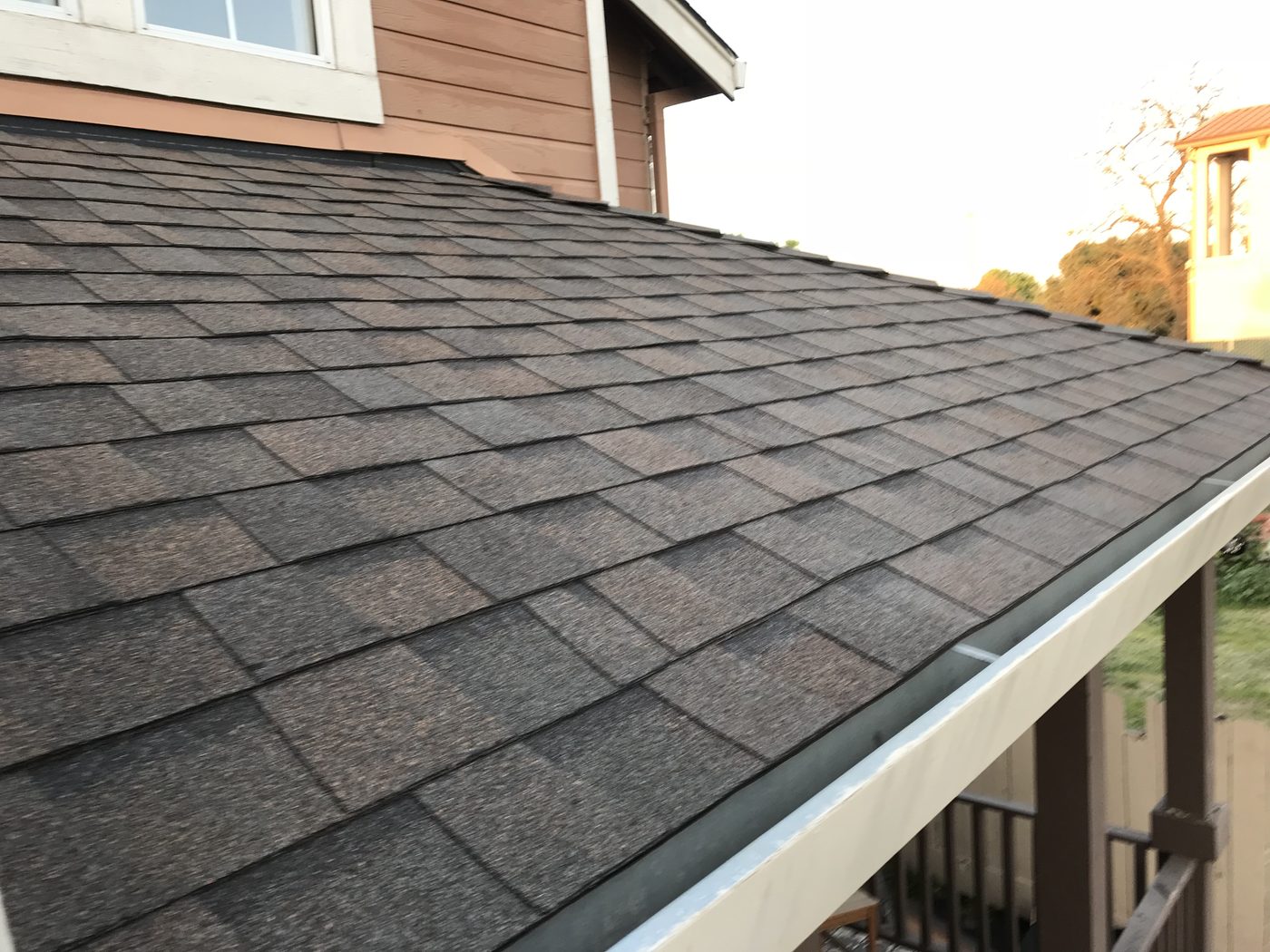
From the ground, the finished eave looks like shingles, drip edge, and gutter—ice-and-water membrane lives under those first courses where wind-driven rain hits first.
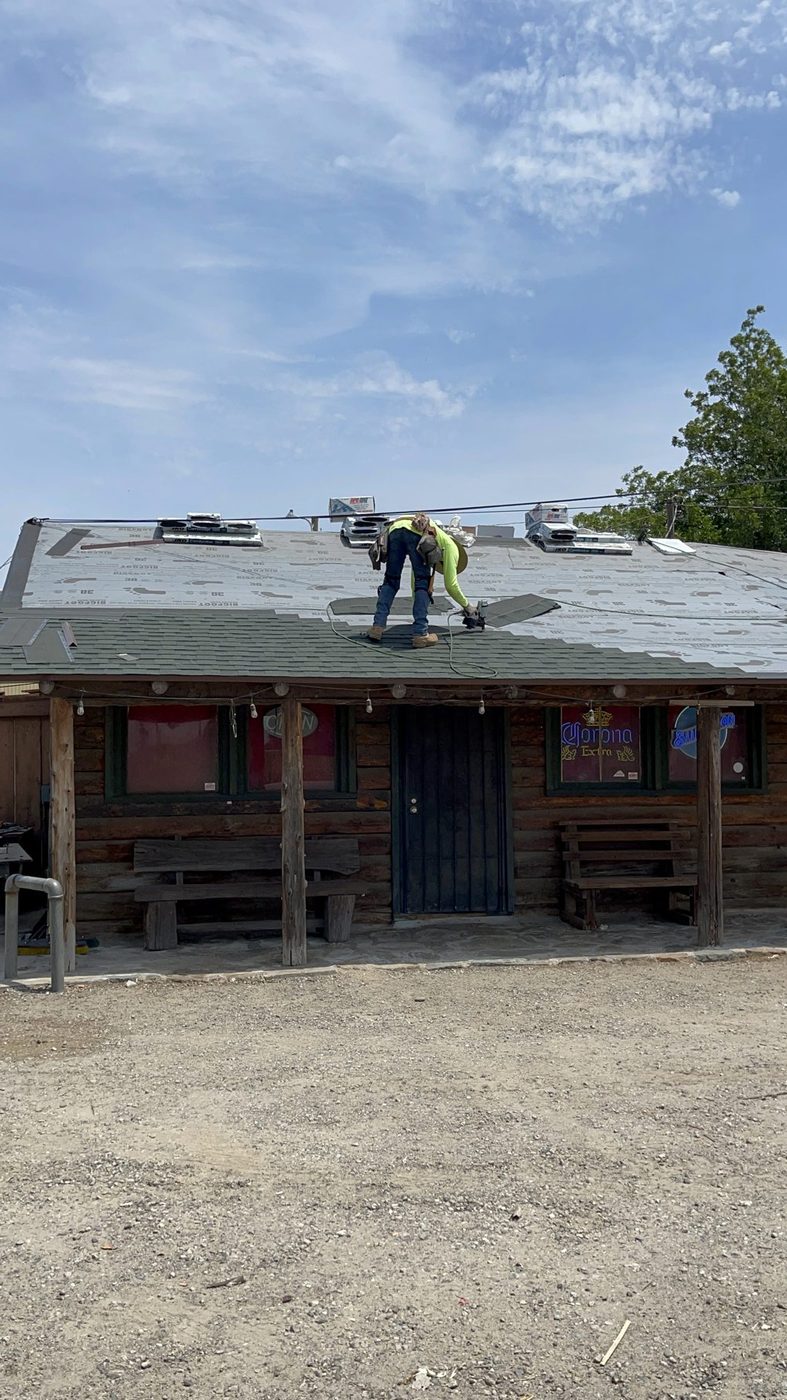
Shingle courses starting at the eave over FeltBuster—edge membrane and starter details belong under this zone before fall storms.
What Modesto homeowners can safely notice from the ground
Stay off a wet or steep roof unless you are trained and insured. From the yard, binoculars, or clear contractor photos, useful edge cues before fall rain include:
- Stained or soft-looking fascia under the eave after prior storms
- Lifted, curled, or missing shingles in the first few courses above the gutter
- Gaps or daylight at drip edge where metal pulls away from the deck edge
- Gutter overflow trails on siding below the eaves—drainage stress at the same zone ice-and-water is meant to protect
- Interior stains near exterior walls under known eave lines after wind-driven rain
You usually will not see StormGuard from the street once shingles are onthat is normal. What you can ask for, when a contractor opens an edge, are photos of the self-adhered membrane under the starter courses. Gutters and downspouts that receive eave discharge still matter as the exit path—see Gutters After a Central Valley Summer.
Repair vs when edges get opened in a larger scope
Many edge problems are local: renew drip edge, replace tired starter courses, add or replace self-adhered membrane at the eave/rake when that zone is opened, and clear gutters so water can leave. That is often enough when the surrounding field shingles and deck are still serviceable.
The conversation widens when soft deck spreads along the overhang, when multiple eaves and rakes fail together after heat and wind, or when the asphalt system is at end of life and a full dry-in (field underlayment + edge membrane + flashings) is the honest rebuild. Aim for the smallest scope that restores the edge as a system—not caulk-only on the gutter line, and not a default tear-off when an eave rebuild would solve it. See Repair or replace? How we decide on a Modesto roof.
Before the first fall storms: a practical checklist
- Expect eaves and rakes to see wind-driven rain before quiet field slopes—plan inspection attention there
- Ask whether the scope includes self-adhered ice-and-water / leak barrier at edges plus field underlayment—not one instead of the other
- Ask for photos of StormGuard-style membrane when an eave or rake is opened
- Clear safe ground-level debris from gutters so water can leave the roof edge
- Use Get a Quick Quote if you want Legend Roofing Company Inc to document your eaves and edges in clear photos and plain language
Edges take the first storm. The backup layer should match that load.
Self-adhered ice-and-water membrane at eaves and edges gives Modesto roofs a sealed backup where fall rain and wind arrive first. Field underlayment still covers the planes; valleys still need their own metal and dry-in. If you are in Modesto, Ceres, Riverbank, Oakdale, or nearby Central Valley towns, Legend Roofing Company Inc (CSLB #1067374 · GAF Master Elite) can inspect the edge system and explain what we find before the next storm.
Legend Roofing Company Inc · 4400 Gomes Rd, Modesto, CA 95357 · (669) 294-1760 7am5pm daily · CSLB #1067374 GAF Master Elite