
Designer Shingles in Modesto: What Goes Into a GAF Grand Sequoia Roof
Want the look of a wood-shake roof without real wood? Here is how a designer shingle differs from a standard architectural shingle, shown on a real Modesto GAF Grand Sequoia re-roof from fresh deck to installed shingles.
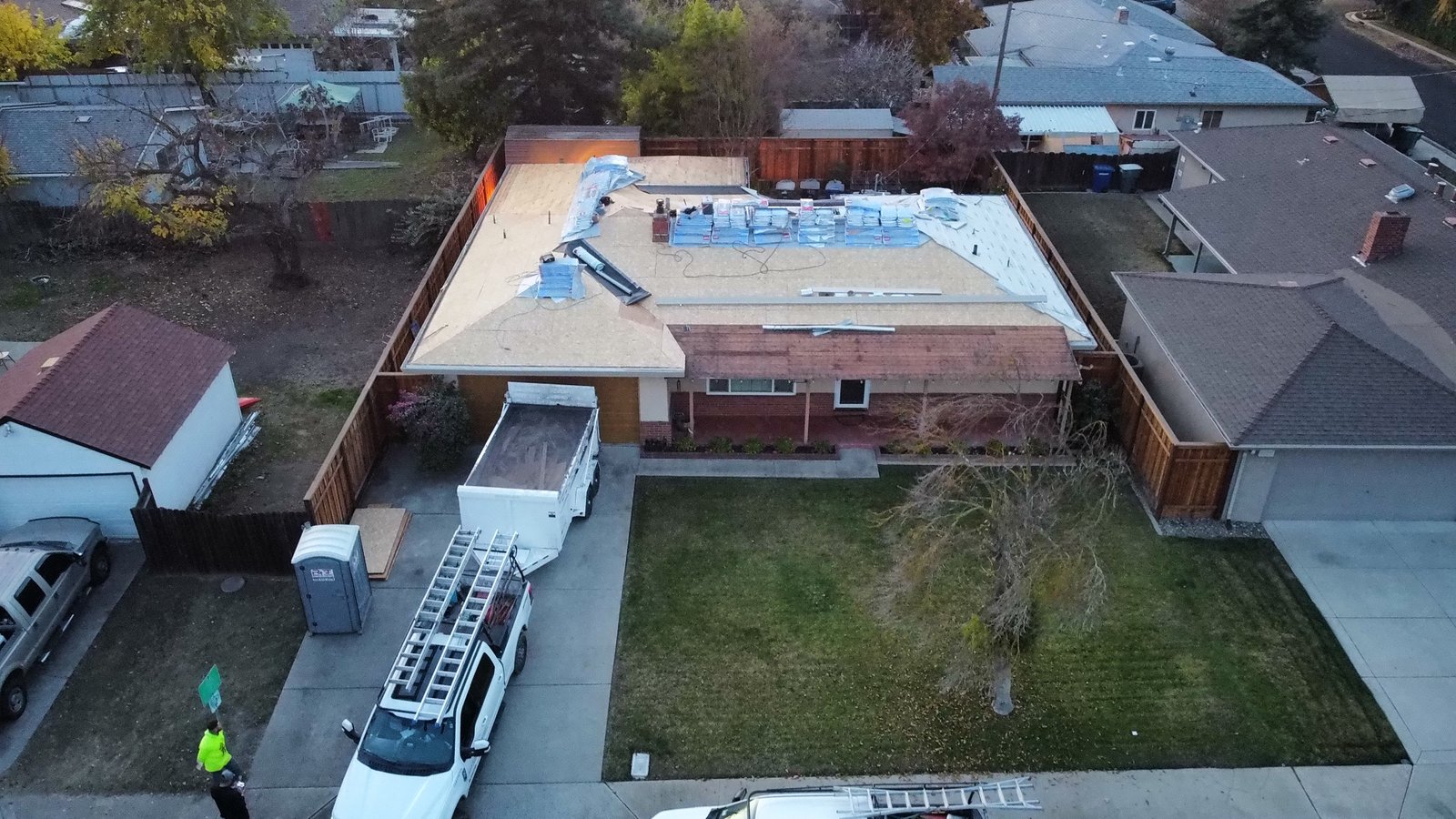
Job setup on a Modesto Grand Sequoia re-roof: dump trailer and ladders in the driveway, a portable restroom for the crew, and shingle bundles staged on the new deck.
Some Central Valley homeowners want a roof with more texture than a standard shingle, something closer to the look of wood shakes, without the upkeep and fire concerns that come with real wood. That’s the job of a designer shingle.
This post walks through what that choice actually means, using a real Legend Roofing Company Inc re-roof in Modesto finished in GAF Grand Sequoia designer shingles. It’s for homeowners in Modesto, Ceres, Turlock, Riverbank, Oakdale and nearby towns who are deciding between a standard architectural shingle and a designer one.
How a designer shingle differs from a standard architectural shingle
Most replacement roofs around Modesto use architectural (dimensional) shingles such as GAF Timberline. Designer shingles are built differently. Going by GAF’s published specifications for Grand Sequoia:
- Oversized, artisan-shaped tabs. GAF designs Grand Sequoia to resemble rugged, hand-split wood shakes, with deeper shadow lines than a typical shingle.
- More material per square. GAF lists 5 bundles and 72 pieces per square with a 5-inch exposure. Standard architectural shingles like Timberline HDZ are typically packaged at 3 bundles per square, so a designer roof puts noticeably more shingle on every section of the roof.
- More fasteners. GAF lists 360 nails per square for Grand Sequoia, which is why nailing has to follow the bundle instructions exactly (more on that in shingle nailing before fall wind).
- Same safety basics. GAF lists a UL 790 Class A fire rating, a Lifetime limited warranty when installed with qualifying GAF accessories, and algae protection, the same family of coverage as its other Lifetime shingles.
GAF positions designer shingles as a fraction of the cost of real slate or wood shake, but they generally cost more than a standard architectural shingle. For most homeowners it comes down to looks: whether that extra texture is worth it on your house.
What it looked like on a real Modesto job
1. Set up the site first. In the featured photo you can see the setup: a dump trailer backed into the driveway for tear-off debris, a ladder truck, a portable restroom for the crew, and new sheet goods staged by the garage. Keeping everything in one area keeps the yard and street usable during the job.
2. Start from a solid deck. With the old roof off, this home’s main roof is covered in fresh OSB sheathing. A heavier, thicker shingle needs a flat, sound, well-fastened deck underneath it, and that’s the only time the deck can be checked. (More on soft spots in roof decking and why we tear off instead of roofing over.)
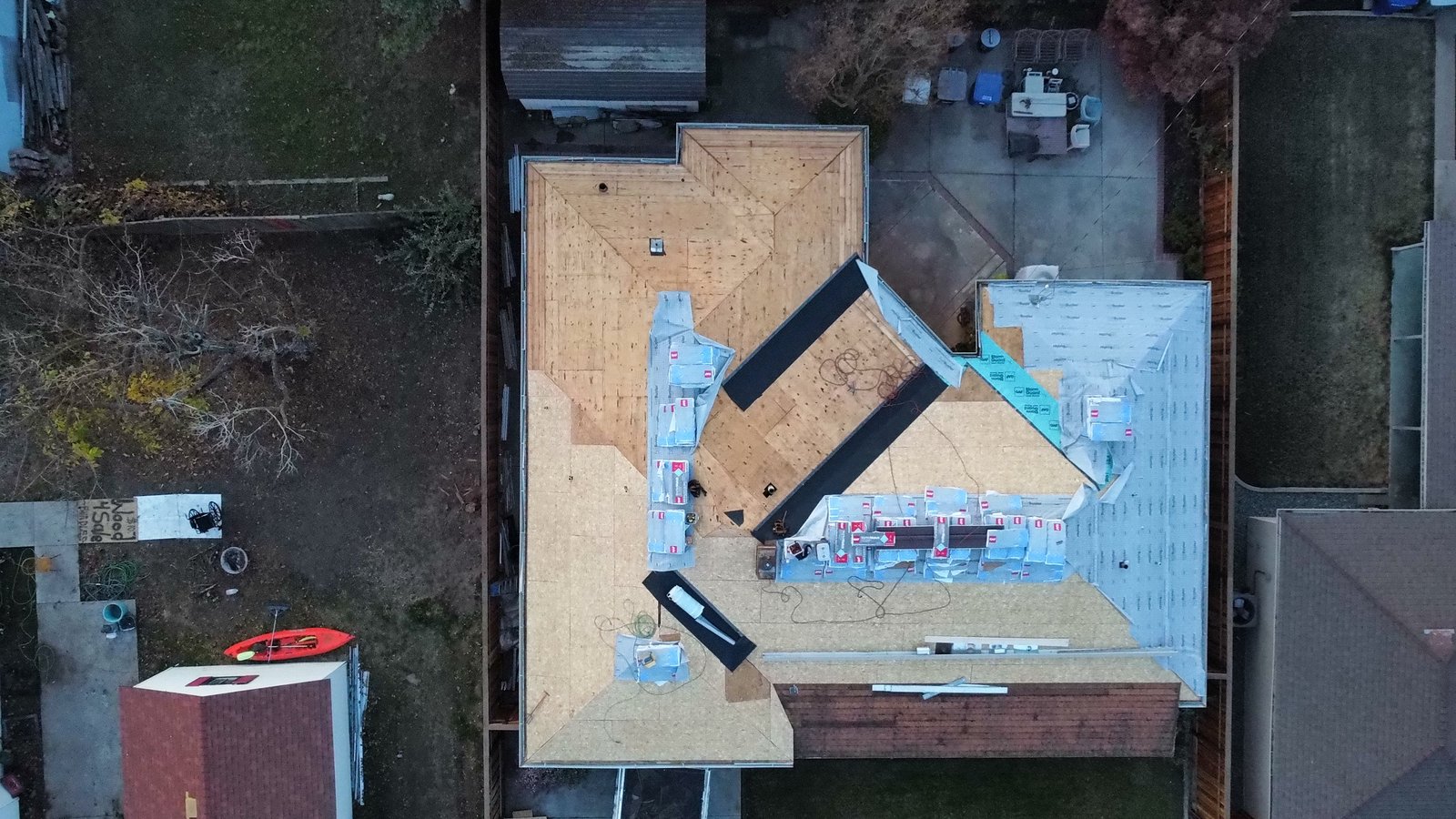
From above: a solid new deck, valleys getting their membrane first, underlayment going on in sections, and bundles spread out along the hips and ridges.
3. Spread the weight out. Five bundles per square adds up quickly. In the top-down photo the bundles are staged in rows along the hips and ridges instead of piled in one spot, which spreads the load and keeps material close to where it’s going.
4. Dry it in before the shingles. The valleys get their membrane first, then synthetic underlayment goes on in sections. That’s the same system we use under any shingle; see roof valleys before fall rain and why underlayment matters in Modesto heat.
5. Install to the bundle instructions. Grand Sequoia has its own exposure, offset and nailing pattern, printed inside every bundle wrapper. The pipe vents are flashed as the courses come up around them, and GAF pairs Grand Sequoia with its TimberTex or TimberCrest hip and ridge caps for the finish. Here’s why ridge caps matter.
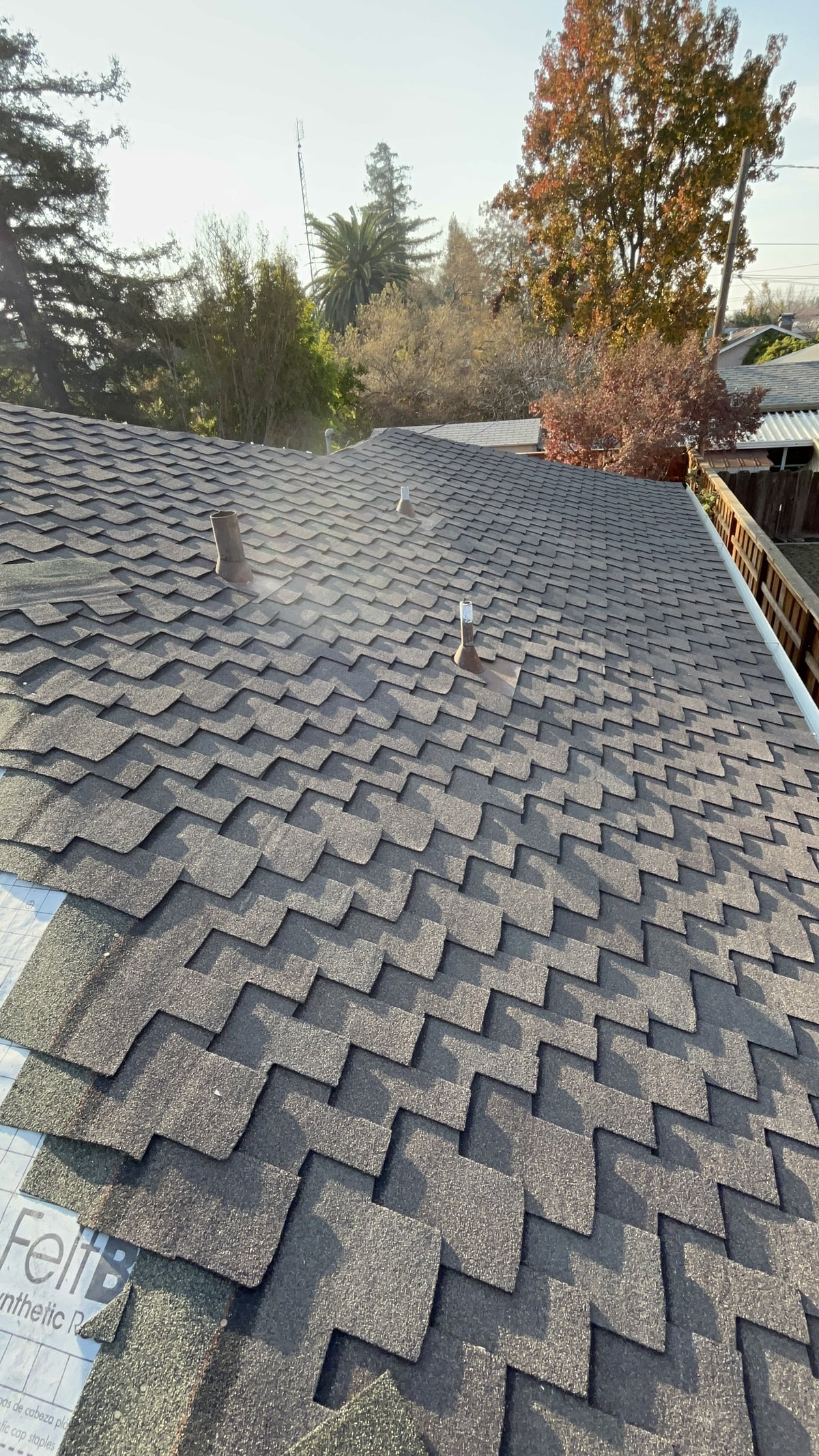
Grand Sequoia going on over FeltBuster synthetic underlayment. The oversized, uneven tabs are what give it the shake-style shadow lines.
Questions to ask before you choose a designer shingle
- Can I see the designer shingle and a standard architectural shingle side by side on a quote?
- Is my roof deck in shape for a heavier shingle, and how is deck repair priced if you find damage?
- Which color works best for my house and for Central Valley sun?
- Which GAF accessories are included, and does the package qualify for the Lifetime limited warranty?
- Does my HOA have rules on roof style or color?
Soft next step
If you’re weighing a shake-look designer shingle against a standard architectural shingle for your home in Modesto or anywhere in the Central Valley, Get a Quick Quote via Contact or call (669) 294-1760. We’re happy to quote both options so you can compare. Learn more about roof replacement in Modesto or read our GAF shingle replacement walkthrough. Product details come from GAF’s Grand Sequoia page.
Legend Roofing Company Inc · 4400 Gomes Rd, Modesto, CA 95357 · (669) 294-1760 · CSLB #1067374 · GAF Master Elite.