 Blog Contact Call (669) 294-1760
Ridge Caps on a Modesto Roof Replacement: Why That Last Detail Matters
Field shingles cover the slopes. Ridge caps finish the peak—and they matter when Central Valley heat and the first fall rain arrive.
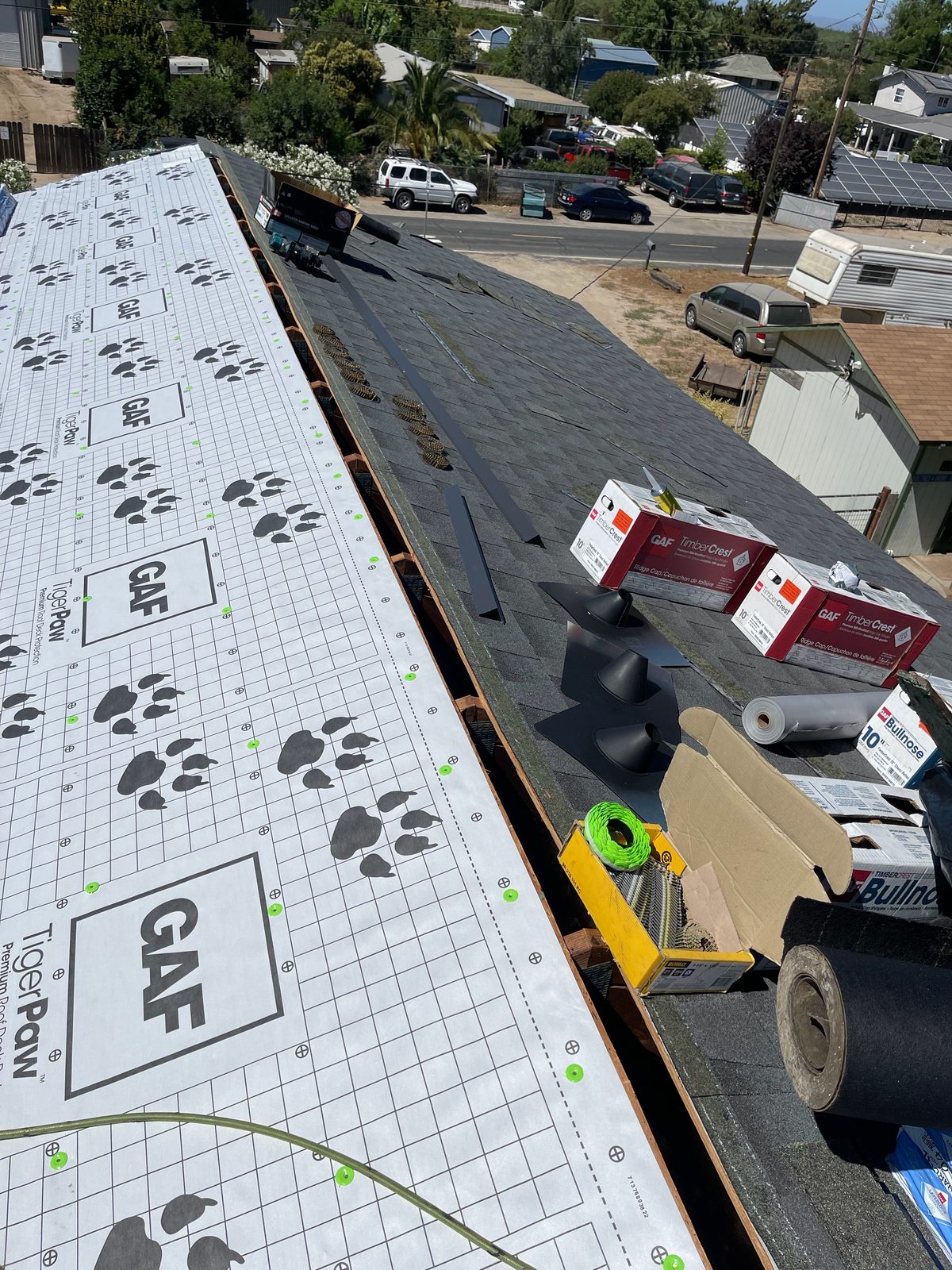
Mid-job ridge view: Tiger Paw underlayment, new charcoal courses, and TimberCrest ridge-cap boxes staged for the finish.
Field shingles cover the slopes. On a Modesto roof replacement, the job is not finished when the last field course reaches the peak. Ridge-cap shingles finish the highest weather surface, and that last detail matters more than most homeowners expect.
This guide explains ridge caps versus field shingles, why the ridge is finished last, what is staged at the peak, and what an honest inspection looks for before storm season.
Ridge-cap shingles vs. field shingles
Field shingles are architectural shingles covering the main slopes and shedding water down the roof from eave to ridge.
Ridge-cap shingles are different: they wrap the peak where two slopes meet. Many GAF replacements use TimberCrest-style high-profile caps that sit proud of the field, cover the nail line, and finish the meeting of the planes.
- Shape and purpose — Field shingles cover broad slopes; caps cover the exposed peak.
- Exposure — The ridge takes wind, UV, and water from both sides.
- System role Caps work with field courses, underlayment, and ridge ventilation when used.
- Not leftover scraps — Proper caps are a specified product, not random field shingles folded over the peak.
We install GAF systems used on Modesto jobs, including Timberline field products and TimberCrest-style ridge finishes when in scope. GAF Master Elite is our verified certification for those systems.
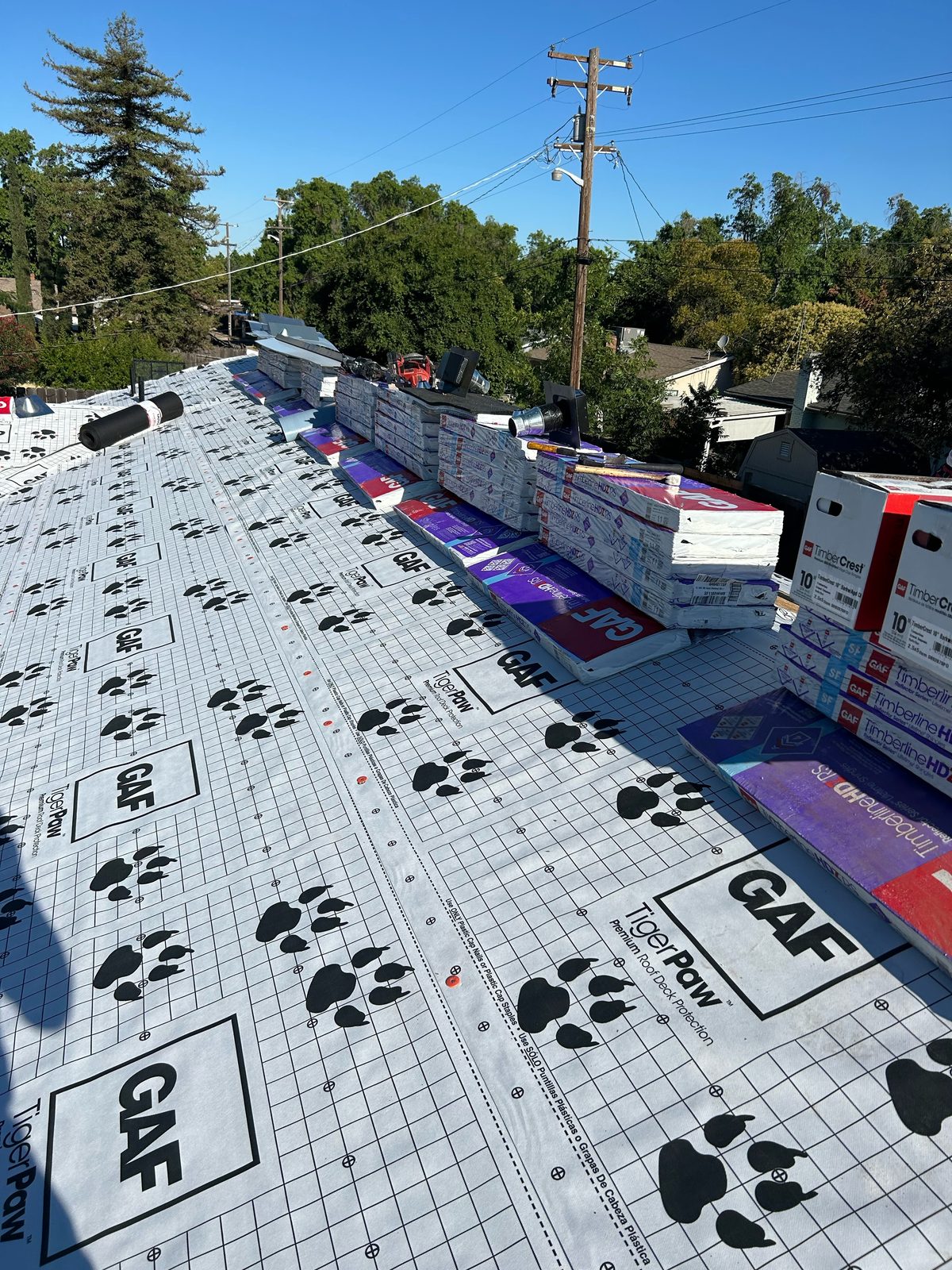
Before field shingles go down: Tiger Paw deck protection with Timberline HDZ bundles staged toward the ridge.
Why the ridge is finished last
On a full tear-off and replace, crews typically work from the eaves up so water sheds over finished courses. The ridge stays open until field courses on both sides are in place. Mid-job photos may show underlayment on one side, new courses on the other, and materials waiting at the peak.
Staging boxes of ridge caps, roofing nails, pipe boots, flashings, and sometimes ridge-vent components is normal; it means the slopes are closing in sequence and the peak is next.
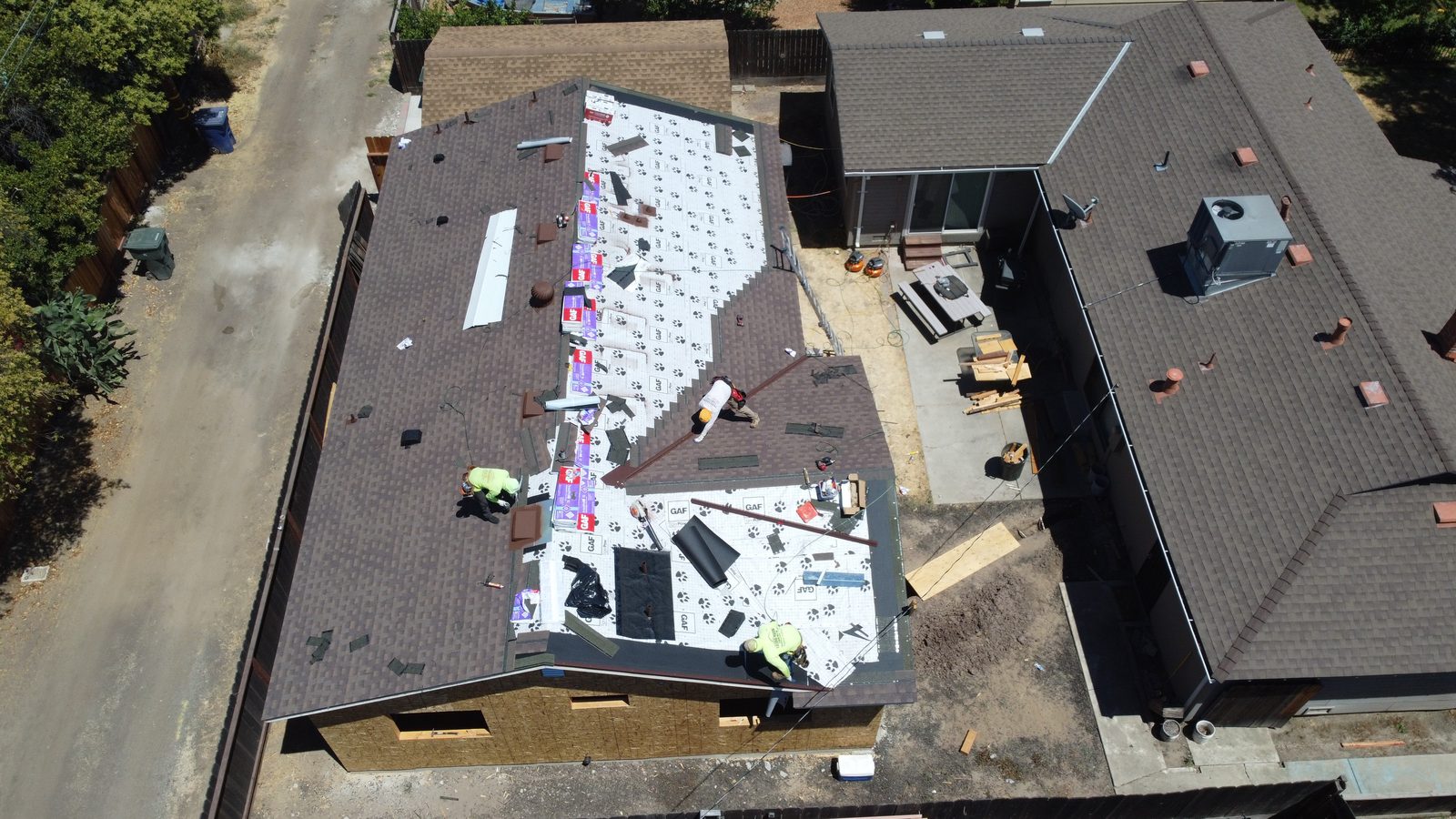
Progress from above—underlayment and new shingle courses meeting before the ridge is finished.
Underlayment at the peak, then finished courses
Before field shingles go down, the deck is protected. On many jobs that means synthetic underlayment such as GAF Tiger Paw run up the slopes toward the ridge. Underlayment is temporary weather protection, not the finished look. Field courses cover it; ridge caps finish the peak.
See What's Under Your Shingles? Why Underlayment Matters in Modesto Heat.
Central Valley heat, first fall rain, and the ridge
Central Valley summers bake asphalt. Older ridge details take UV and attic heat for months. The ridge faces the sky, catches wind, and often sits above vents that move hot attic air out.
- Heat and UV can crack, lift, or erode older ridge caps.
- When fall rain arrives, an open nail line, missing cap, or poorly sealed detail is a path water can use.
- Ridge ventilation helps move heat out when designed into the system; the finish still has to keep weather out.
A finished ridge is one piece of a larger system, like asphalt shingle aging in Valley heat.
aging in Valley heat.Safe ground-level signs vs. stay off the roof
Stay off hot asphalt in peak heat. From the ground, look for missing, cracked, or lifted ridge-cap pieces; a flattened, wavy, or uneven ridge; daylight or dark gaps; granule loss; or ceiling stains after storms.
Do not climb up to tap loose caps, add random caulk, or walk the ridge. Ridge work involves height, fragile shingles in heat, and fastening patterns that need to match the system.
shingles in heat, and fastening patterns that need to match the system—not a weekend patch that opens at the next wind event.What an honest inspection looks for
- Dedicated ridge-cap product rather than field scraps.
- Cracks, lift, missing pieces, and nail exposure.
- How field courses stop and whether the peak is closed correctly.
- Ridge ventilation and whether airflow paths are blocked.
- Pipe boots, box vents, soft deck, and prior patch clues.
A practical checklist before the first fall storm
- Look from the ground for missing, cracked, or lifted ridge caps.
- Do not treat roofing cement as a permanent ridge system.
- Ask whether dedicated caps such as TimberCrest-style product will be used—not leftover field scraps.
- Ask how ridge ventilation will be detailed with the caps.
- Keep underlayment, boots, and field condition in the same conversation.
A practical checklist before the first fall storm
- Look from the ground for missing, cracked, or lifted ridge caps.
- Do not treat roofing cement as a permanent ridge system.
- Ask whether dedicated caps such as TimberCrest-style product will be usednot leftover field scraps.
- Ask how ridge ventilation will be detailed with the caps.
- Keep underlayment, boots, and field condition in the same conversation.
Finish the peak the way the system was designed
Ridge caps are a small percentage of the shingle count and a large percentage of the weather line at the top of the house. On a Modesto roof replacement, finishing the ridge last is normal; skipping a proper cap product or letting old cracked caps ride into storm season is not.
Legend Roofing Company Inc can inspect the ridge as part of the system and explain what the finish should look like in clear terms.
Legend Roofing Company Inc · 4400 Gomes Rd, Modesto, CA 95357 · CSLB #1067374 · GAF Master Elite