
Roof Leak in the First Fall Storm? What Modesto Homeowners Should Do First
After a long, dry Central Valley summer, the first real rain is when hidden roof problems show up as a drip in the hallway or a stain on the ceiling. Here is a calm, step-by-step plan for the first hour, what not to do, and where those first-storm leaks usually start.
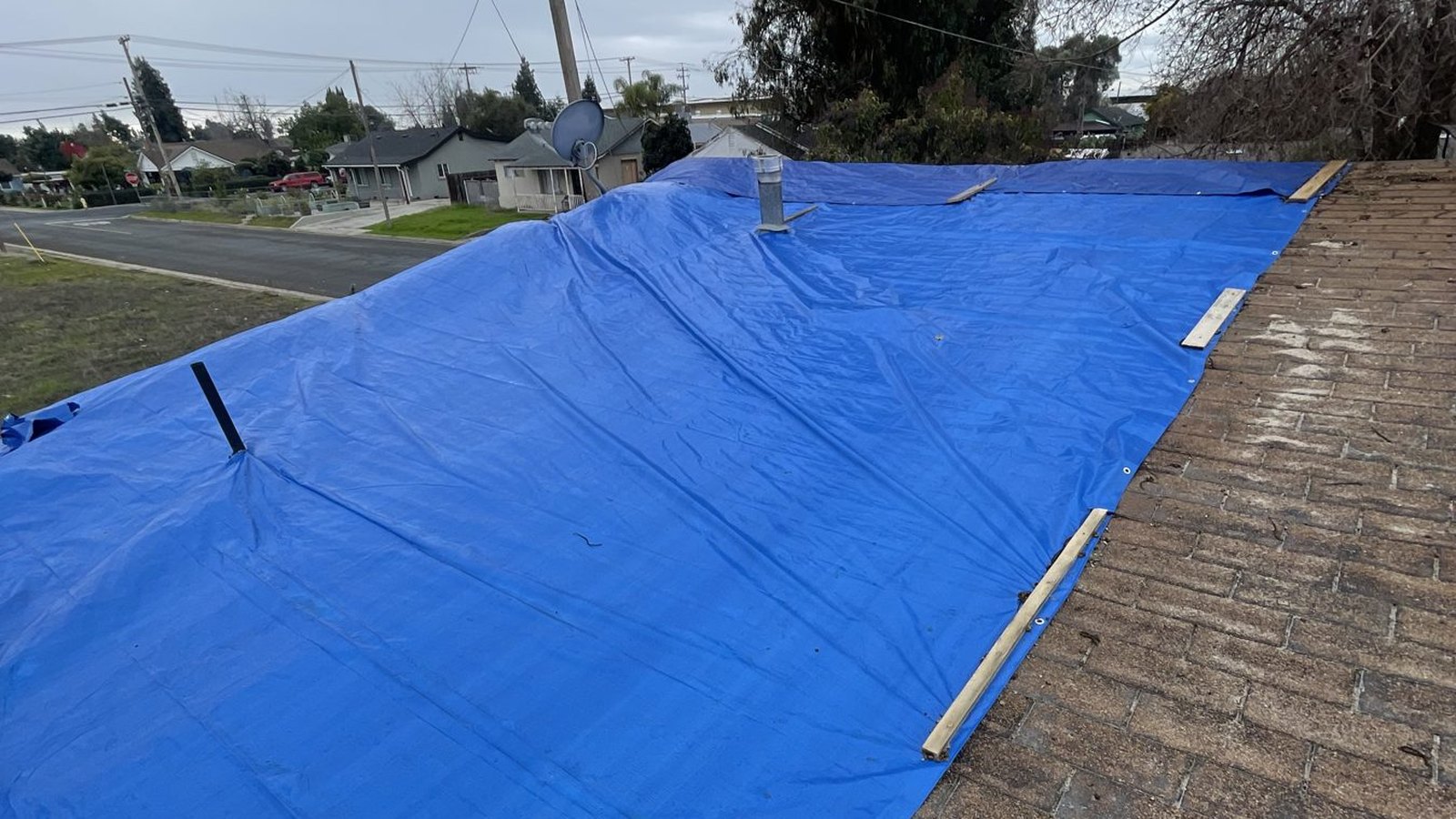
A temporary tarp on one of our jobs, held down with wood battens so wind and rain cannot get under it. A tarp like this buys time; it is not the repair.
A leak during the first storm of the season is stressful, but it rarely needs a panicked decision. Most first-storm leaks come from small openings that summer heat has been working on for months. What matters in the first hour is protecting the inside of the house and keeping everyone safe. The roof itself can wait until it is safe to look at it properly.
Step 1: Protect the inside of the house
- Catch the water. Put a bucket, tote or trash can under the drip, with a towel inside to cut splashing. Move furniture, rugs and electronics out of the way.
- Stay clear of a sagging ceiling. If drywall is bulging with water, keep people and pets out from under it.
- Keep water away from electrical. If water is near a light fixture, fan or outlet, don’t touch it. If you can reach your breaker panel safely and dry, switch off that circuit.
- Check the attic only if it is safe. With a flashlight, from the hatch, look for wet insulation or a drip line. Step only on framing, never between joists.
Step 2: Write it down and take photos
Before anything gets cleaned up, take photos and short videos of the ceiling stain, the drip, wet areas and anything damaged. Note the time the leak started and what the weather was doing—steady rain, wind-driven rain from one direction, or only during heavy bursts. That detail helps whoever traces the leak, and it gives you a record if you later talk to your insurance company.
Step 3: Stay off the roof
A wet roof is slippery, and tile is easy to crack underfoot. Please don’t climb a ladder in the rain or at night to smear sealant over the spot you think is leaking. Water often enters well uphill of the stain inside, so a patch in the wrong place can trap water instead of stopping it. Leave the roof to a licensed roofer once conditions allow.
Step 4: Get it stabilized, then repaired
When we respond to an active leak, the order is simple: stabilize, then repair. Stabilizing can mean a temporary tarp battened down like the one in the photo above, or a short-term fix at the obvious opening, so the house stays dry through the storm. The permanent repair usually waits for a dry roof, because flashing, underlayment and sealants need dry surfaces to work.
Where first-storm leaks usually start
On Modesto and Central Valley homes, most first-rain leaks trace back to the same handful of spots:
Pipe and vent penetrations
Every pipe that comes through the roof has a boot or flashing around it. Summer sun dries out rubber collars and sealants, and old metal flashings can rust or lift at the edges. More on this in our guide to pipe boots and flashing after Modesto heat.
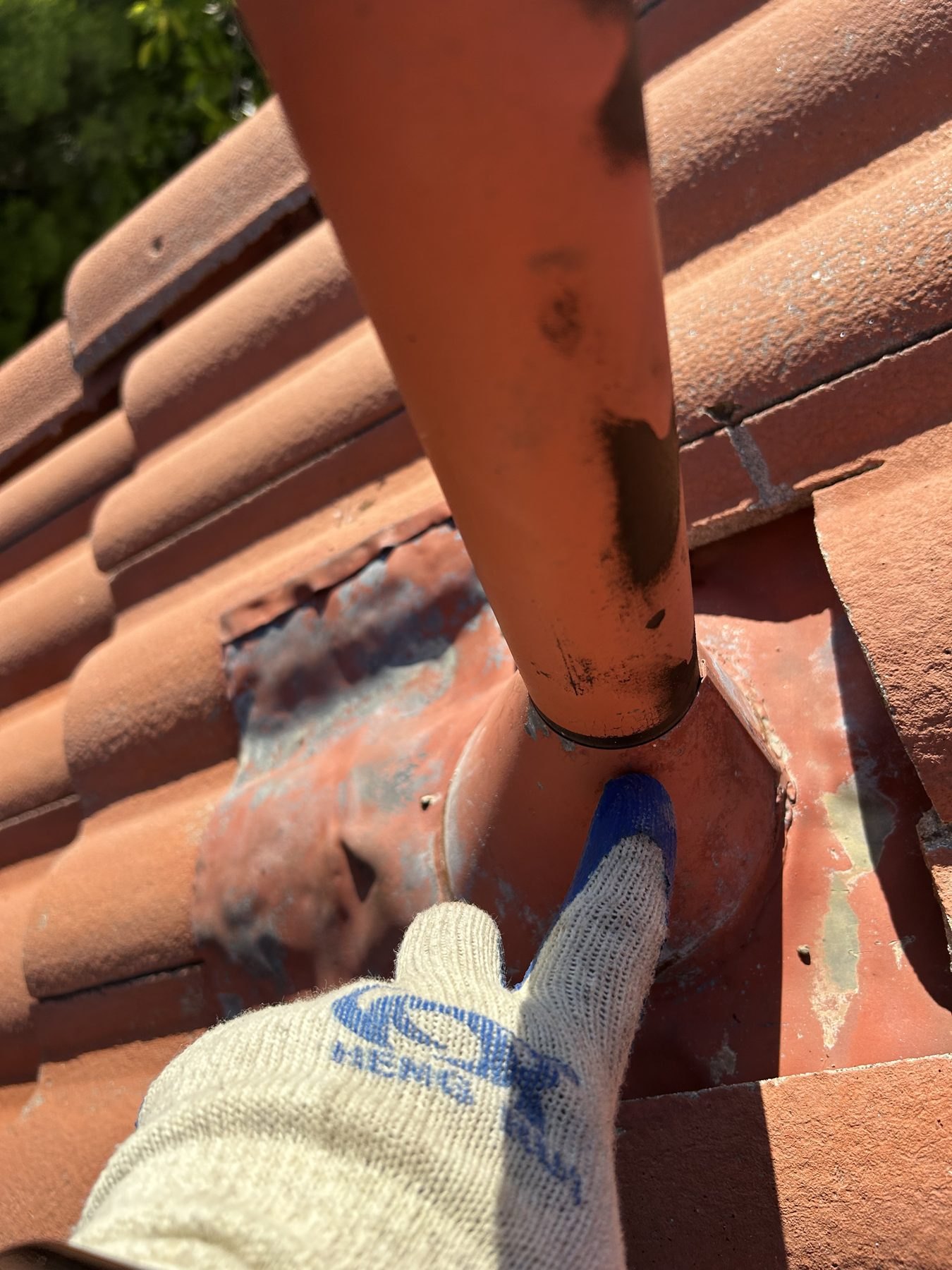
A tile-roof vent pipe with worn, patched flashing at its base. Penetrations like this are one of the most common first-storm leak points.
Cracked or slipped tile
Tile itself sheds most of the water, but the underlayment beneath it does the final waterproofing. A broken tile or an open ridge piece lets rain reach that layer directly, and if the underlayment is old and brittle, a leak follows.
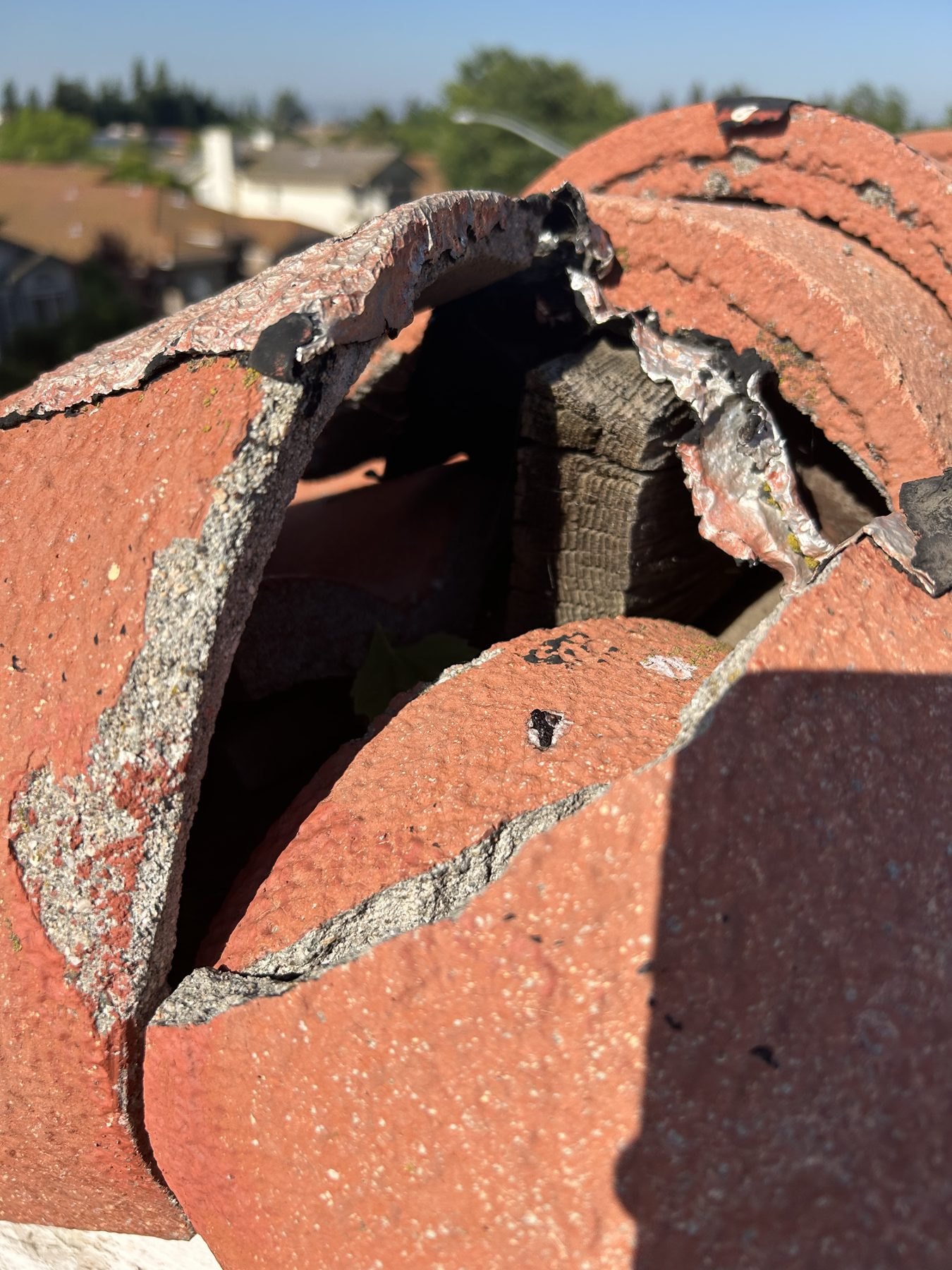
Broken ridge tiles leave an opening straight down to the underlayment.
Valleys and gutters full of debris
Leaves and dirt build up in valleys over the summer. When the first heavy rain comes, the debris acts like a dam and pushes water sideways under tile or shingles. Clogged gutters can back water up at the roof edge the same way. See how valleys move water off the roof and what to check in your gutters.
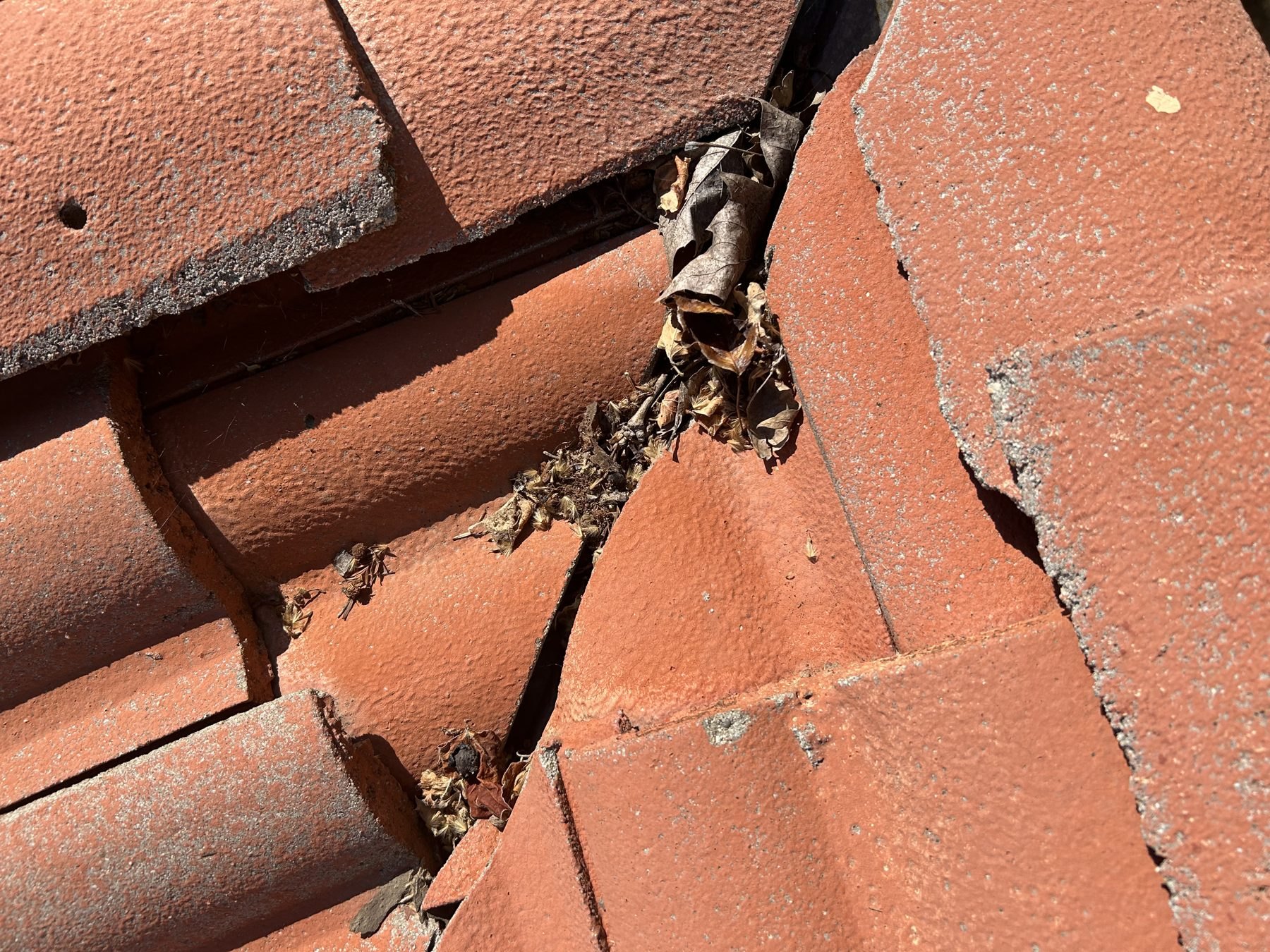
Debris packed into a tile valley. In a heavy rain it can send water sideways instead of down the valley.
Chimneys and walls
Where the roof meets a chimney or a wall, metal flashing has to overlap in the right order. Baked sealant or lifted step flashing is a classic first-rain leak. Our chimney flashing guide walks through what that looks like.
Does one leak mean I need a new roof?
Not usually. A single failed pipe boot, a few broken tiles or one clogged valley is often a straightforward repair. A replacement starts to make sense when leaks show up in several places, the underlayment is brittle across the roof, or the decking has gone soft. We lay out the difference in repair or replace, and we put both options in writing so you can decide.
Quick answers
Can a roof leak be repaired while it is raining?
A temporary fix or tarp can often go on to keep water out. A lasting repair generally needs a dry roof, so it is usually done once the storm passes.
Will a tarp stop the leak?
A properly secured tarp can keep water out for a while. It is a temporary measure: wind works it loose and sun breaks it down, so plan the real repair soon after.
Should I wait until after the rainy season to call?
No. Water that keeps getting in can soak insulation and soften decking and drywall, which turns a small repair into a bigger one. It is better to get it looked at early.
Soft next step
If your roof leaked in the first rain, or you would like a look before the next storm, Get a Quick Quote through our Contact page. We answer 7am–5pm daily. More on roof repair in Modesto.
Legend Roofing Company Inc · 4400 Gomes Rd, Modesto, CA 95357 · (669) 294-1760 · CSLB #1067374 · GAF Master Elite.