
Pipe Boots After a Modesto Summer: Why Roof Penetrations Leak First
Plumbing vents and chimney flashings take more Valley heat than many homeowners expect. Here is why penetrations fail first—and how to tell a local repair from a wider roof problem.
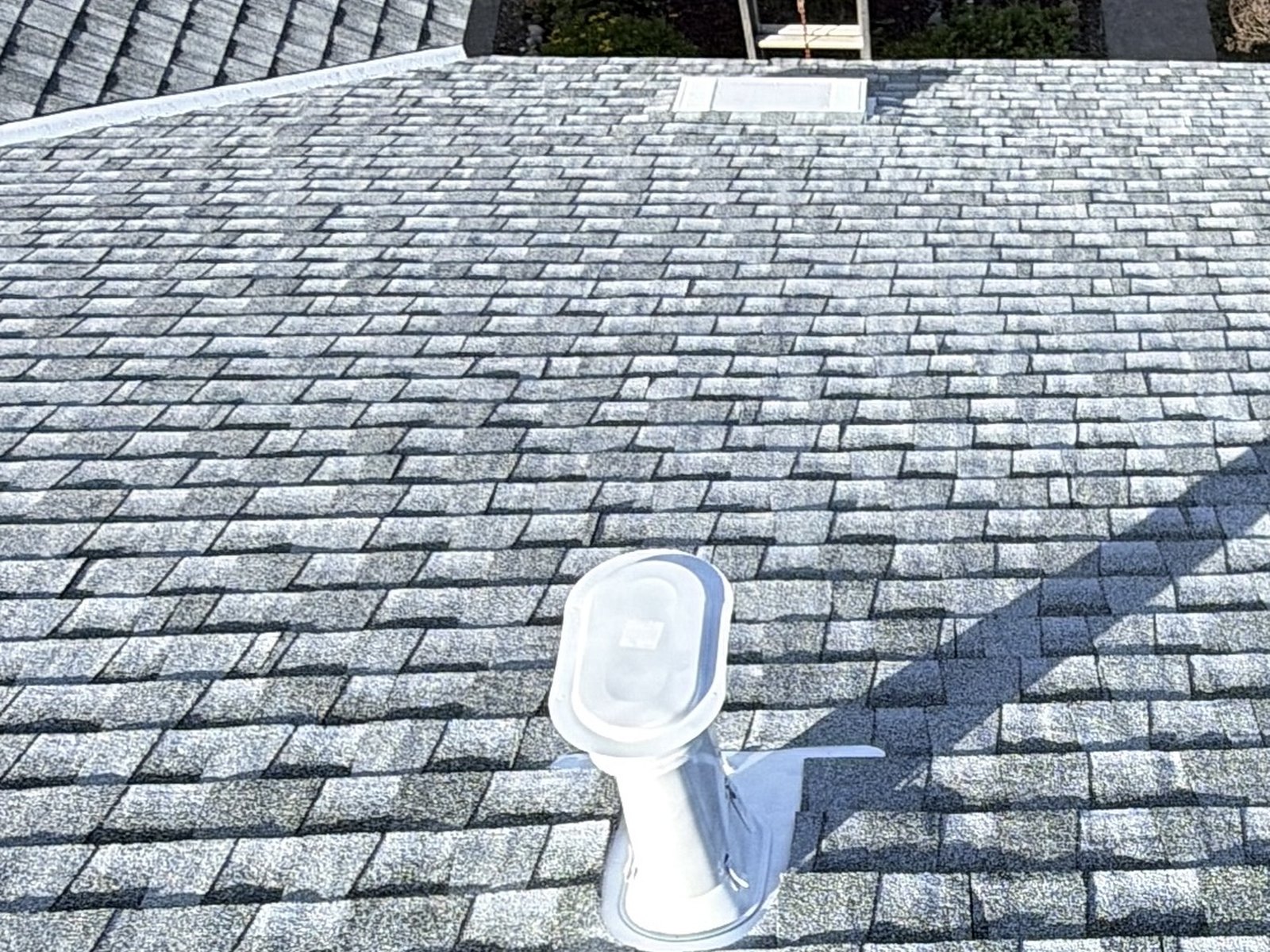
A pipe boot is a small part of the roof—and one of the first places Valley heat and UV show up after a long dry season.
Modesto and the Central Valley put asphalt roofs through long stretches of sun with almost no rain. Shingle fields often look fine from the street. The first problem after a dry summer is frequently not an open field of shingles—it is a small opening where a pipe, vent, or chimney exits the roof.
Those openings are called penetrations. The flexible collar around a plumbing pipe is a pipe boot. Metal pieces that shed water at vents and chimneys are flashing. Both sit in direct sun, expand and contract every day, and often rely on sealant that eventually dries and cracks. Crews call that sealant “baking out.”
This guide explains why penetrations leak earlier than many homeowners expect, what you can notice without walking a hot roof, and when a localized roof repair in Modesto may be enough.
Why Valley heat hits boots and flashing first
An asphalt-shingle roof is a layered system. The open shingle field sheds water in a continuous plane. A penetration breaks that plane. The boot or flashing has to move with heat and still keep a seal around a pipe, duct, or masonry.
Central Valley UV and daily heat cycles harden rubber boots. Collars crack, split, or pull away from the pipe. Metal flashing can lift at laps. Sealant that was meant to finish a joint shrinks and leaves hairline openings. Summer can hide those gaps because there is little water to test them. The first fall storm finds them quickly.
A cracked boot does not automatically mean the whole roof is finished. It often means one detail needs attention before water softens decking around that pipe.
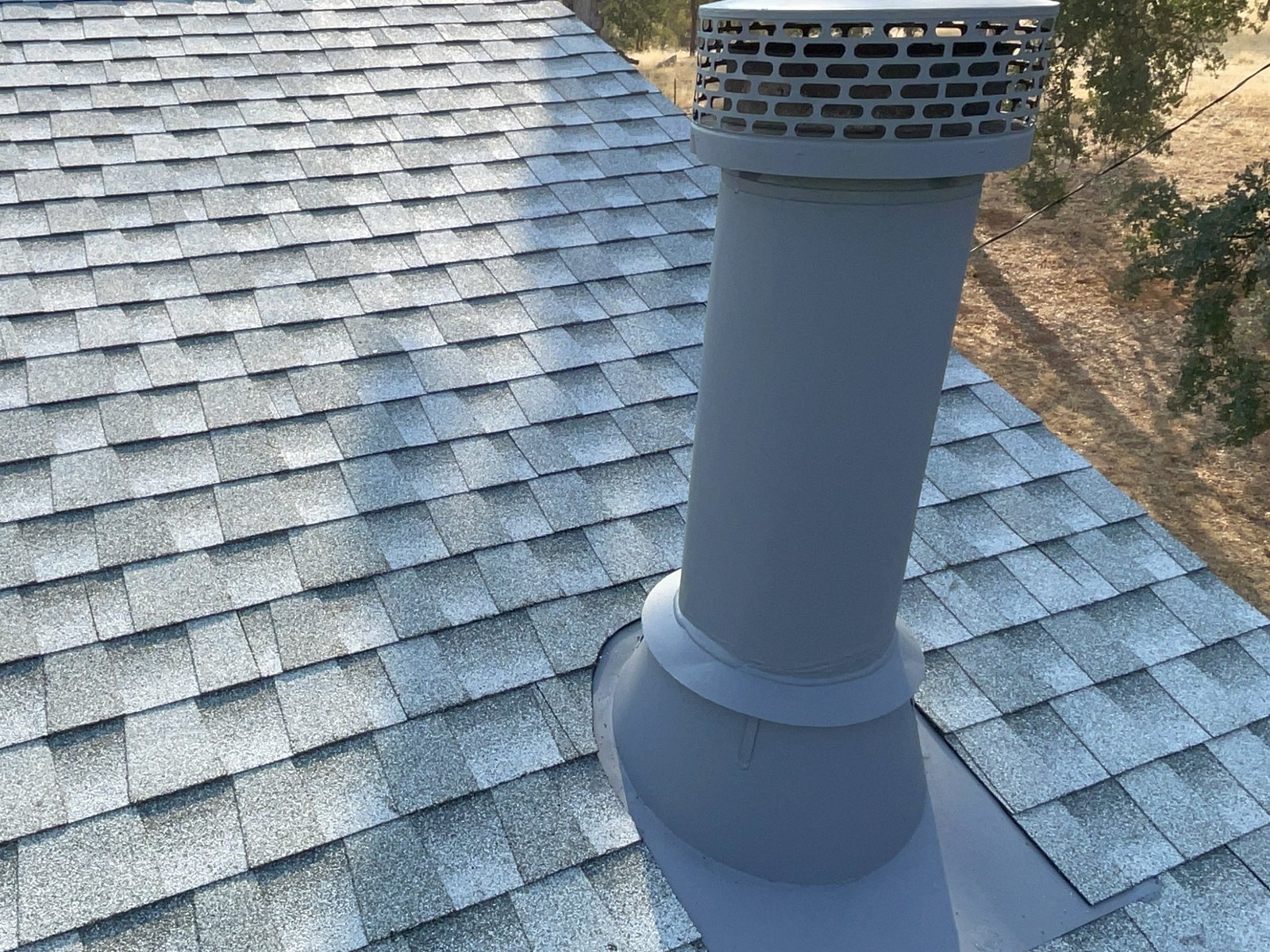
Exhaust and plumbing vents need a clear water path: flashing layered with the shingles, not sealant alone.
What sealant bake-out means in plain language
Sealant finishes joints. It is not a substitute for properly layered flashing or a sound boot. In Modesto sun, caulk and mastic can turn chalky, pull off metal or rubber, and leave thin openings that look minor until wind-driven rain arrives.
Re-smearing sealant over a cracked rubber boot without replacing the boot is a common short-term patch. Heat cycles open the same path again. A more durable repair replaces the worn boot or corrects flashing so water sheds as designed—downhill, away from the opening.
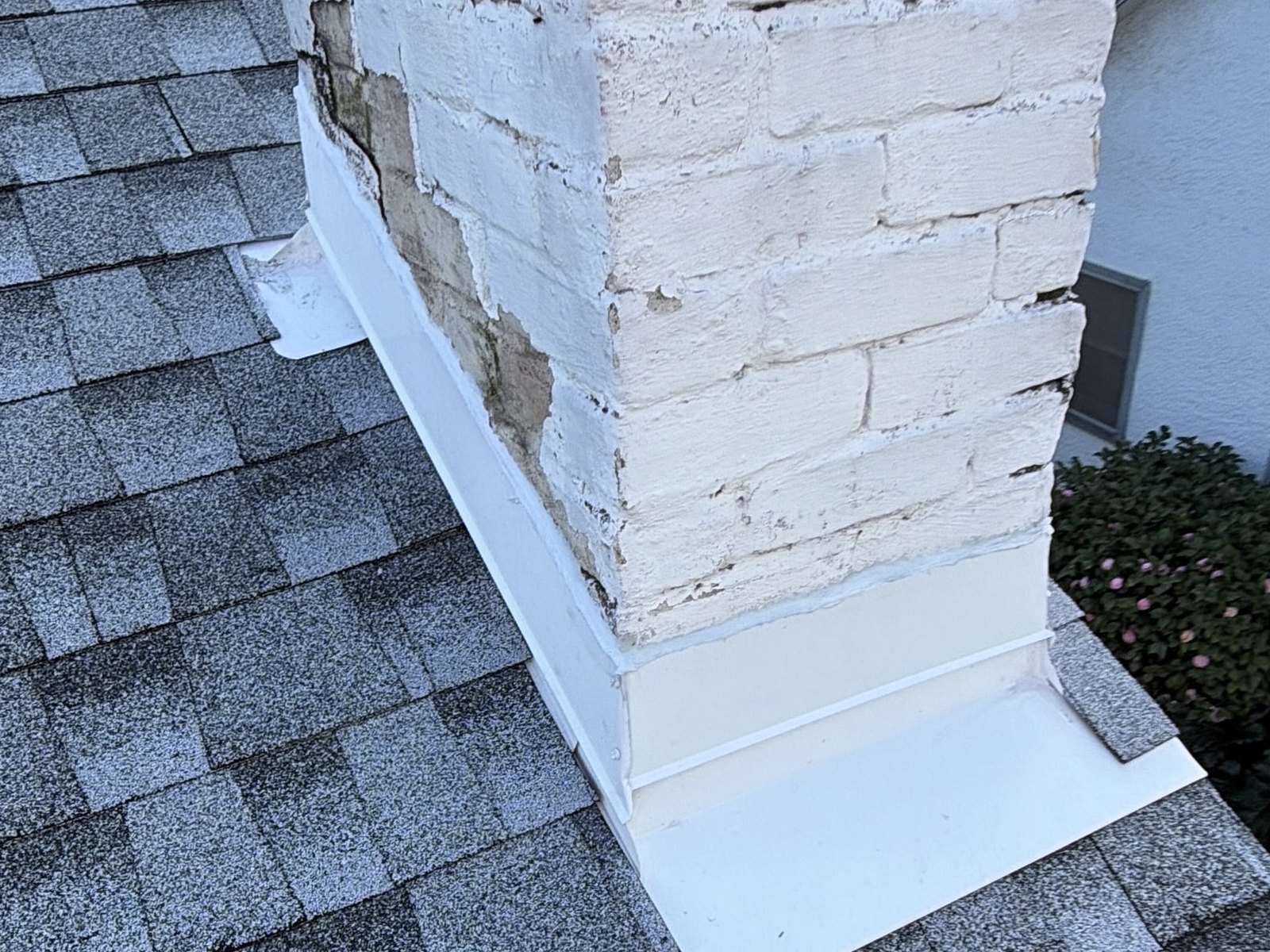
Chimneys move differently than the roof deck. Flashing—not paint—keeps water out of that joint.
Clues you can notice without climbing
Stay off asphalt roofs in peak heat when possible. Soft shingles damage easily under foot traffic. Safer checks include:
1. Interior stains near bathrooms, kitchens, or laundry walls
Pipes and vents often exit near those rooms. Recurring ceiling stains, peeling paint, or a damp smell after rain can point to a penetration above—even when the stain is not directly under the pipe, because water can travel along decking.
2. Cracked or pulled rubber around a vent pipe
From the ground or a safe window, look for splits in the collar, gaps where rubber left the pipe, or a boot that has flattened and hardened. Binoculars help. Do not step onto a hot roof to confirm.
3. Gaps, rust streaks, or lifted metal at chimneys and wall transitions
Chimney and wall flashings move. Separated counter-flashing, rust trails under metal, or lifted shingles on the uphill side of a chimney deserve a closer look.
4. Sealant crumbs or granules concentrated near known vents
After wind, gutters near penetrations sometimes collect old sealant bits or extra granules. That is a clue, not a diagnosis by itself.
5. A leak that appears only after the first real rain of the season
Dry-season gaps often stay quiet until water returns. A “sudden” fall leak at a bathroom ceiling is a classic penetration pattern.
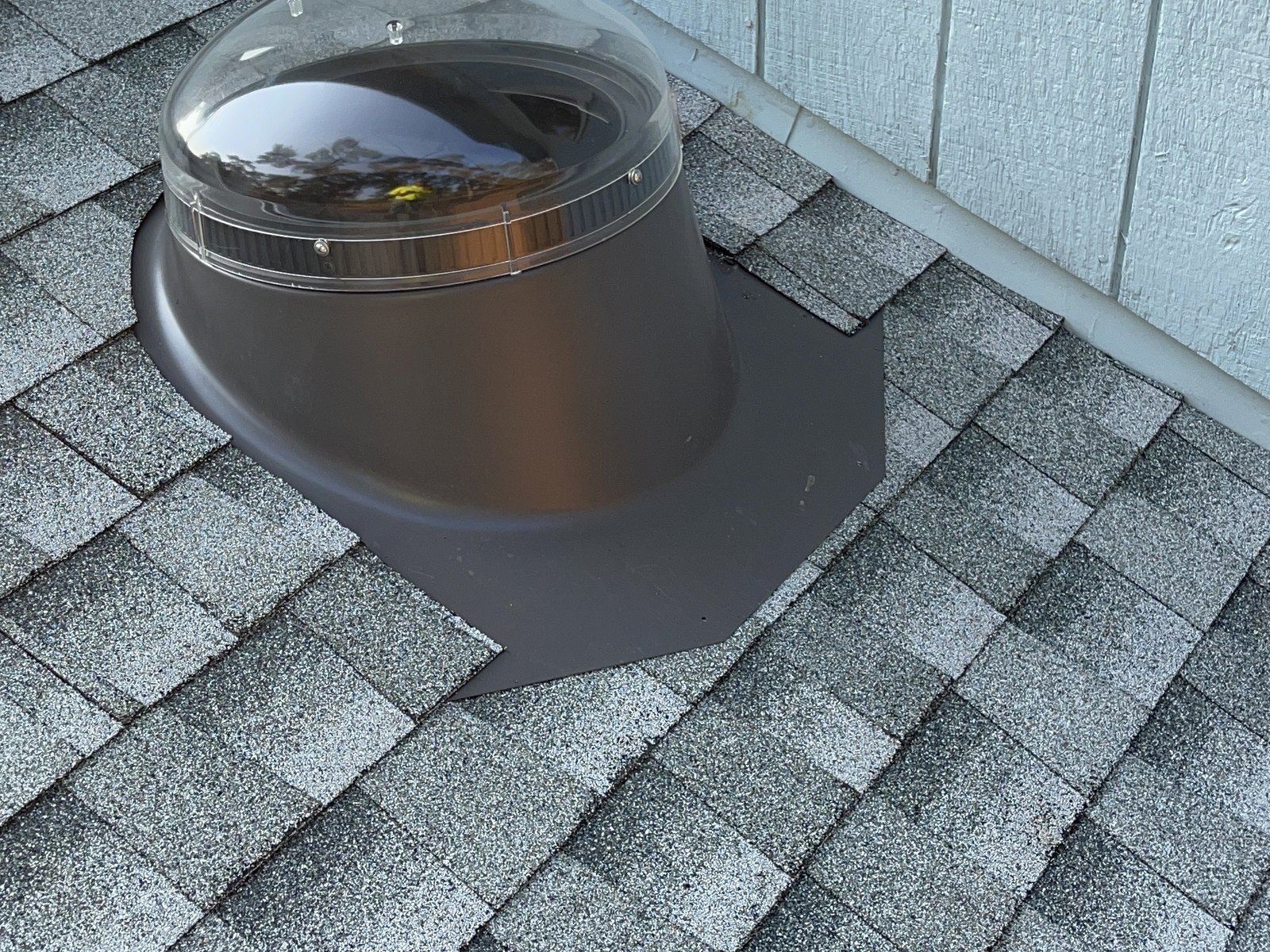
Other roof openings—like a sun tunnel—use the same idea: a flashed base that sheds water downhill, not a smear of sealant.
When a repair may be enough
Localized work is common when the surrounding shingles and underlayment are still serviceable and the issue is limited to one boot, one vent, or a short stretch of chimney flashing.
- Pipe boot replacement — remove the failed collar, install a new boot sized to the pipe, and weave it into the shingle course so water sheds downhill
- Vent flashing correction — reset or replace base flashing so metal is layered with the shingles, not floating on sealant
- Chimney flashing rework — step, counter, or apron flashing when laps have opened or sealant was doing metal’s job
- Limited surrounding repair — a few damaged shingles or a short underlayment patch next to the penetration when moisture traveled a short distance
Exact scope depends on roof type, how long water has been moving, and whether decking has softened. For how we weigh repair versus replacement in general, see Repair or replace?.
When a wider evaluation helps
Ask for a broader look when several boots or flashings are failing at once, leaks appear in more than one area, decking feels soft around a penetration, the shingle field shows widespread wear, or prior patches at the same pipe keep reopening.
One cracked boot after many summers can still be an isolated wear item. Several failing penetrations on the same heat-aged clock can mean the system is aging together. The goal is an honest read—not a default tear-off because one collar split, and not endless patches on a roof that can no longer hold a reliable repair.
Heat also ties to attic conditions. Balanced attic ventilation can reduce oven-like temperatures under the deck; it does not replace a sound boot. When replacement enters the discussion, see roof replacement in Modesto.
A practical pre-rain checklist for penetrations
- From the ground or a safe window, scan visible pipe boots and chimney bases
- Note any interior stains near bathrooms, kitchens, or laundry rooms
- After light rain (from indoors), watch for new drip marks near those rooms
- Keep gutters clear so water is not held against the roof edge while you sort penetration issues
- Photograph what you see—date, location, weather—for your records
- Use Get a Quick Quote if a leak repeats, wood looks soft, or the detail is hard to see safely
Photos help. They do not replace an on-site evaluation when water is active.
Get a clear answer on the leak path
Penetrations are small, but they decide where the first fall rain goes once summer heat has aged the seals. If you are seeing a bathroom stain, a cracked collar, or chimney flashing that has pulled away in Modesto, Ceres, Turlock, or nearby Central Valley towns, Legend Roofing Company Inc can evaluate the detail and the surrounding roof together and explain practical options.
Get a Quick Quote or call (209) 404-6110.
Legend Roofing Company Inc · 4400 Gomes Rd, Modesto, CA 95357 · CSLB #1067374 · GAF Master Elite