
Gutters After a Central Valley Summer: What to Check Before Fall Rain
Dry summers hide drainage problems. Before Central Valley rain returns, here is what Modesto homeowners can check on gutters, downspouts, and roof edges—without climbing a hot roof.
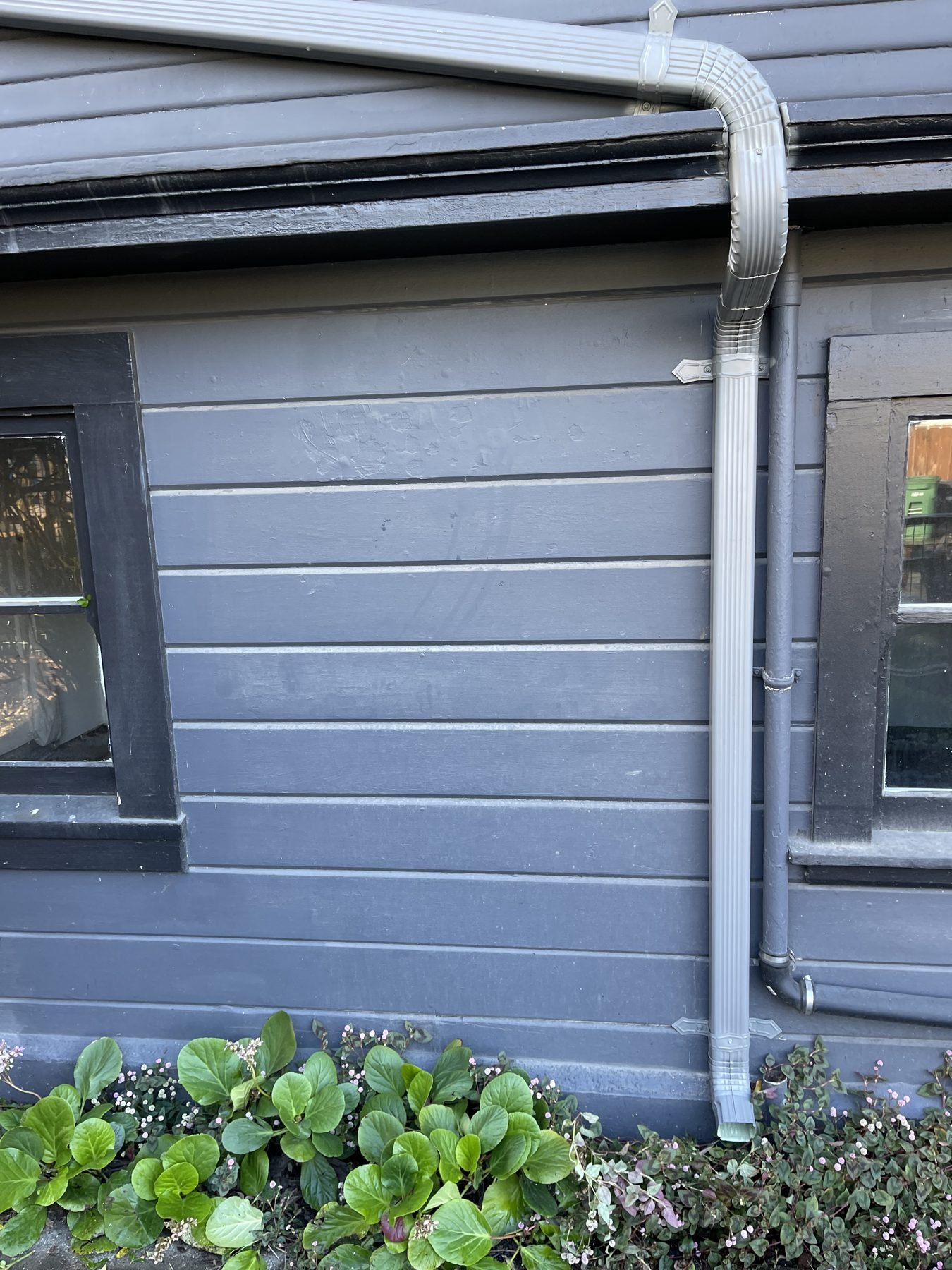
A clean downspout path matters as much as the gutter itself—water needs a clear exit away from the foundation.
Modesto and the Central Valley spend months with little meaningful rain. That dry stretch is easy on day-to-day routines—and hard on gutters. Dust, tree litter, shingle granules, and nest debris settle into troughs that barely see flowing water until the first fall storm.
When that storm arrives, a clogged gutter does not just overflow. Water can run behind fascia, soak the roof edge, stain siding, or pool against the foundation. Many “sudden” wet spots after the first rain started as quiet summer buildup.
This guide is for homeowners who want a practical, ground-level checklist before the rainy season—not a pitch to replace every roof that dropped a few granules.
Why dry summers hide drainage problems
During a wet week, you notice overflow immediately. During a dry summer, a gutter can look fine from the driveway while the trough is half full of silt and leaves. Downspout elbows fill with packed debris. Screens and guards trap dust against the mesh.
Central Valley trees (walnut, oak, fruit trees, and windblown litter) add more material than many coastal homes see. Add loose granules from aging asphalt shingles, and the first heavy rain turns that dry mix into a paste that blocks outlets.
A gutter problem is not automatically a roof-replacement problem. It is a drainage problem that can stress the roof edge if it is ignored.
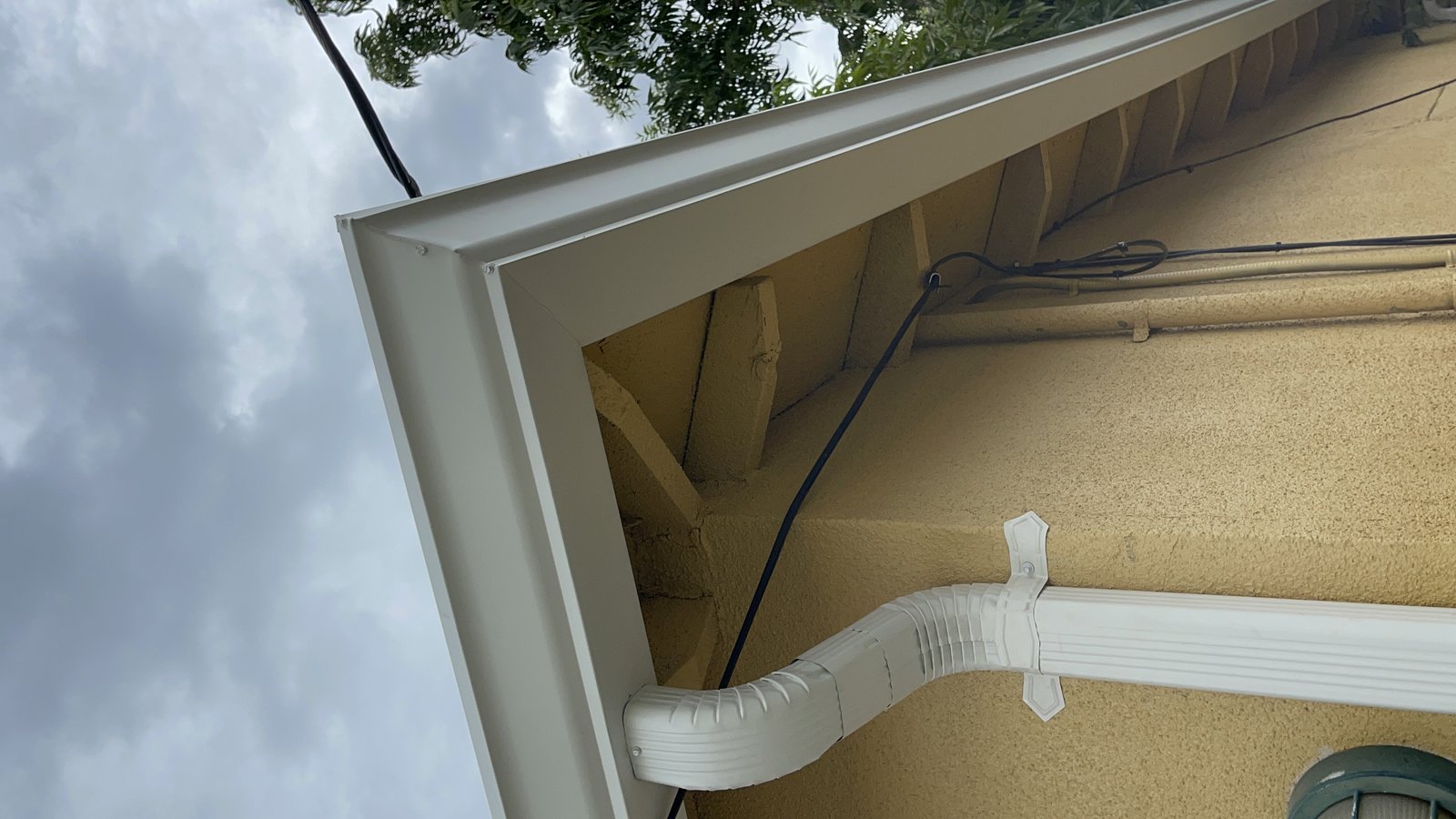
Corners and elbows are common clog points after a dry, dusty Valley summer.
What you can safely check from the ground
Stay off asphalt roofs when they are soft from heat, and avoid ladders if you are not set up for safe work. Many useful clues show from the yard, a second-story window, or after a short garden-hose test at the downspout outlet (gentle flow only).
1. Overflow stains and dirt trails under the gutter line
Look for vertical dirt tracks on siding, darkened fascia, or mulch that has washed away under a mid-span section. Those marks often mean water left over the front lip instead of through the downspout.
2. Sagging sections or pulled hangers
A trough that dips between hangers holds standing water longer and clogs faster. After summer heat cycles, hangers can loosen. A slight sag is a maintenance item; a long, heavy bow needs attention before storms.
3. Downspout elbows and outlets
Feel (from the ground) whether the bottom elbow dumps freely, or look for a packed plug of leaves at the outlet. Water that stops a few inches into the pipe will exit at the nearest joint—often at the eave, not at the foundation line where you want it.
4. Corners and valley dump points
Roof valleys concentrate water into specific gutter spots. Those corners collect granules and needles first. If one corner overflows while the rest of the run looks clear, clean that dump point before assuming the whole system failed.
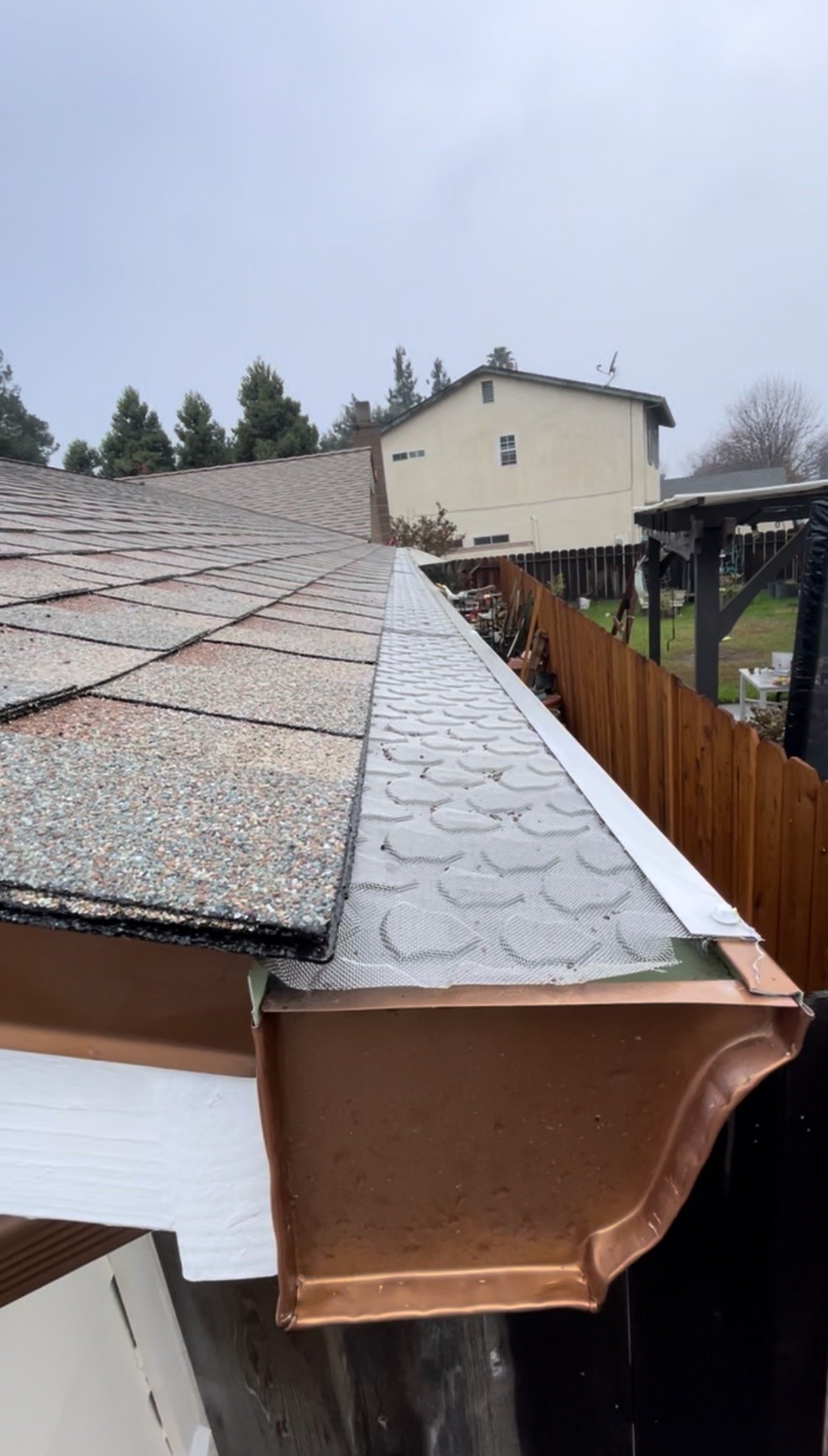
Guards help, but they still need a seasonal check so water can enter the trough.
5. Guards, screens, and “invisible” clogs
Mesh and hood-style guards reduce large debris, but fine dust and seed pods still collect. If water sheets over the front of a guarded gutter during rain, the mesh or the trough beneath may be restricted. Guards are not a set-and-forget substitute for a seasonal look.
6. Where the water goes after the downspout
A clear gutter that dumps against the foundation still creates moisture problems. Extensions, splash blocks, or grading should move water several feet away from the slab or crawlspace edge when possible.
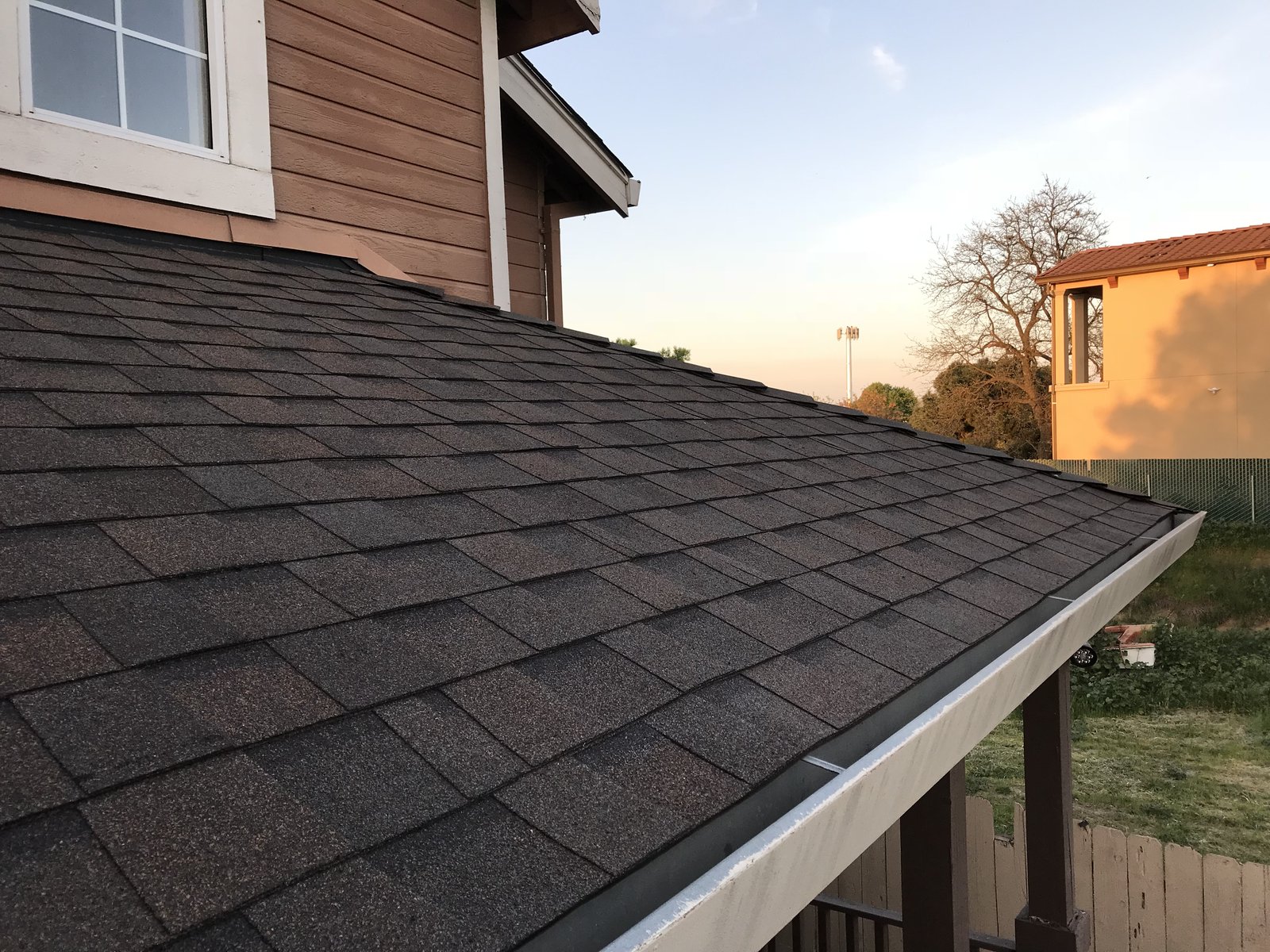
Roof edge, drip edge, and gutter work as one system when rain finally returns.
How gutters protect the roof edge
Gutters are part of the roof’s water-management system. When they overflow against the fascia, moisture can work into rafter tails, drip edge, and underlayment at the eave. Repeated wetting at the edge is one reason homeowners see soft fascia, peeling paint, or staining near the soffit after a stormy week.
Clear drainage also keeps valleys and lower slopes from holding standing water against shingles longer than designed. That does not mean every clogged gutter equals a failed roof. It means fixing drainage is often the first, least invasive step when the surface still looks serviceable.
When a repair may be enough
Localized fixes are common when:
- One section sags or pulls away from the fascia
- A single downspout or elbow is packed
- A corner miter leaks while the rest of the run is sound
- A short stretch of gutter was damaged by a ladder or falling branch
A careful look at hangers, seams, outlets, and the roof edge usually decides whether cleaning and a small repair are enough—or whether gutter work should be planned with the edge metal.
When a wider evaluation helps
Ask for a broader roof evaluation when:
- Overflow repeats after cleaning
- Fascia or roof-edge wood feels soft or shows ongoing decay
- Multiple leaks appear near eaves after storms
- Granule piles are heavy and shingles show widespread wear
- Water is entering the attic or living space near exterior walls
The goal is an honest read of the system—gutters, edge metal, shingles, and penetrations—not a default full tear-off because leaves collected in August. A roof inspection is how we sort those facts.
A simple pre-rain checklist for Modesto homeowners
- Walk the perimeter after the next windy day and note where debris collects
- Confirm every downspout outlet is open
- Watch the first light rain (from indoors or under cover) for overflow spots
- Clear or schedule clearing before a forecasted heavy storm
- Photo any stains, soft wood, or repeated overflow for your records
- Use Get a Quick Quote if the roof edge, fascia, or interior moisture looks uncertain
Get a clear answer on drainage—and the roof edge
Gutters rarely make headlines, but they decide where the first fall rain goes. If you are seeing overflow stains, sagging runs, or wet spots near eaves in Modesto, Ceres, Turlock, or nearby Central Valley towns, Legend Roofing Company Inc can evaluate the drainage path and the roof edge together and explain practical options.
Get a Quick Quote or call (669) 294-1760.
Legend Roofing Company Inc · 4400 Gomes Rd, Modesto, CA 95357 · CSLB #1067374 · GAF Master Elite