
Sun Tunnel Flashing After a Modesto Summer: Why Tubular Skylights Leak
Sun tunnels bring daylight through a small roof cut. After a long Modesto summer, the first drip often starts at the flashing—not the clear dome. Here is how the system works and what to check.
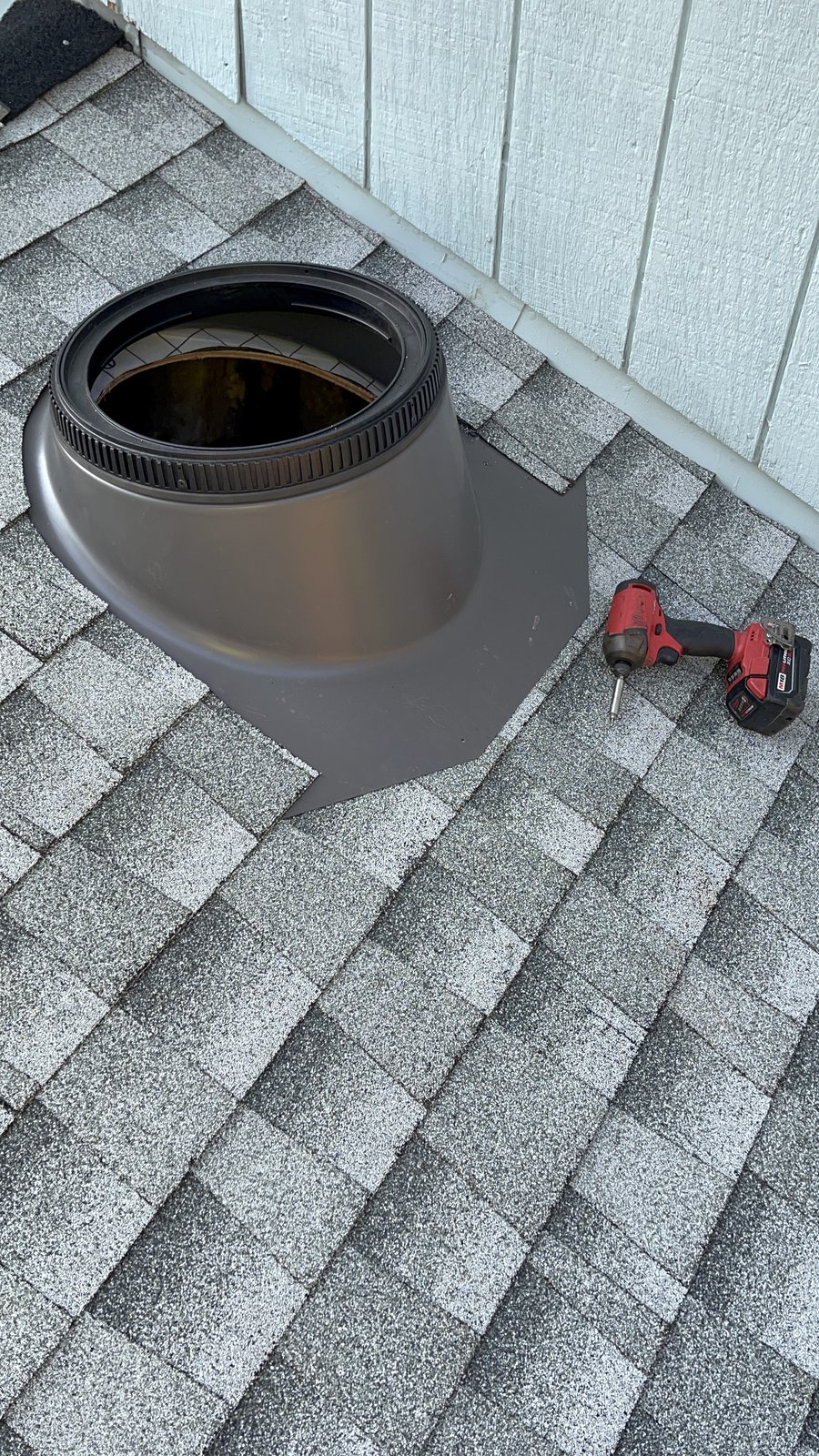
Flashing base in place—top edge under the shingles, apron over the course below—before the clear dome goes on.
Sun tunnels (tubular skylights) bring daylight into hallways, closets, and interior rooms through a small roof cut and a reflective tube. Homeowners often watch the clear dome and assume that is where water starts. After a long Modesto and Central Valley summer, the first drip more often starts at the flashing—the metal base woven into the shingles—or at aged sealant around the collar, not because the acrylic “failed” overnight.
This guide explains how flashing, boot/collar, and dome work together, what an honest inspection looks for after heat, and when a penetration repair is enough versus a wider roof conversation. The photos are from real Legend Roofing Company Inc work on a Modesto-area / Central Valley roof—not staged stock.
What a sun tunnel actually is on the roof
A tubular skylight is a penetration system, not just a plastic bubble:
- A flashing base (metal flange) integrates with the asphalt shingle courses so water sheds around the opening
- A collar / mounting ring rises from that base so the dome can fasten cleanly
- A clear dome covers the tube and accepts UV and heat all day
- Inside the home, a reflective tube and diffuser deliver light—those interior parts do not stop roof water by themselves
If the flange is not layered correctly—or if sealant is doing the job the metal should do—rain finds the cut in the deck the same way it finds a failed pipe boot.
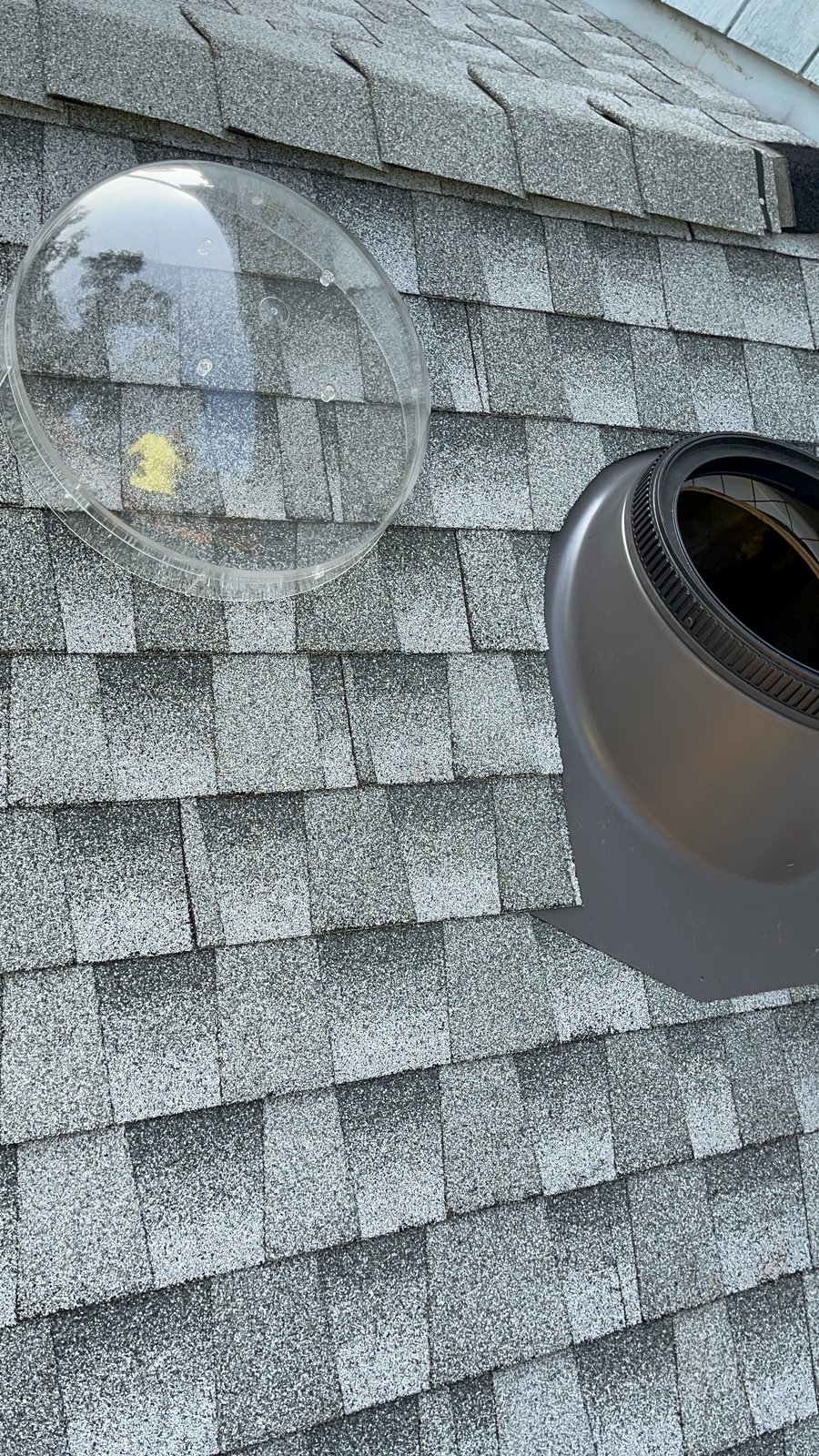
Work in progress: flashing woven into the shingles, reflective tube visible, dome waiting to mount.
Why Central Valley heat exposes weak sun-tunnel details
Modesto summers bake roofs for months. UV and attic heat dry and crack old roofing cement and caulk lines at the collar, expand and contract metal flashing against shingles and fasteners, and stress aged rubber or plastic components at similar penetrations nearby. The first fall storm then concentrates water at every cut in the field.
Shingle fields can still look fine while a sun tunnel, pipe boot, or chimney detail is already tired. That pattern matches what we see across Stanislaus County and nearby Central Valley towns: penetrations fail first; open slopes often fail later.
How flashing, collar, and dome work together
Think of three jobs:
- Flashing keeps sheet water in the shingle plane. Upslope edges tuck under courses; the downslope apron sits on top so water runs off—not under—the metal.
- Collar / boot interface seals the vertical rise where the tube meets the weather surface. This is where homeowners often see cracked caulk and think “one more tube of sealant.”
- Dome keeps weather out of the tube opening and survives sun. A cracked or loose dome matters—but a perfect dome on a wrongly layered flange still leaks.
On our documented install, the base went in first with a proper weave into gray architectural shingles; the clear dome sat staged on the roof until the collar was ready; then the finished unit showed dome, dark metal base, and shingles working as one detail.
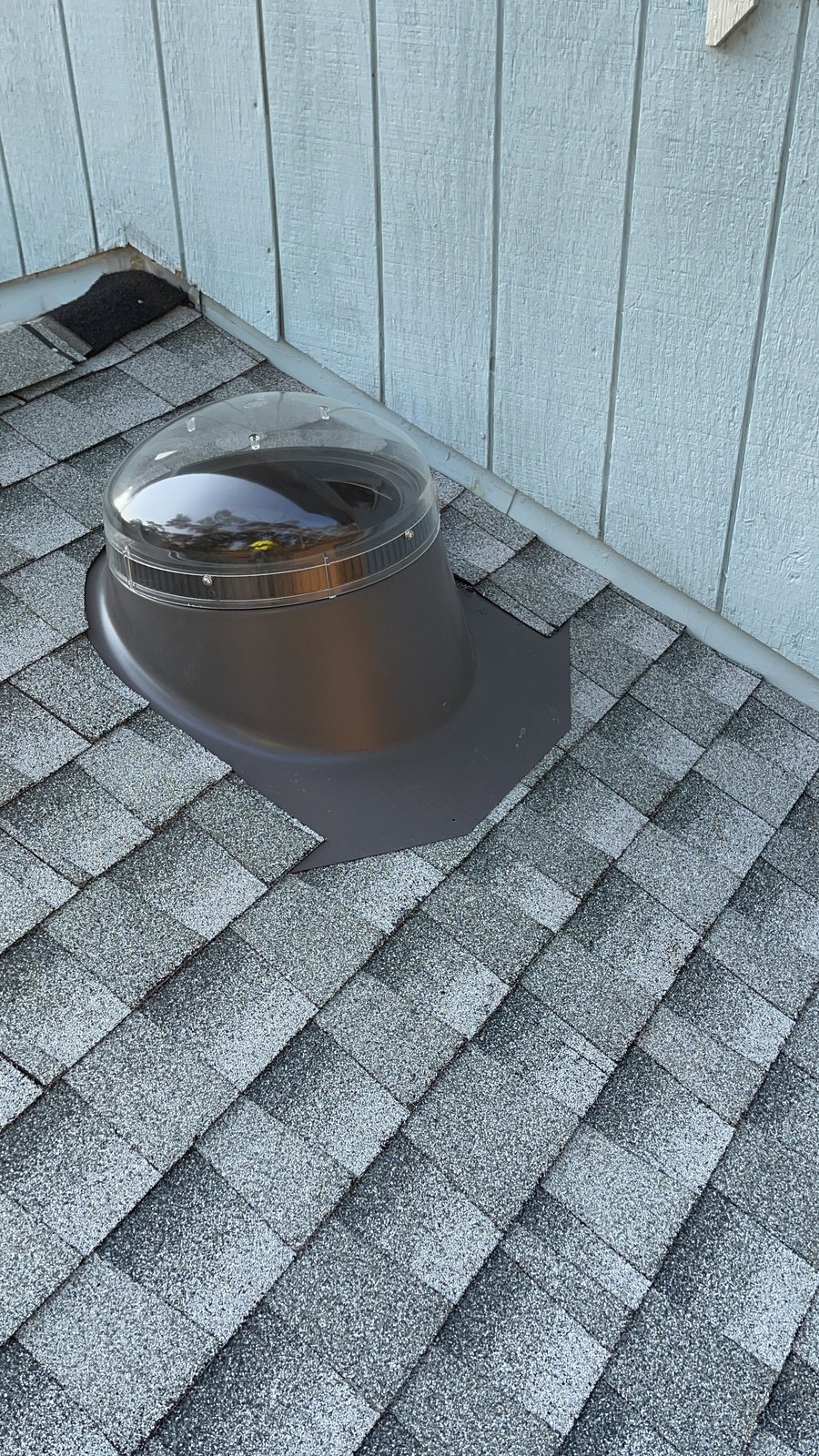
Finished assembly—dome secured to the collar, flashing shedding water with the shingle courses.
What an honest inspection looks for
Stay off a hot roof unless you are trained and insured. From the ground, binoculars, or clear contractor photos, useful cues include:
- Rust, lift, or gaps at the metal flange edges
- Shingles that look forced or cut short around the circle (poor weave)
- Heavy, cracked, or repeatedly re-caulked sealant rings at the collar
- Stains on ceilings or walls under the tunnel path after rain
- Soft deck or dark staining around the cut when the system is opened during repair
An honest scope documents the system—flashing + collar + dome + nearby underlayment—not only “dome looks cloudy.” For related penetration education, see Pipe Boots After a Modesto Summer and Chimney Flashing After a Modesto Summer. Underlayment under the field still matters after the wood and flashings are right—see What's Under Your Shingles?.
When repair is enough—and when the conversation gets wider
Many sun-tunnel leaks are penetration repairs: replace or re-set flashing correctly, renew the collar detail, repair local soft deck if moisture reached the OSB, and remount a sound dome. That is often enough when the surrounding field shingles and underlayment are still in serviceable condition.
Wider work belongs in the conversation when soft or rotten deck spreads beyond the cut, when multiple penetrations are failing together after heat, or when the shingle system itself is at end of life and every new flash will sit on a tired field. The goal is the smallest honest scope that stops water—not a caulk-only patch that fails at the next storm, and not a default full tear-off when a clean flashing rebuild would solve it. For how our team talks about repair versus replace in plain language, see Repair or replace? How we decide on a Modesto roof.
Before the next storm: a practical checklist
- Do not assume a clear dome means the roof cut is sealed
- Ask whether flashing will be woven into shingles as a system—not sealed with caulk alone
- Ask whether soft deck around the tube will be checked and replaced if wet
- Have nearby pipe boots and other penetrations checked in the same visit
- Use Get a Quick Quote if you want Legend Roofing Company Inc to document the detail in clear photos and plain language
Daylight is the goal. Water control is the flashing’s job.
Sun tunnels are valuable daylight tools on Modesto-area homes. After Central Valley heat, they deserve the same attention as pipe boots and chimneys: metal that sheds water with the shingles, a collar that is not held together by old caulk, and a dome that sits on a sound base. If you are in Modesto, elsewhere in Stanislaus County, or nearby Central Valley towns and a tubular skylight is on your mind, our team can inspect the penetration and explain what we find before the next rain.
Legend Roofing Company Inc · 4400 Gomes Rd, Modesto, CA 95357 · (669) 294-1760 · 7am–5pm daily · CSLB #1067374 · GAF Master Elite