
Tile Roof Leaking but the Tiles Look Fine? Why Modesto Tile Repairs Start Underneath
On a tile roof, the tile you see from the street is only half the system. When a tile roof leaks in the Central Valley, the cause is often the underlayment below the tile. Here is what we find when we lift a section, how the repair works, and when it makes more sense to talk about a new roof.
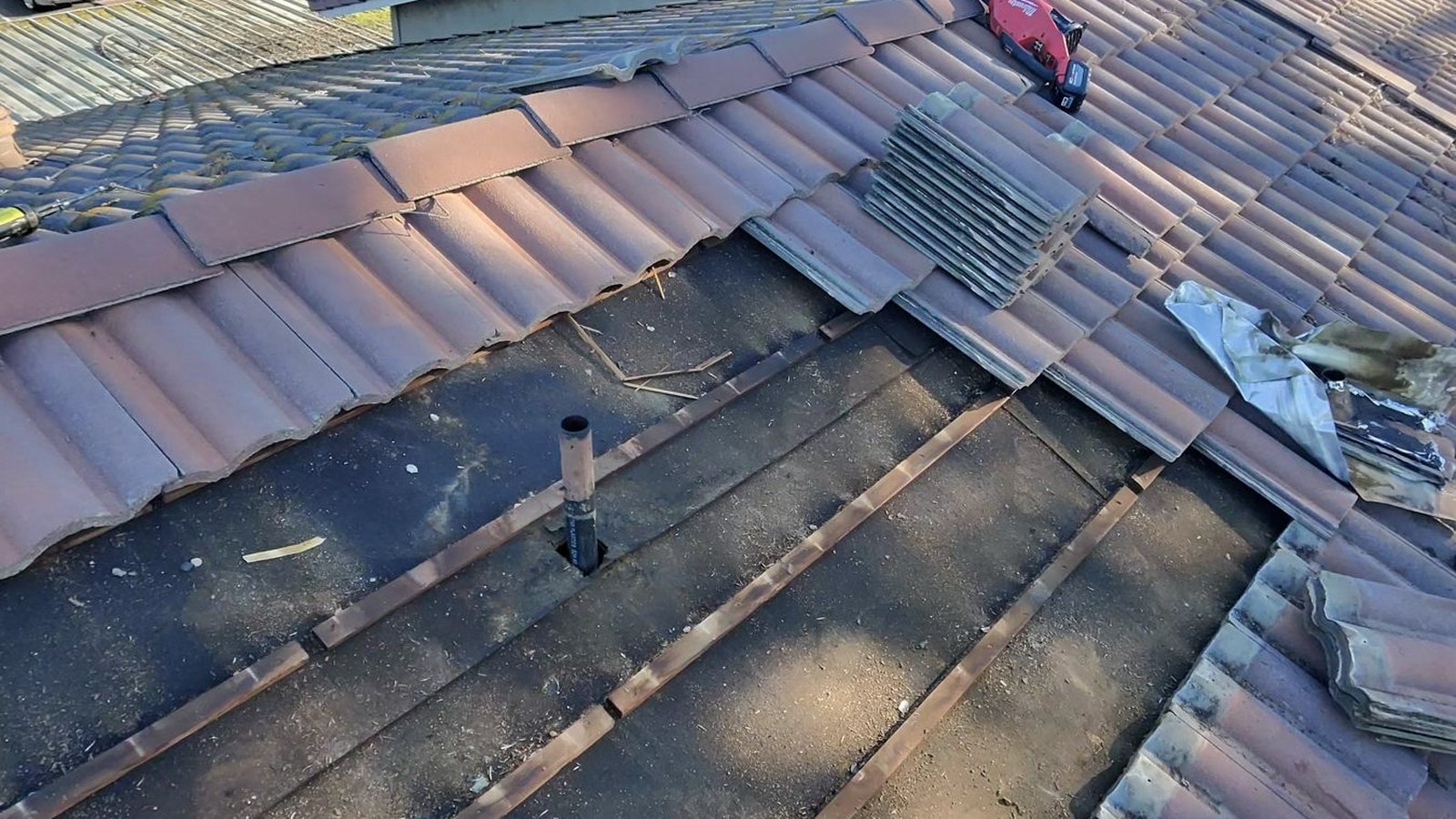
A tile section lifted on one of our repair jobs. The tiles are stacked to the side so they can go back on, and the old underlayment and battens are exposed around a vent pipe.
A lot of homeowners are surprised when a tile roof leaks even though no tile looks broken. The reason is simple: tile sheds most of the water, but the waterproof layer is the underlayment beneath it. Concrete and clay tile can stay solid for a very long time, while the underlayment under it ages from heat, trapped debris and years of small amounts of water getting past the tile. In the Valley, long hot summers are hard on that layer, and the first real rains of fall are when the weak spots show up inside the house.
Where tile roofs usually leak
- Around pipes and vents. Every penetration needs its own flashing under and over the tile. When the underlayment around a pipe tears or the flashing fails, water follows the pipe down.
- In valleys. Valleys carry water from two roof planes, and debris that collects there holds moisture against the layers underneath. We covered this in a tile valley that went soft.
- At slipped or cracked tiles. A tile that shifts lets more water reach the underlayment in one spot, and over time that spot wears through.
- At walls, chimneys and roof edges. Anywhere the tile meets something else depends on flashing doing its job.
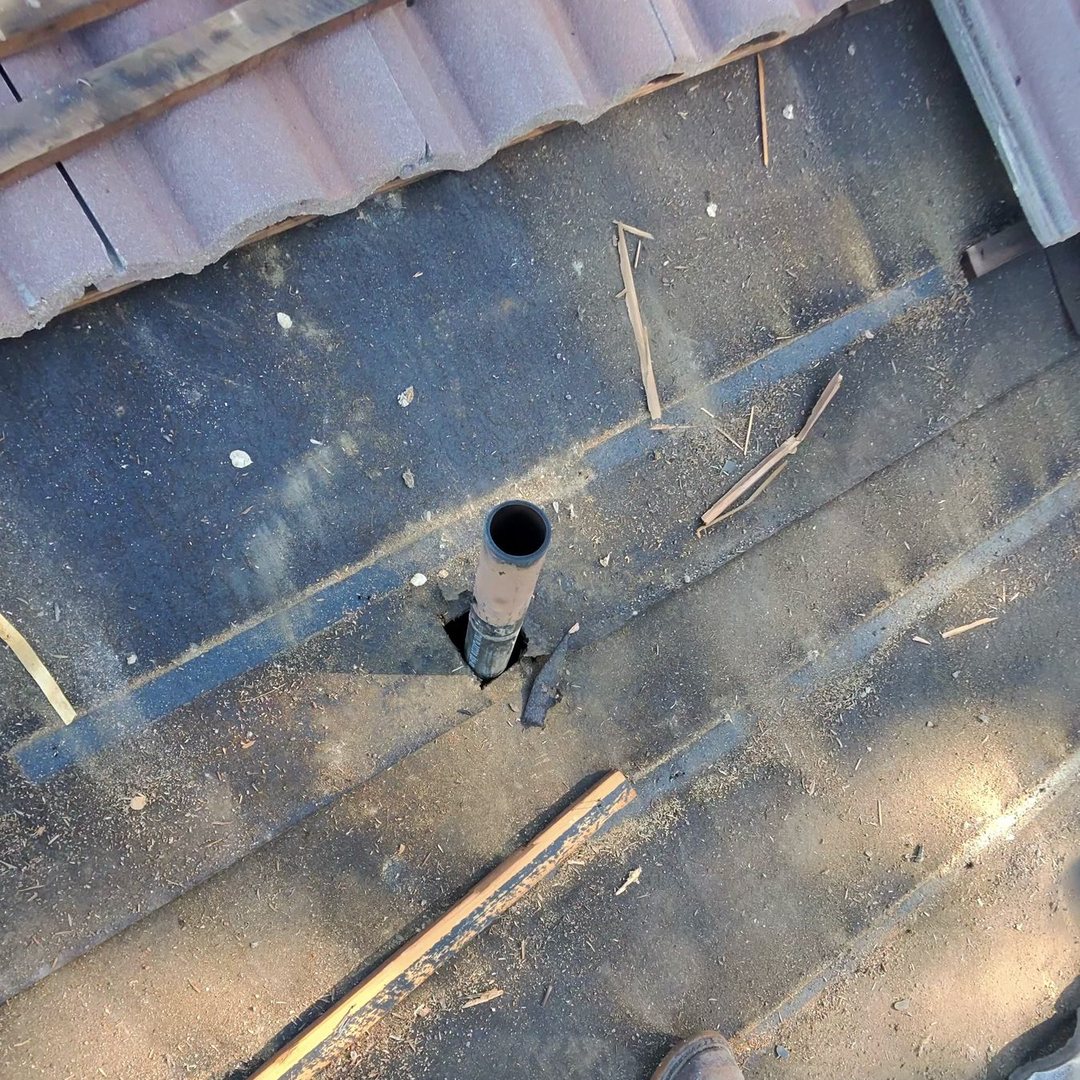
What we found under the tile on this job: old underlayment worn and torn right around the vent pipe. From the street, the tiles above it looked normal.
How a tile section repair works
When the problem is limited to one area, a tile roof can often be repaired without replacing the whole roof. The general steps look like this:
- Lift the tile carefully. Tiles in the affected area are removed and stacked so the good ones can be reused. Broken ones are set aside to be replaced.
- Open up the old layers. The worn underlayment and any damaged battens come off so we can see the deck underneath and check it for soft or stained wood.
- Install new underlayment. New underlayment goes down and laps correctly into the surrounding roof so water keeps running downhill over each layer, not under it.
- Flash the penetrations. Pipes and vents in the section get new flashing that works with the tile profile.
- Re-lay the tile. Battens go back where they are needed and the tile is set back in its courses, with matching replacements where a tile was broken.
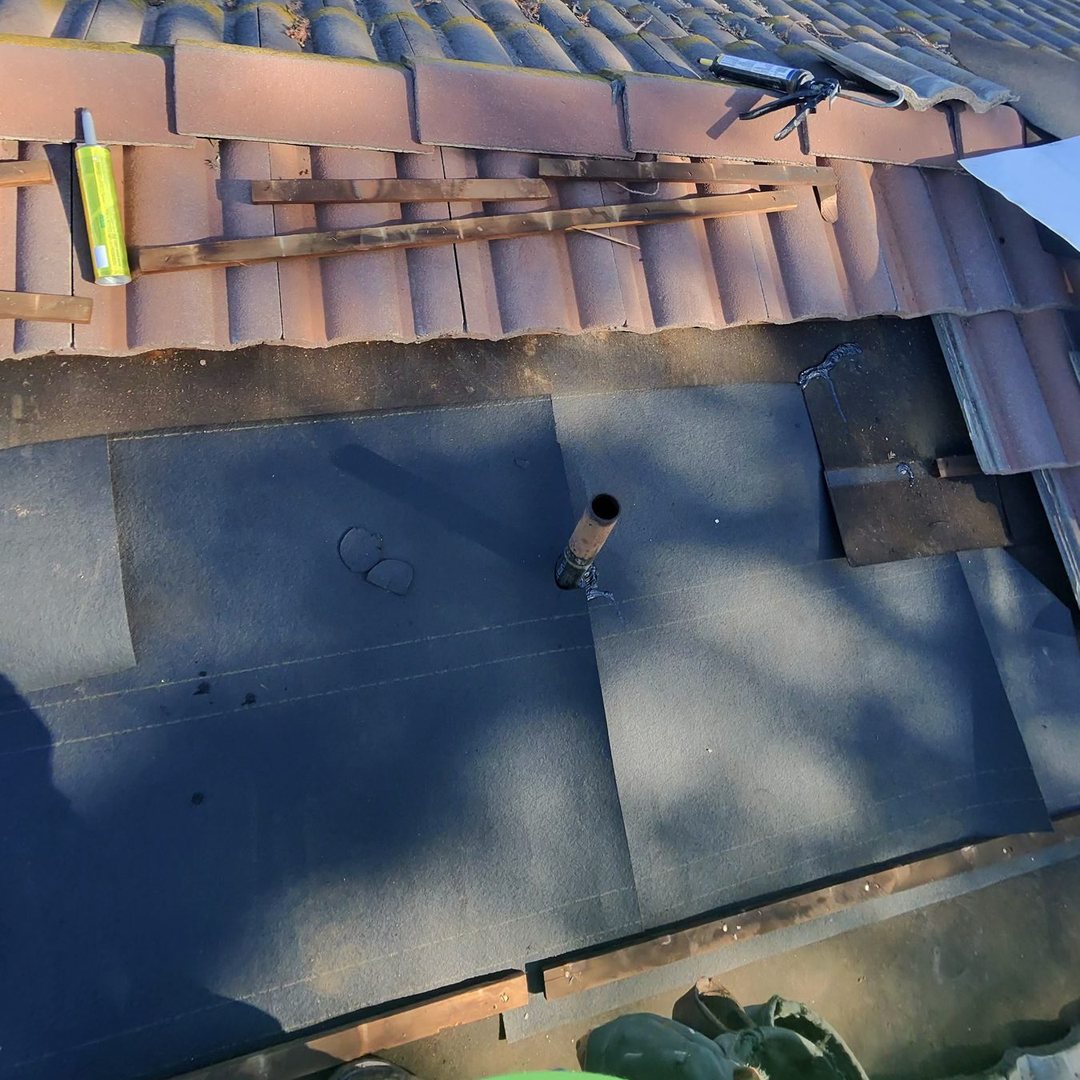
The same kind of section with new underlayment down around the pipe, before the battens and tile go back on.
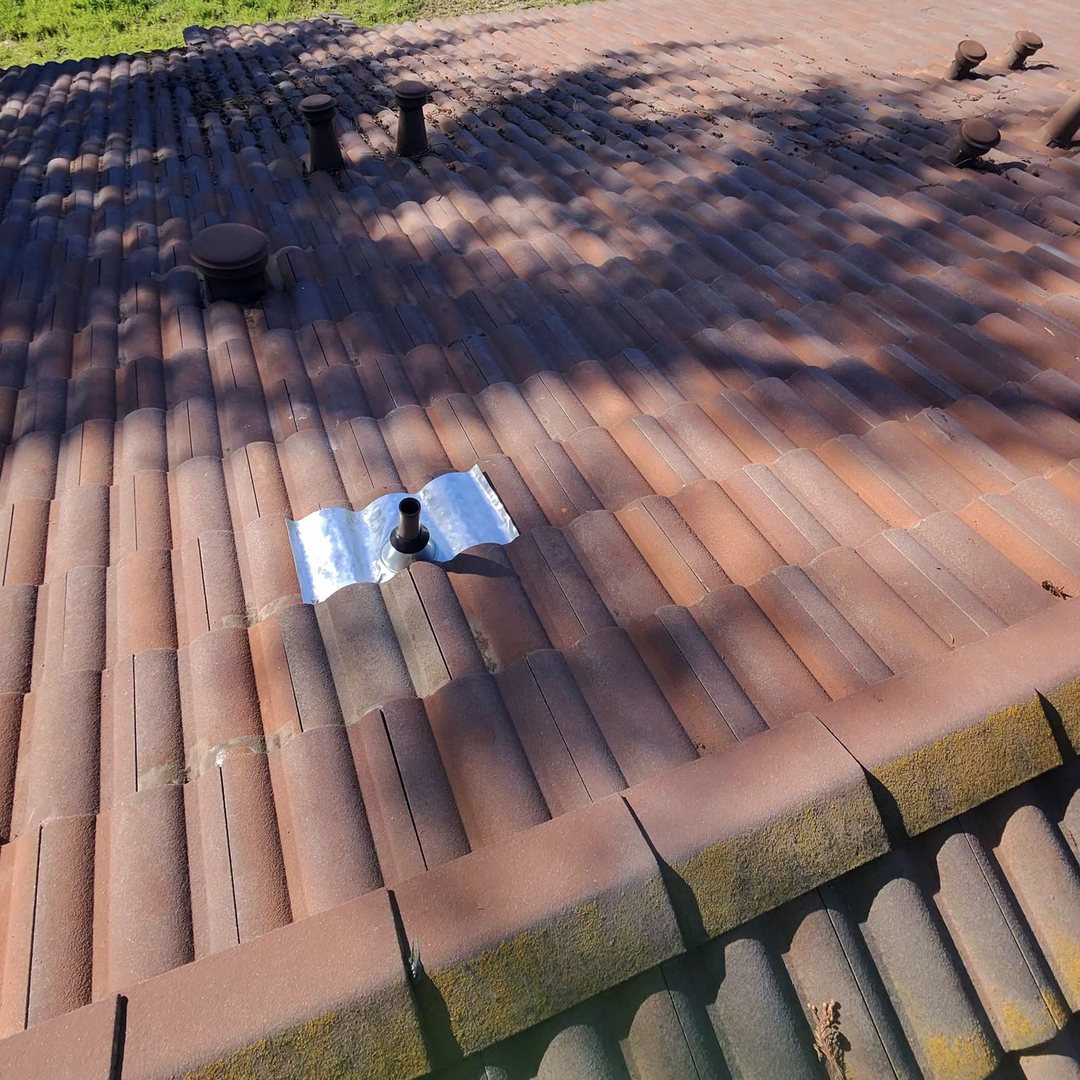
Tile back in place with new flashing at the vent pipe. Done right, a repaired section should blend into the rest of the roof.
Repair or a bigger conversation?
A section repair makes sense when the leak is in one place, the deck under it is sound, and the underlayment elsewhere still looks serviceable. It starts to make less sense when we find the same worn underlayment everywhere we lift, when leaks keep showing up in new spots, or when the deck has gone soft in more than one area. At that point the options are usually a full tile lift-and-relay with new underlayment, or a different roof altogether. Some Modesto homeowners choose to switch from tile to shingles at that stage; we wrote about what changes when an old tile roof comes off. Our post on repair or replace covers the general decision.
Quick answers
Can a tile roof leak if no tiles are broken?
Yes. Tile sheds most of the water, but the underlayment below is what keeps it out of the house. Worn underlayment or failed flashing can leak under tiles that look perfect.
Can the same tiles be reused after a repair?
Usually, yes. Tiles that come off whole can go back on. Broken tiles are replaced with the closest match available for that profile and color.
Should I walk on my tile roof to look for the leak?
We don’t recommend it. Tile can crack under a foot that lands in the wrong spot, and a cracked tile adds a second problem. Note where the water shows up inside, take photos of any ceiling stains, and let a roofer check it from the roof.
What should I do if it is raining right now?
Protect what is under the leak, catch the water and keep people off the roof. Our guide on a roof leak in the first fall storm walks through the first steps.
Soft next step
If your tile roof showed a stain or a drip in the first rains, Get a Quick Quote through our Contact page or call (209) 404-6110. More on roof repair in Modesto and roof leak detection.
Legend Roofing Company Inc · 4400 Gomes Rd, Modesto, CA 95357 · (209) 404-6110 · CSLB #1067374 · GAF Master Elite.