
After the Tear-Off: FeltBuster Dry-In on a Modesto Roof
When a Modesto roof comes all the way off, the house is open to the sky until the deck is covered again. Here is what that dry-in stage looks like on real Legend Roofing jobs—from open sheathing to GAF FeltBuster, then the first shingle courses.
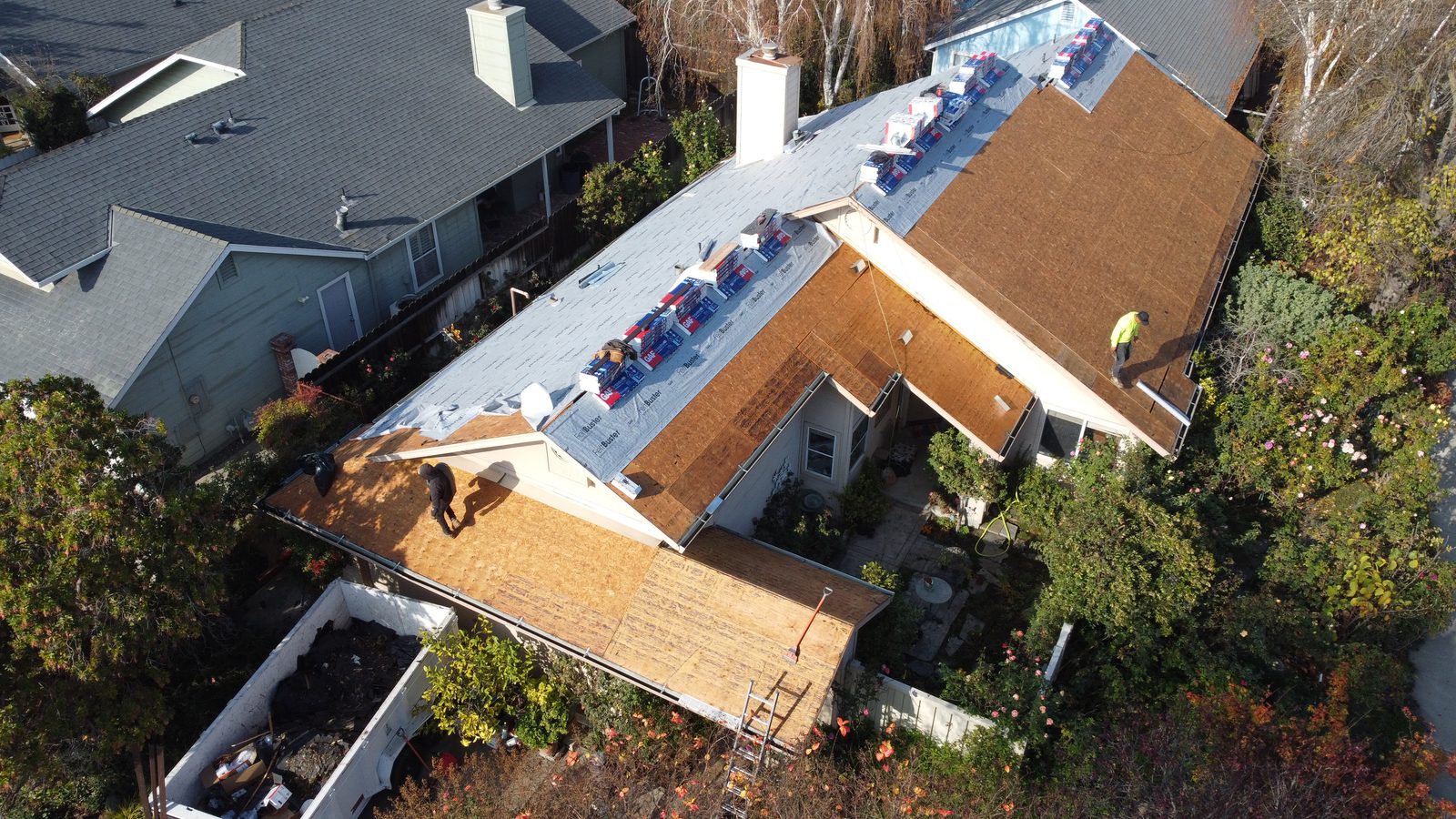
A full tear-off in progress: old shingles gone, OSB exposed, FeltBuster already covering the high peaks, and new Timberline bundles staged on the ridges.
Neighbors often ask what they’re looking at when a roof replacement is mid-job. The noisy part is usually the tear-off. The quiet, important part is what happens next: the deck gets checked, damaged wood gets replaced, and a synthetic underlayment goes down so the house is dry before the first course of shingles.
This walkthrough follows that sequence on real Legend Roofing Company Inc jobs around Modesto, using drone and roof-level photos from active replacements. It is about the dry-in stage, not the hire-or-overlay decision (we cover that separately in tear-off vs. overlay).
1. Tear-off opens the deck
Old shingles, felt and fasteners come off so the crew can see the wood. Soft spots, water stains and broken panels show up here—the same issues we talk about in why Modesto decking matters. A debris trailer in the driveway is normal; the goal is to get the old roof off the house and out of the yard without leaving piles overnight.
Until underlayment is down, that open OSB is the only lid on the home. That is why dry-in is scheduled the same day whenever weather allows.
2. Dry-in: FeltBuster (and Legend-branded underlayment) before shingles
Once the deck is sound, a synthetic underlayment goes down. On many of our GAF jobs that product is GAF FeltBuster—the gray printed sheet you can see from the street or a drone. On other Legend jobs we also run Legend-branded underlayment over the field. Either way, the job of this layer is the same: shed water if a shower hits before shingles are finished, and give the courses a clean surface to nail into. For the role of underlayment more broadly, see our underlayment guide.
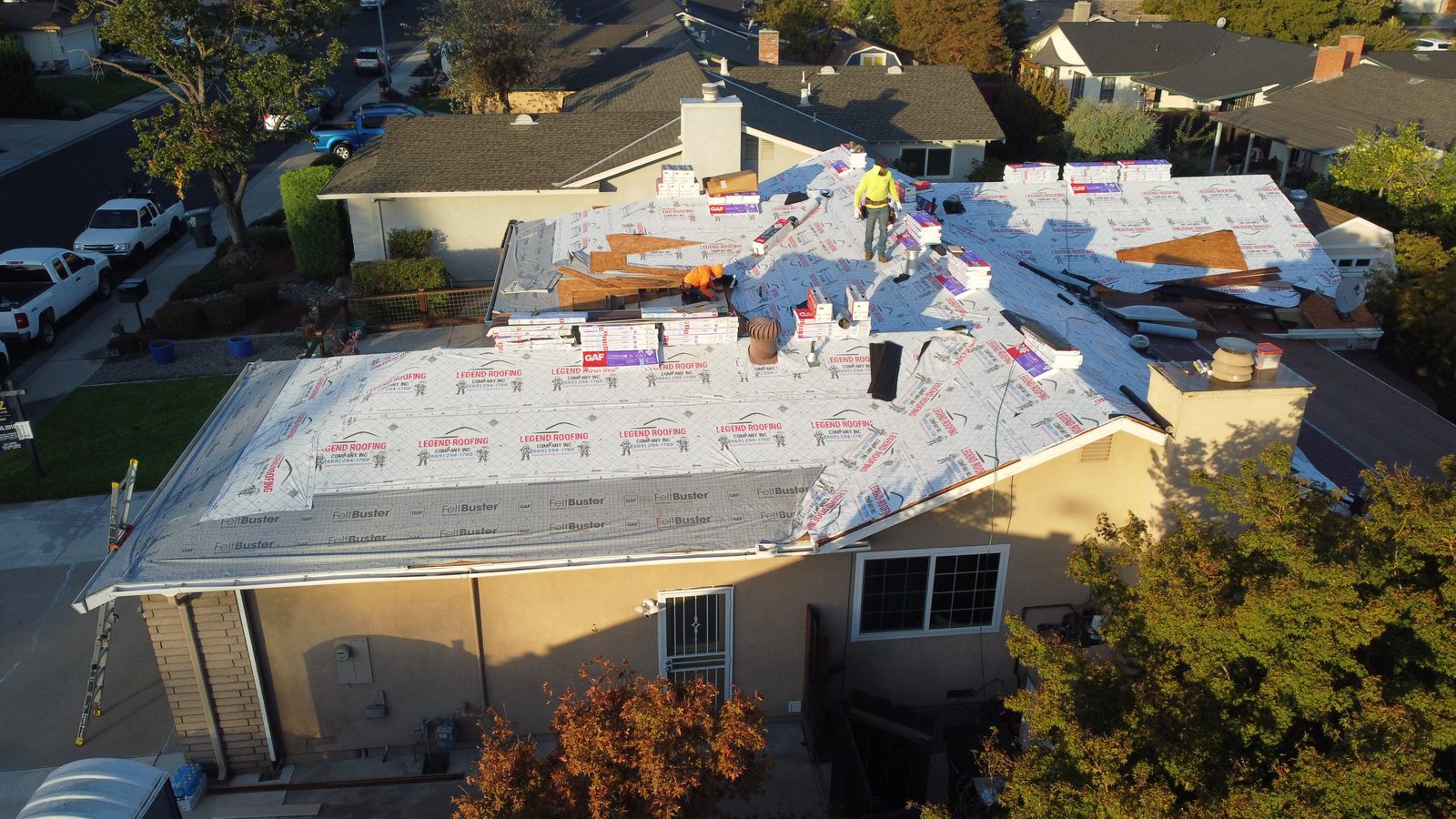
Dry-in underway: Legend-branded underlayment across most of the planes, FeltBuster on a lower section, and GAF bundles staged for the next courses.
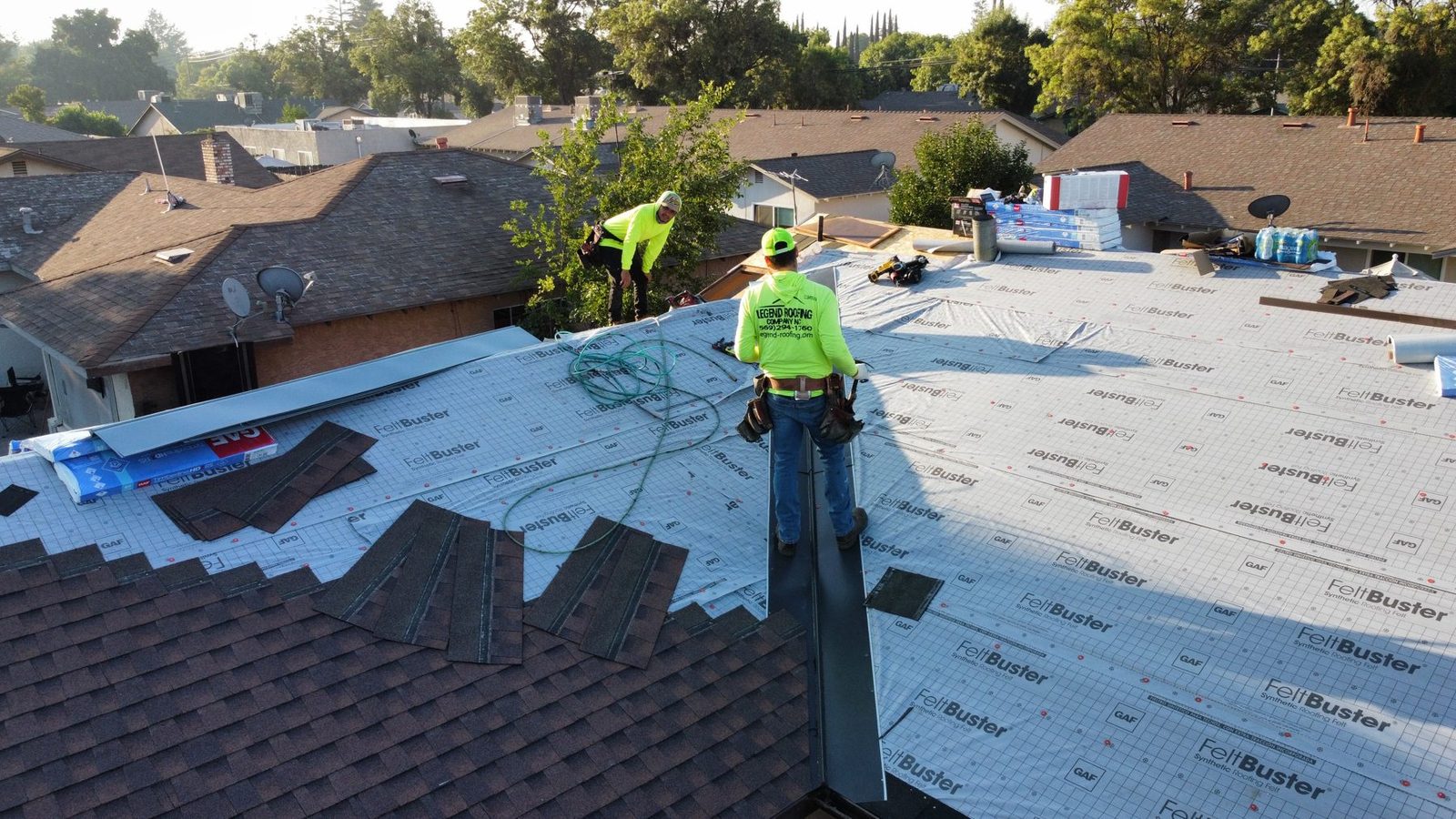
Roof-level view of FeltBuster with valley metal started. The crew shirts carry the Legend Roofing Company Inc name.
3. Edges and valleys get finished before the field races ahead
Dry-in is not only rolling sheets. Metal at eaves (drip edge), valleys and penetrations has to be in the right order so water has a path off the roof. Rushing the field courses while edges are open is how leaks start at the first storm.
4. First courses: shingles over a dry deck
With underlayment locked down, architectural shingles start from the eaves up. On the job below, Timberline courses are already covering the main planes while a lower garage section is still on FeltBuster—a normal mid-job view, not a finished roof.
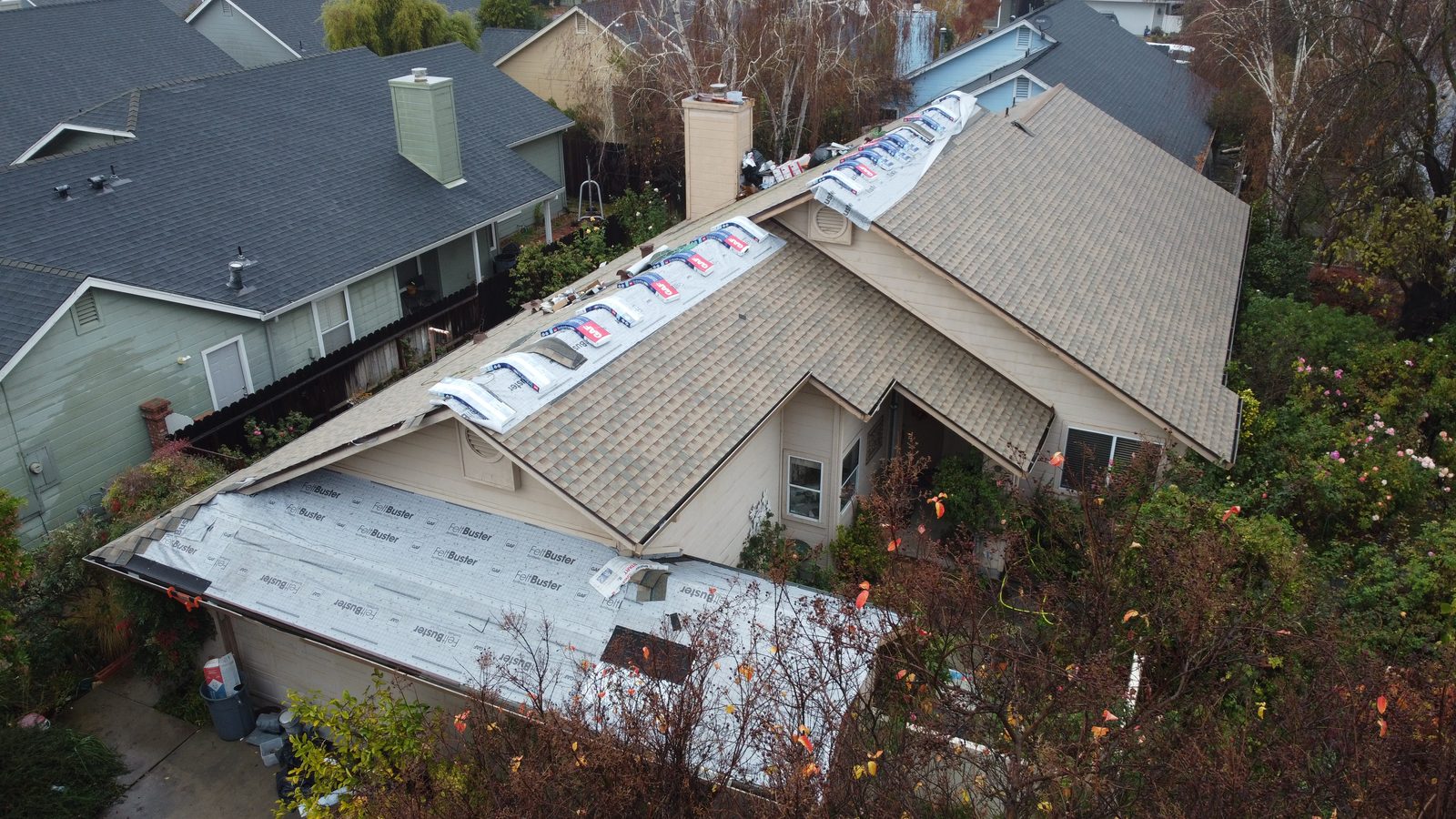
Mid-install: main slopes in new shingles, garage plane still protected by FeltBuster, bundles waiting on the ridge.
What homeowners can watch for from the ground
You do not need to climb the roof. From the street or a second-story window, a healthy tear-off day usually shows:
- Old material leaving the property in a trailer or dumpster, not stacked against the house overnight.
- Open deck covered the same day with printed synthetic underlayment (FeltBuster or equivalent).
- Bundles staged on the roof after dry-in, not dumped on landscaping.
- Edges, valleys and vents addressed in sequence—not left open while the field gets ahead.
- No large uncovered OSB left exposed if rain is in the forecast.
Soft next step
If you are planning a roof replacement in Modesto or elsewhere in the Central Valley and want a clear look at what the tear-off and dry-in will involve on your house, Get a Quick Quote via Contact. More on roof replacement in Modesto.
Legend Roofing Company Inc · 4400 Gomes Rd, Modesto, CA 95357 · (669) 294-1760 · CSLB #1067374 · GAF Master Elite.