
What Central Valley Heat Does to Asphalt Shingles—and What to Check
Heat and sun do not automatically mean a new roof. Here is what Modesto homeowners can safely watch for from the ground.
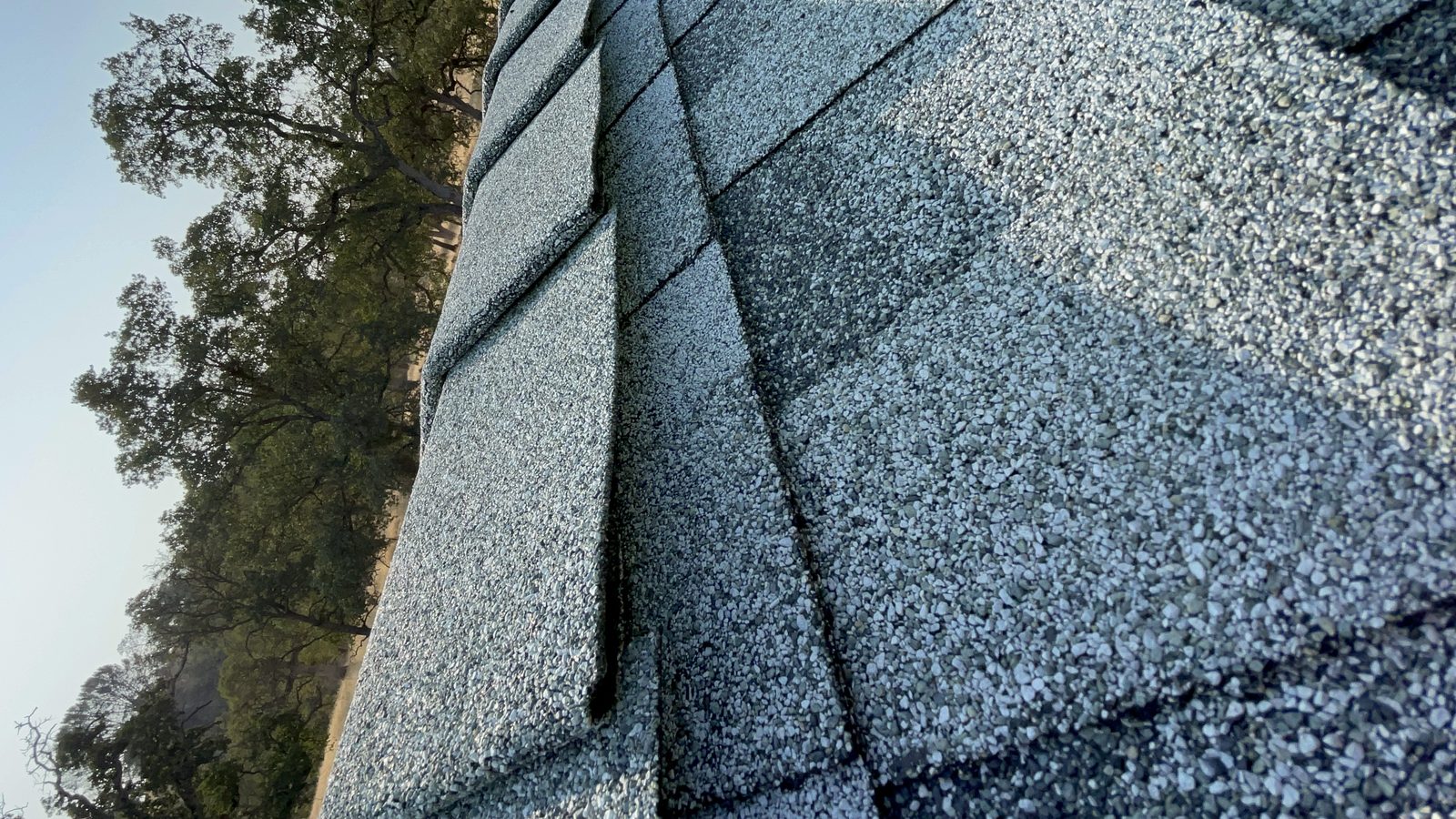
A close look at asphalt-shingle surfaces and ridge caps on a real Legend Roofing Company Inc project.
Long, hot summers are part of owning a home in Modesto and across the Central Valley. Asphalt shingles are made to be outdoors, but years of sun, heat, wind, and seasonal rain can gradually change how a roof looks and performs.
That does not mean every warm attic, faded shingle, or granule in a gutter calls for a roof replacement. The useful question is whether the roof is showing normal age or signs that water protection may be weakening.
Why sunlight and heat matter
An asphalt-shingle roof is a layered system. The visible shingles shed water and protect the materials below, while the underlayment, flashing, roof deck, and ventilation all play important roles.
Sunlight and repeated heating and cooling can slowly age the asphalt in shingles. Over time, a roof may become less flexible. Surfaces that receive strong afternoon sun can also age differently from shaded sections. That is why two roof slopes on the same home may not look identical.
Heat alone does not diagnose a roof. Shingle age, installation, ventilation, tree cover, roof pitch, maintenance, and past repairs all affect what an inspector sees.
Five signs you can check from the ground
Avoid walking on a roof. Besides the fall risk, foot traffic can damage shingles—especially when the roof is very hot. A ground-level look, attic check, or photo taken from a safe window can still reveal useful clues.
1. Shingle edges that lift, curl, or no longer lie flat
One slightly raised edge does not prove the roof is failing. A broader pattern, or shingles that have become visibly distorted, deserves attention because wind-driven rain may have an easier path beneath the surface.
2. Bald-looking areas or unusual granule loss
The mineral granules on asphalt shingles help protect the asphalt from sunlight. A small amount of loose granules can be normal, particularly on a newer roof. Larger bare patches, obvious surface wear, or a sudden increase in granules at downspout outlets may justify an inspection.
3. Cracked, slipped, or missing shingles
An isolated damaged shingle may be repairable. Multiple damaged areas can point to broader weathering or wind exposure. The roof should be evaluated as a complete system before anyone recommends repair or replacement.
4. Changes around vents, chimneys, valleys, and roof edges
Many leaks begin at transitions rather than in the middle of an open shingle field. Look for displaced material, visible gaps, bent flashing, sealant that has separated, or debris collecting in valleys. Check these details without stepping onto the roof.
5. Interior stains, damp odors, or attic moisture
Ceiling discoloration, peeling paint, damp insulation, or a persistent musty smell can be warning signs. The visible stain may not sit directly below the roof entry point because water can travel along decking or framing. If water is actively entering the home, protect the interior if it is safe to do so and contact a roofing professional promptly.
What about a hot attic?
An attic will usually be warmer than the living space during a Modesto summer. Ventilation and insulation influence how heat and moisture move through the roof assembly.
Ventilation is not a one-size-fits-all upgrade. Adding a vent without considering intake, exhaust, roof design, and existing equipment can create an unbalanced system. A proper evaluation should look at the whole assembly rather than recommending a single product based only on indoor temperature.
Homeowners can safely look for blocked soffit vents, disturbed insulation, moisture marks, or daylight entering where it should not. Do not touch electrical wiring, step between ceiling joists, or enter an attic when conditions are dangerously hot.
When a repair may be enough
A localized problem may be a repair candidate when the surrounding shingles remain serviceable and the issue is limited to a specific vent, flashing detail, small damaged area, or isolated leak path.
A responsible recommendation depends on what is actually found. Replacing an entire roof for a repairable detail wastes money; repeatedly patching a roof with widespread deterioration can also cost more over time.
When replacement may be considered
Replacement may enter the discussion when deterioration is widespread, leaks appear in multiple areas, the roof deck has broader damage, repairs can no longer be completed reliably, or the existing system is near the end of its useful service life.
No single photo, stain, or granule pile should decide that question. The roof surface, penetrations, flashings, attic conditions when accessible, and repair history should be considered together. A roof inspection is how we sort those facts.
A practical seasonal checklist
- Scan the roof from the ground after strong wind or rain.
- Keep gutters and downspout outlets clear so water can drain.
- Watch for debris collecting in roof valleys.
- Check ceilings and accessible attic areas for new moisture marks.
- Note changes instead of guessing: where, when, and under what weather they appeared.
- Arrange an inspection when damage is visible, a leak repeats, or the roof’s condition is uncertain.
Photos and notes can help a roofing professional understand what changed, but they do not replace an on-site evaluation.
Get a clear answer before choosing repair or replacement
The goal of an inspection should be to identify the source of a problem and explain practical options—not to assume every older roof needs to be replaced.
If you are concerned about heat-related wear, loose shingles, flashing, or a possible leak in Modesto or the surrounding Central Valley, Legend Roofing Company Inc can evaluate the roof and explain what the visible conditions mean.
Get a Quick Quote or call (209) 404-6110.
Legend Roofing Company Inc · 4400 Gomes Rd, Modesto, CA 95357 · CSLB #1067374 · GAF Master Elite